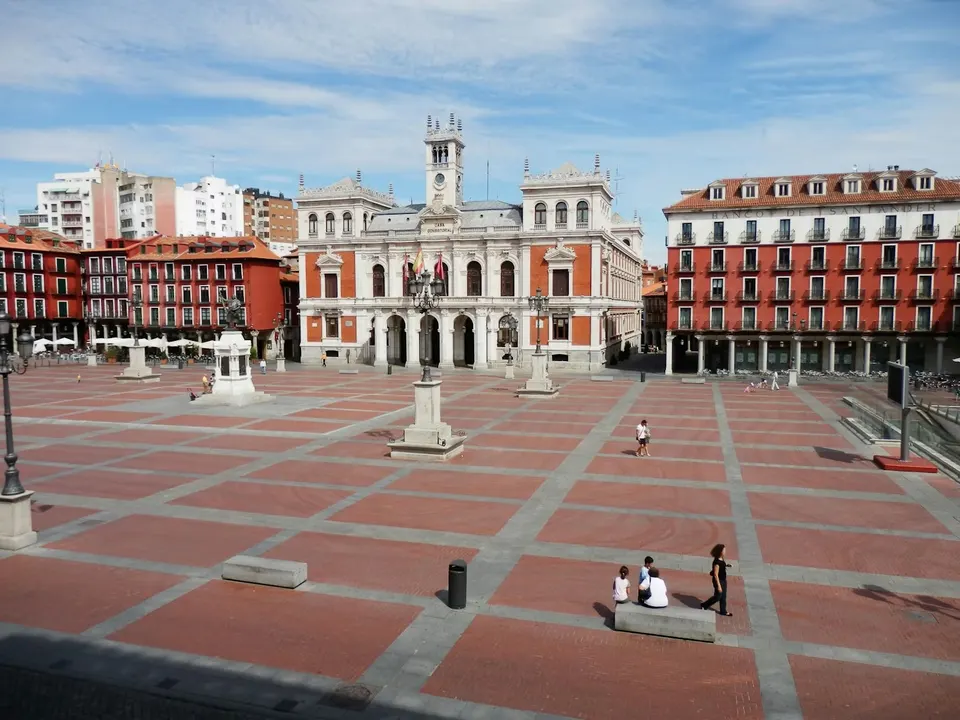
Valladolid
From the Plaza Mayor that inspired Madrid to the house where Cervantes wrote Don Quixote. Discover the former capital of the court of Philip III with audio guides.
Explore ValladolidDiscover the history and soul of Valencia with 50 walking audio guides narrated by experts. From the Cathedral to the Albufera, every corner has a story worth hearing.


Valencia packs over 2,000 years of history into a walkable route: Gothic landmarks like the Silk Exchange, modernist markets like the Central Market, Roman ruins beneath the Almoina, the contemporary architecture of the City of Arts and Sciences, and natural landscapes like the Albufera. All within minutes of each other.
With EarGuide's Valencia audio guide, every monument reveals its story through professional narration recorded by local historians. Unlike a free tour or a conventional guided visit, you set the pace, the order and the stops. No groups, no schedules, no internet needed.
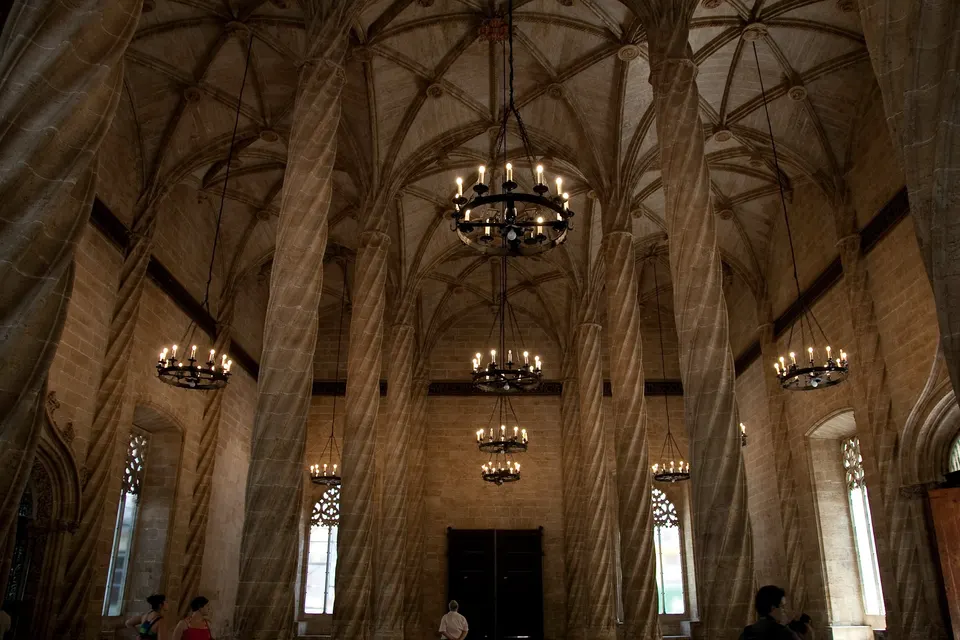
Discover the temple of medieval commerce in Valencia, an architectural marvel where wealth, power, and satire were carved in stone.
La Lonja de la Seda (The Silk Exchange) stands in the heart of Valencia as the most imposing civil testament of European late Gothic. Built to make the city's economic muscle visible during its Golden Age, this complex was not born for religious prayer, but for the worship of money, contracts, and the silk trade. Its monumentality transcends mere mercantile utility, becoming a public declaration of urban sovereignty that continues to amaze today with its audacity.
Crossing its doors means entering a game of calculated contrasts: from the almost sacred solemnity of its vaults to the biting humor of its gargoyles, to the severity of an internal prison for those whose word lost its value. A space where the laws of the Mediterranean were dictated under golden ceilings and where every construction detail hides a warning or a demonstration of civic pride.
 01
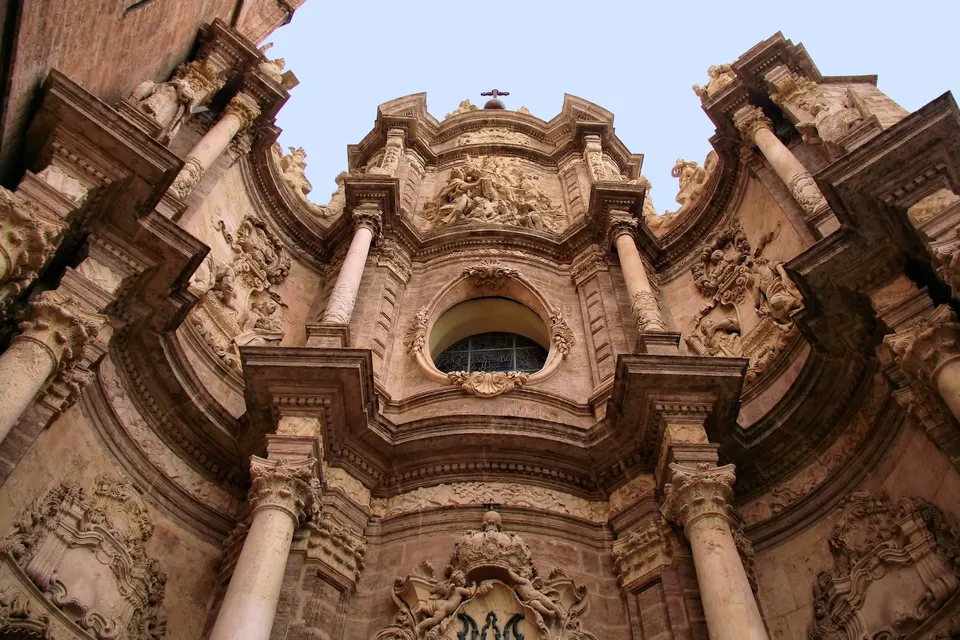
01 A palimpsest of a mosque, a Gothic cathedral, and Baroque touch-ups that guards the alleged Holy Grail. Discover the real layers beneath the official stone.
At first glance, this building seems like a head-on collision of disjointed styles. A very scenic Baroque portal here, a purely Gothic tower there. But this monument is not an inert block; it is the result of centuries of superimpositions, fires, whims, and calculated destructions. It began to be built in 1262 directly on the site of the main mosque —which in turn stood on an old Visigothic cathedral— and, since then, it has not stopped mutating.
What is truly fascinating here is not only what is visible, but what was deliberately hidden. From Renaissance angels walled up for centuries due to a matter of fashion, to relics that survived wars hidden in village closets. If you wonder what to see in Valencia Cathedral, the answer is not in looking passively, but in understanding the cracks in its story.
 02
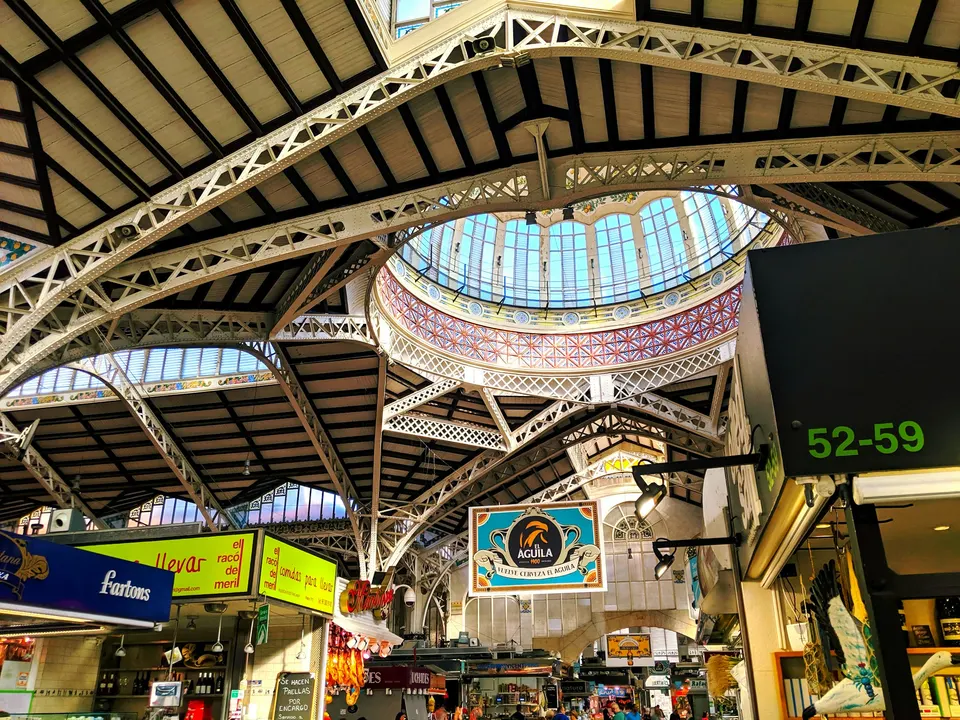
02 Forget the harmless postcard. This is a machine of iron and glass built over an old scaffold, designed to feed the city and show off the ego of its bourgeoisie.
Planning what to see in Valencia Central Market is usually limited to walking around looking at tiles. Mistake. This 8,160-square-meter enclosure is an exercise in urban power. Built in fits and starts since 1914, its structure reflects the ambition of an era that decided to bury centuries of mud under tons of cast iron and zenithal light.
The architecture of the Valencia Central Market dazzles to distract you from its colder pragmatism. From basements created to auction livestock to roofs that isolate smells, nothing here is pure decoration. Download the audio guide, put on your headphones, and join me to read the scars of this building.
 03
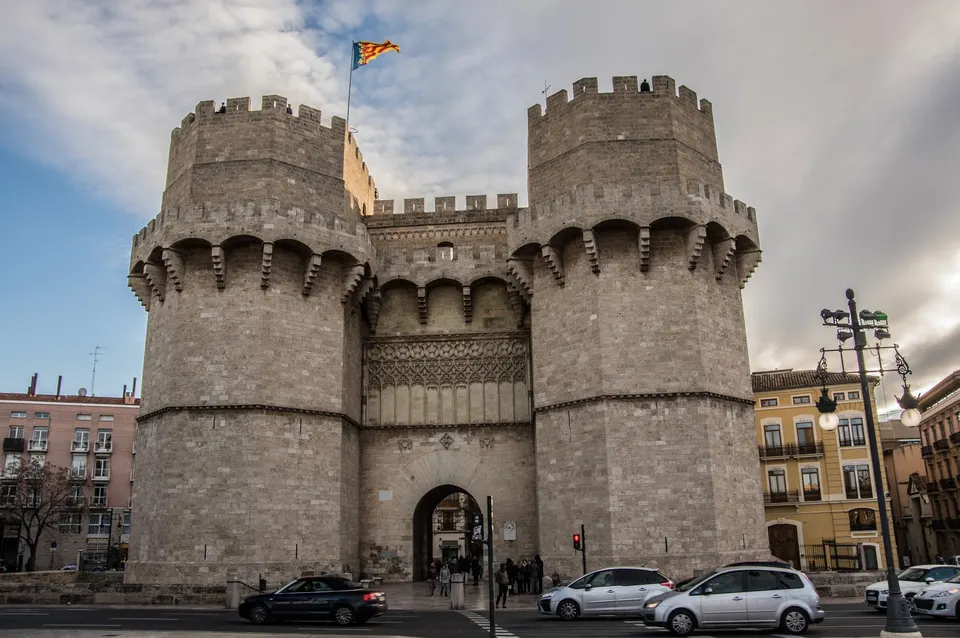
03 The gate that was designed to flatter power, survived because it was a prison, and ended up hiding works of the Prado Museum.
If you are looking for what to see at the Serranos Towers, forget the romanticism of the classic medieval postcard. Built between 1392 and 1398 by Pere Balaguer, they were born as a double-edged urban machine: a colossal access to intimidate and, at the same time, a gigantic triumphal arch for the pomp of kings. At first glance it seems pure defensive engineering, but its history is full of pragmatic improvisations and ironic twists.
The architecture of the Serranos Towers deceives the modern spectator. What today is bare stone was once a polychrome festival. However, its true survival did not depend on its beauty, but on its ability to house human misery. The secret history it hides in its vaults requires more than a superficial reading; to understand how this block of stone avoided demolition and came to guard the greatest artistic treasure in the country, you need to listen to the audio guide while you walk it.
 04
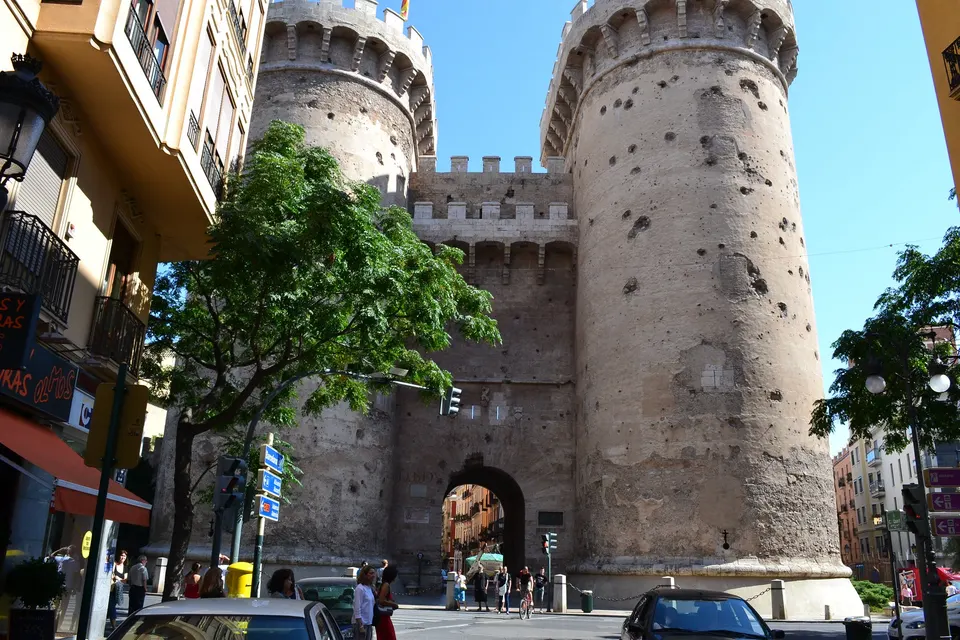
04 A defensive mass that refuses to erase its scars. Discover the medieval gate that survived artillery, urban demolitions, and its own past as a prison.
Cities usually apply makeup to their past; Valencia, on the other hand, left its wounds in plain sight in the middle of the expansion. Built between 1441 and 1460 under the direction of Francesc Baldomar and Pere Compte, the Quart Towers are not the typical postcard scenery. They were the robust western gate of the Christian wall and the physical barrier against the road to Castile. If you wonder what to see at the Quart Towers, forget princess tales: here you will find rough masonry, real cannonball impacts, and pure urban survival.
It is ironic that a structure designed to keep the enemy out spent centuries (from 1626 to 1868) dedicated to keeping women inside, functioning as an overcrowded female prison. Today, stripped of the walled enclosure that gave it meaning, this mass challenges you from the sidewalk. But looking at it from the outside is just scratching the surface. To unearth its secret history and understand the implacable logic of its design, you have to cross its shadow. Download our audio guide and join us in reading the stone.
 05
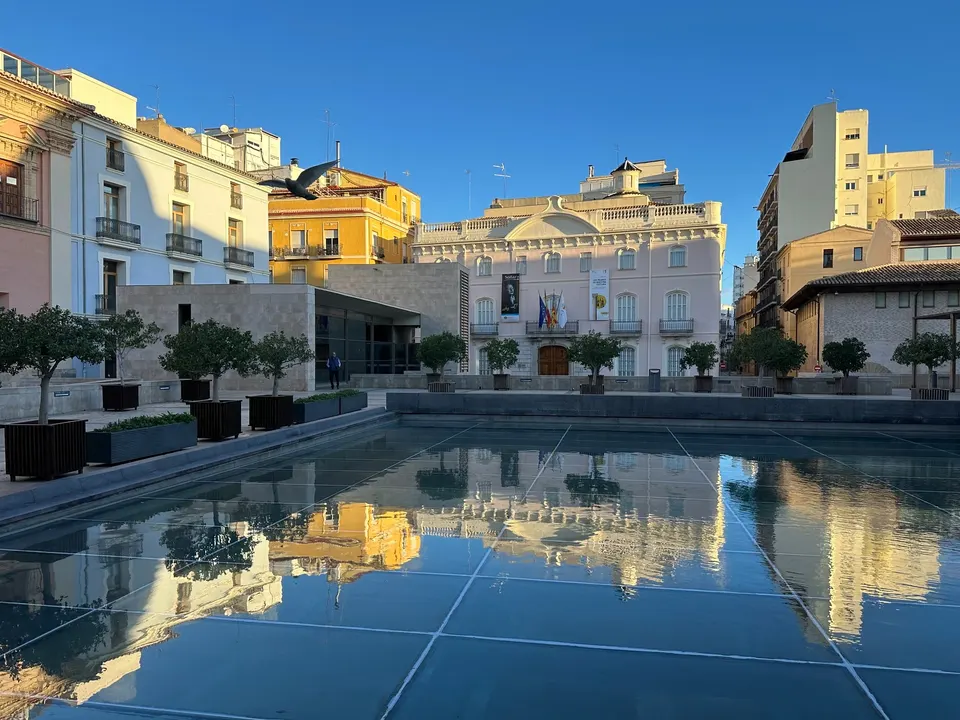
05 Forget intact monuments. Here you go underground to see the exact scar of how a city was founded, burned down, and rebuilt.
Do not expect romantic ruins set there for a photo. What defines the architecture of the Almoina Archaeological Center is a forensic cut in the subsoil. Discovered by pure chance in 1985 while laying the foundations for an expansion of the Cathedral, this site is an archive of earth and stone that stacks more than two thousand years of history without filters.
From the first Roman stone to the foundations of the Islamic alcazar, all the power and tragedy of Valencia are concentrated in these very square meters. At first glance, stones and walkways. But when you understand what you are looking at, it is the rawest place in the city.
 06
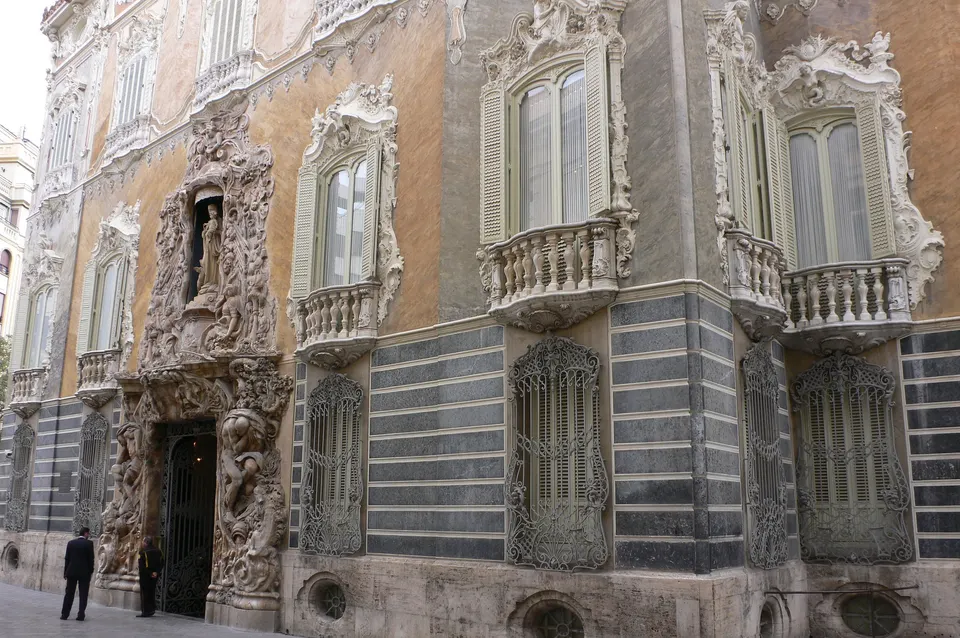
06 Discover how a Valencian nobleman tore down his medieval castle to build the wildest exercise in Baroque vanity in the city. Today, paradoxically, it guards everyone's ceramic memory.
When planning what to see in the Palace of the Marqués de Dos Aguas, you should park your naivety. What you are going to find is not a peaceful home, but a calculated exercise in power propaganda. Between 1740 and 1744, the 3rd Marquis, Giner Rabassa de Perellós, decided that his palace did not command enough respect. Without his pulse trembling, he ordered the demolition of the severe Gothic crenellated towers that gave character to his lineage to commission a radical Baroque reform. The goal was not beauty, it was the visual submission of the passerby. Walking through these rooms today with our audio guide is learning to read between the lines of unbridled ambition.
That architectural excess today encloses formidable paradoxes. Behind a facade that shouts noble exclusivity, now beats the fragile history of the artisan tradition. And although the current building imposes reverence, its walls have endured aggressive redecorations, art exiles, and deceptive reconstructions that have altered its original essence. Nothing is exactly what it seems.
 07
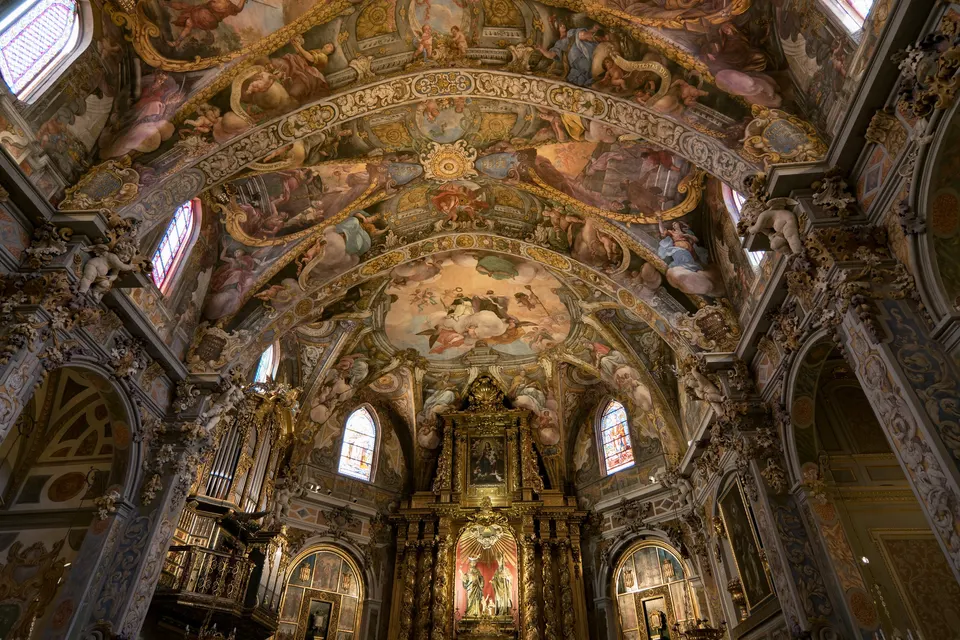
07 A sober Gothic facade that hides almost 2,000 square meters of Baroque frescoes. They will tell you it is the 'Valencian Sistine Chapel', but the rawness of its real history surpasses any advertising slogan.
Founded in 1238 on an old mosque after the conquest by Jaume I, this parish is a visual deception executed to perfection. For two centuries it kept its Gothic skeleton intact, methodical and calculating, until at the end of the 17th century it was decided to completely mask it under a skin of paint.
The clash between the cold discipline of the exterior stone and the interior chromatic chaos defies logic. It is not just a sacred space; it is a massive canvas where technique blurred the physical limits of the building, surviving fires, looting, and decades of abandonment before resurfacing.
 08
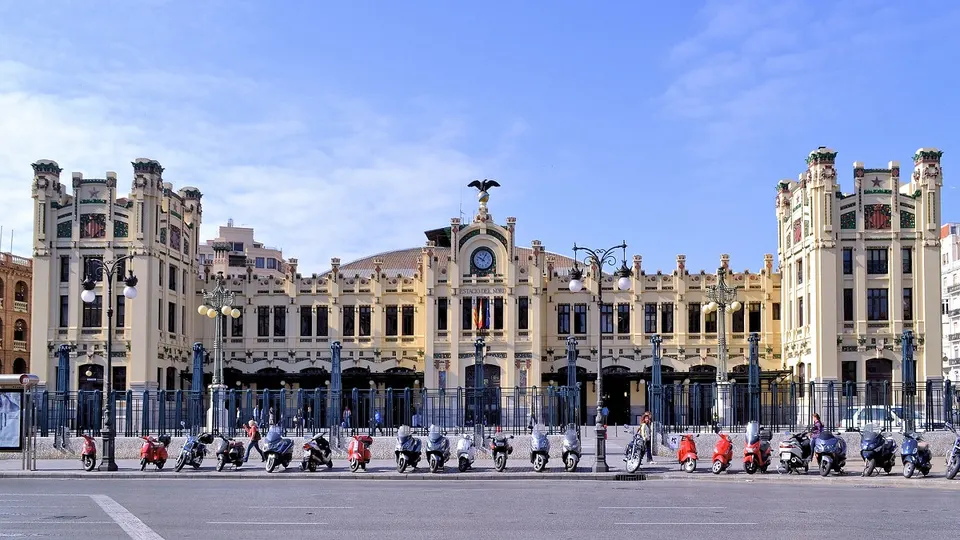
08 A terminal designed to impress and dominate. Discover how a private company disguised its corporate propaganda as a tribute to the city.
At first glance, it's easy to be fooled by the avalanche of ceramics and floral motifs. But if you are considering what to see at Estación del Norte (North Station), you should know that this building was not born from a burst of local romanticism, but from cold corporate calculation.
To cut to the chase, the architecture of Estación del Norte hides much more than just century-old ticket offices. Behind its careful aesthetics there are strikes, bombings, and ghost projects that no one bothers to look at.
 09
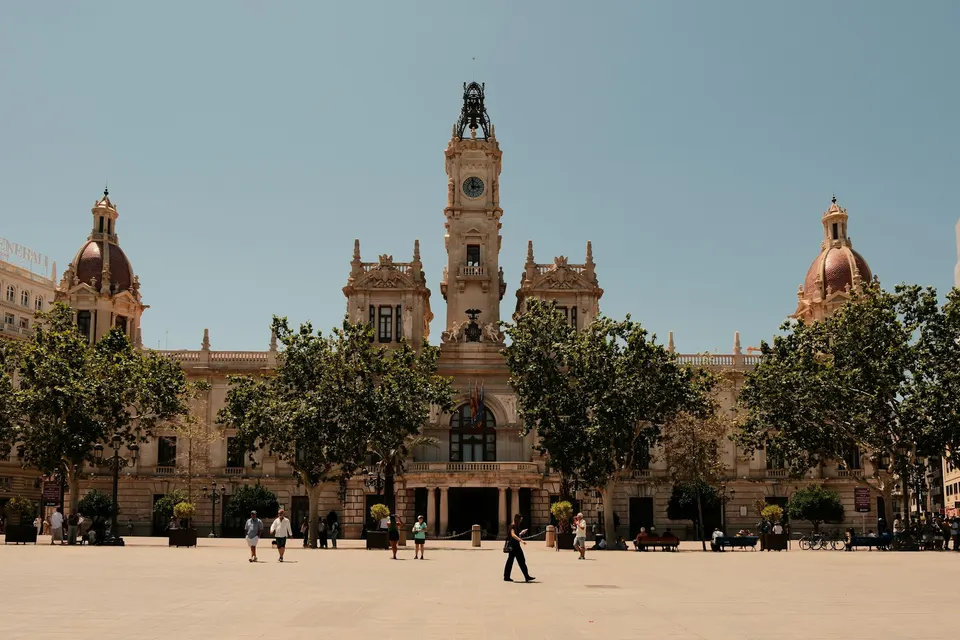
09 Neither its shape was planned, nor is its history peaceful. Discover how a neighborhood wiped off the map became the great civic stage of Valencia.
If you are looking for what to see in the Town Hall Square, be prepared to question what is in front of you. The official narrative sells this space as the natural heart of the city, but the reality is the result of a brutal demolition. This huge esplanade did not exist before the 20th century; it was born by completely razing the Convent of San Francisco and the attached fishermen's neighborhood. Behind its imposing facades, the secret history of this place hides constant political changes, names crossed out on plaques, and war scars that tourist postcards prefer to omit.
Far from being a peaceful relic, the architecture of the Town Hall Square is a theater of operations. It was flooded by more than two meters of water in the Great Flood of 1957, used as a testing ground for architectural modernity, and, finally, converted into a pedestrian zone. A canvas where municipal power tries to impose order, while tradition demands making the ground shake with tons of gunpowder.
 10
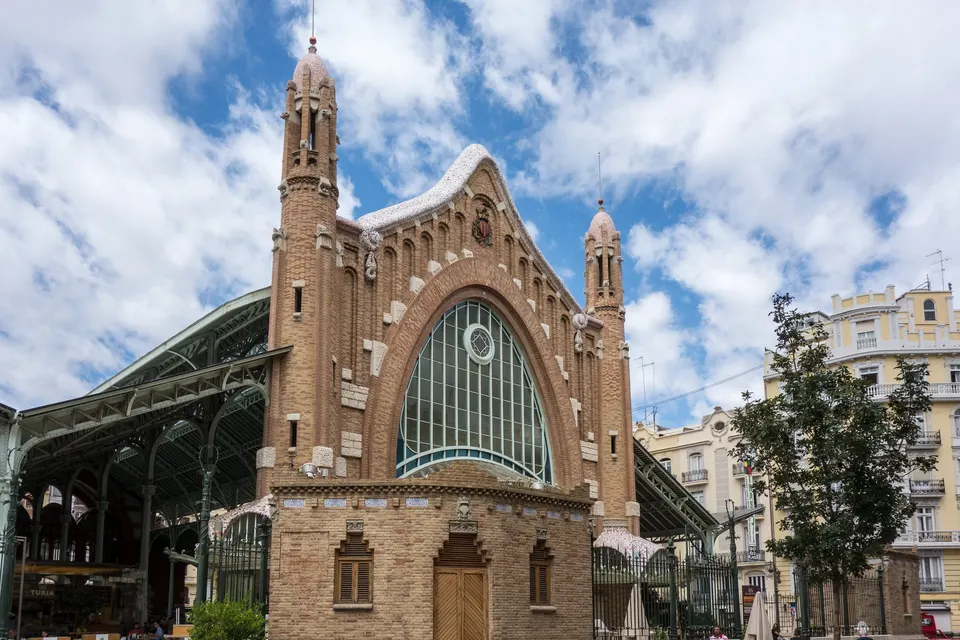
10 From the stench of gas to gastronomic luxury. Discover how the Valencian bourgeoisie transformed its neighborhood by building a market that today no longer sells fresh food, but exclusivity.
At first glance, it seems like the perfect excuse for the city to overcharge for a coffee. But the history of the Colón Market hides a much less innocent agenda. Built in 1914 by Francisco Mora Berenguer, this magnum opus of the Ensanche was not erected out of pure love for art, but as a prestige tool to isolate the local elite from the rest of Valencia.
Architecture always hides double intentions. What today is a placid diaphanous space of iron and glass, was actually born as a hygienist exorcism to wipe a toxic industrial factory off the map. And that is only the first of its contradictions.
 11
11 A dry riverbed that was going to be asphalt and ended up being one of the largest urban parks in Spain. Discover how the fury of the water and the neighborhood stubbornness transformed Valencia.
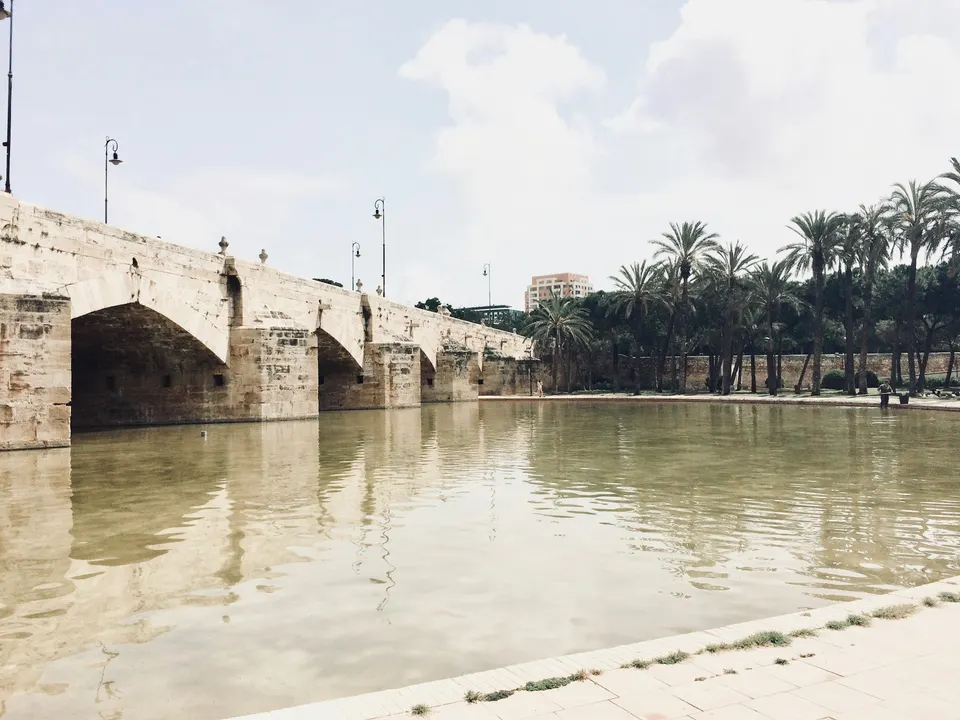
What to see in the Turia Garden? For starters, the resounding absence of a river. It sounds absurd, but the monumental architecture of the Turia Garden rests, literally, on a void. After the tragic flood of 1957, Valencia banished the watercourse to the south and was left with an immense scar crossed by 18 bridges. Today you walk on grass where decades ago there were unpredictable currents, in a green corridor of almost 9 kilometers that completely redefines the geography of the city.
The secret history of the place is not exactly an urban fairy tale. If the authorities had executed their plans, today you would not be planning a walk among pines, but dodging trucks. This space is the result of the pulse between a government that saw a business opportunity and a city that demanded oxygen. Understanding this garden is understanding how a marginal and unhealthy land dodged its condemnation to become a highway junction.
 12
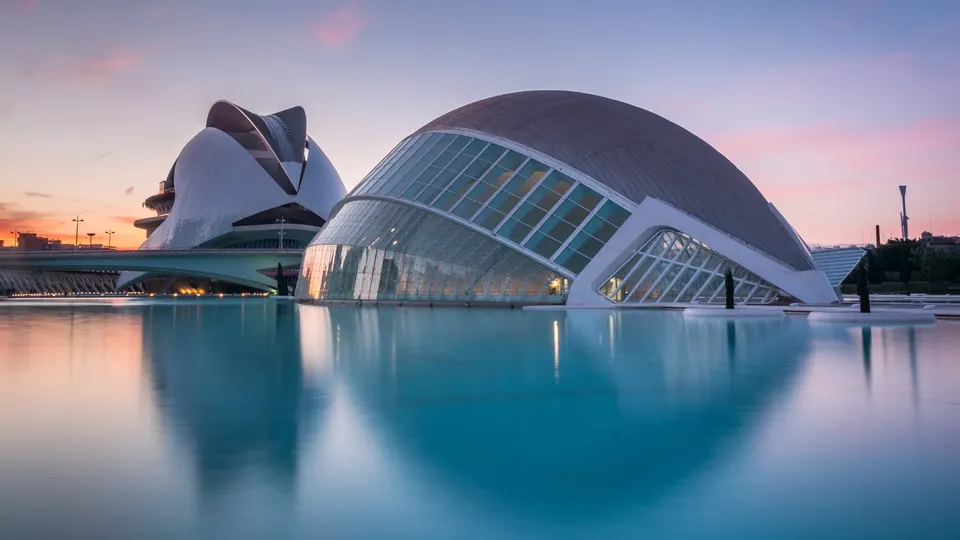
12 A complex that transformed the dry bed of a river into a sci-fi set, marked equally by architectural genius and millionaire controversies.
Beyond the impeccable postcards, the architecture of the City of Arts and Sciences holds a history of political ambition and cost overruns. Built on the old bed of the Turia River, this immense white and blue ensemble defies gravity and, sometimes, the financial logic of a city that wanted to rewrite its skyline.
Walking among these immense biomorphic structures requires a critical eye. Discovering what to see in the City of Arts and Sciences implies scratching under its brilliant trencadís surface to find exiled geniuses, ironic floods, and a sharp popular humor that demystifies the solemnity of the work.
 13
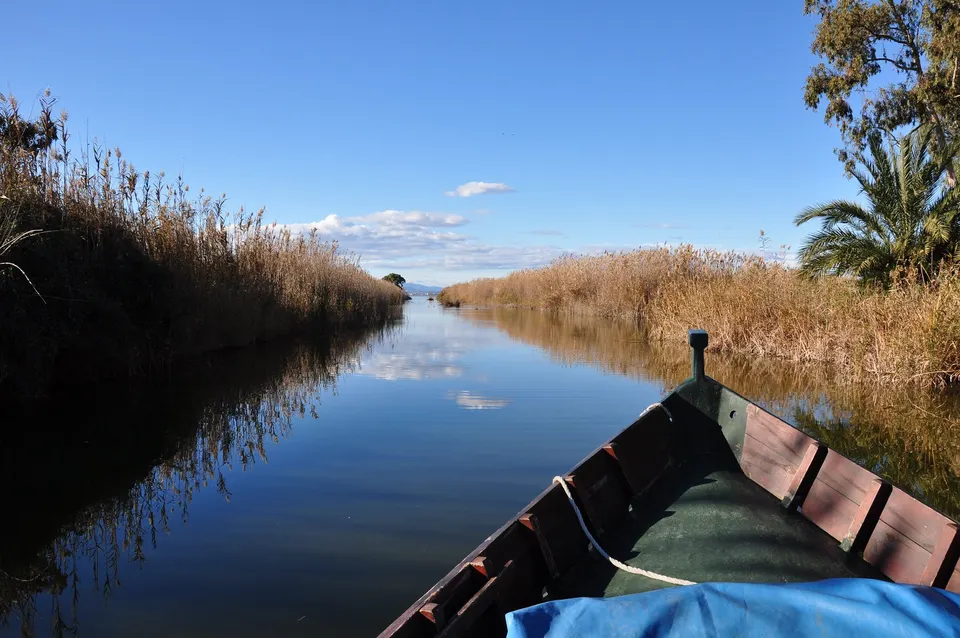
13 A wetland that humans have been shrinking and taming at will for centuries. Discover the hidden machinery behind the postcard.
Everyone sells this landscape as an unaltered paradise. Be suspicious. What you will see here is not wild nature, but a massive factory of rice, fish, and costumbrist literature that has barely survived economic ambition. We explain what to see in Albufera Natural Park, clearing the fog of the romantic filter.
From kings who expropriated the water to an ecological collapse that almost turned it into a dead swamp. You will walk along the edges of a lake that is, in reality, a territorial ground zero.
 14
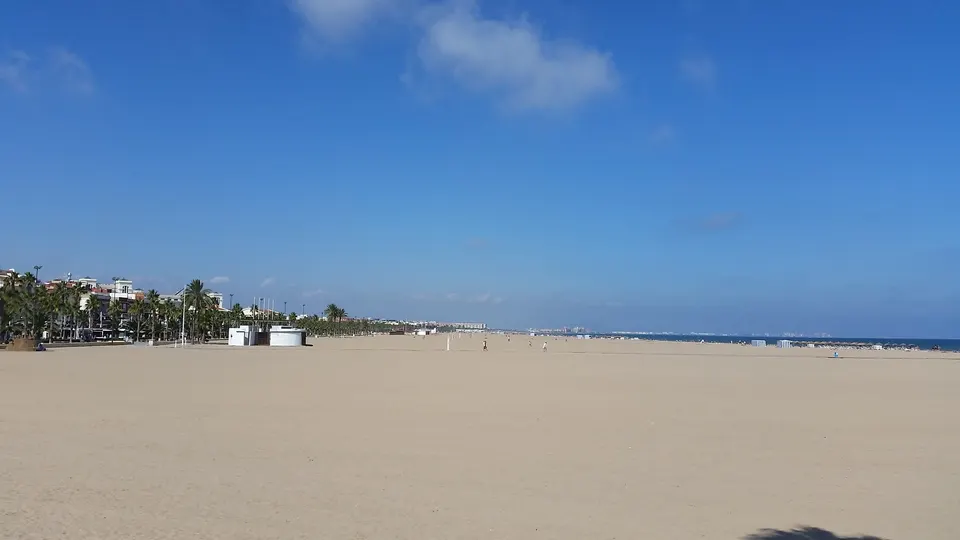
14 The beach that was born from a French botanist over an unhealthy marsh and ended up being Sorolla's canvas. Discover what to see on Malvarrosa Beach beyond the sand.
We are usually naive when we look at the sea and assume that the sand was always there. The secret history of this coastal strip destroys that idea: what you step on today was a swampy terrain that had to be dried out and tamed with geraniums. It was not always the city's great maritime lounge.
From the slave labor of the fishermen, to a catwalk for the bourgeoisie and an improvised landing strip. Understanding the architecture of Malvarrosa Beach and its evolution requires a skeptical look at its apparent calm.
 15
15 The EarGuide app is free. The Valencia audio guide includes 15 walking routes with over 12 hours of professional narration across 15 monuments and more than 50 points of interest. Download it free on the App Store and Google Play.
No. EarGuide works completely offline. Download the routes over WiFi before you head out and you can use the audio guide without internet or mobile data throughout your entire tour of Valencia.
The Valencia audio guide is available in Spanish and English, with professional narration recorded by historians and experts in Valencian culture.
The audio guide includes 15 independent routes with over 12 hours of narrated content in total. Each route takes between 1 and 2 hours on foot. You can do each route separately or combine several in a single day, at your own pace.
They are different experiences. EarGuide's audio guide lets you explore Valencia with no schedules or groups, pause and resume whenever you like, and replay any explanation as many times as you need. It's ideal for independent travellers, families and anyone who prefers a more flexible and in-depth tour than a conventional free tour.
The Valencia audio guide covers 15 major monuments: Silk Exchange, Cathedral, Central Market, Serranos Towers, Quart Towers, Almoina Archaeological Centre, Palace of the Marquis of Dos Aguas, Church of San Nicolás, North Station, Town Hall Square, Colón Market, Turia Gardens, City of Arts and Sciences, Albufera Natural Park and Malvarrosa Beach.
Yes. Purchases belong to your EarGuide account, not to one app or one phone. A city unlocked in the EarGuide app is also unlocked in that city's own app, and the other way round, on both iPhone and Android. Just sign in with the same account on the other device. The store's “restore purchases” button only covers the app the purchase was made in, so signing in is what carries it across.
Download EarGuide free and carry all Valencia audio guides in your pocket. Offline, at your own pace.
From the Plaza Mayor that inspired Madrid to the house where Cervantes wrote Don Quixote. Discover the former capital of the court of Philip III with audio guides.
Explore Valladolid
From the sacred mountain of Doi Suthep to the market built over the royal cemetery. Explore the old capital of the Lanna kingdom with audio guides.
Explore Chiang Mai
From the Art Nouveau town reborn out of the 1904 fire to a wooden lighthouse on the edge of the Atlantic. Explore Ålesund and its islands with audio guides.
Explore Ålesund
From the Templar castle where a pope refused to stop being one to the range this coast deliberately left wild. Explore the walled town of the Papa Luna with audio guides.
Explore PeñíscolaWe are working to bring EarGuide to more cities in Spain and Europe. Where do you want to discover culture?
Notify me