Baroque Fresco
Church of San Nicolás Audio Guide (Iglesia de San Nicolás)
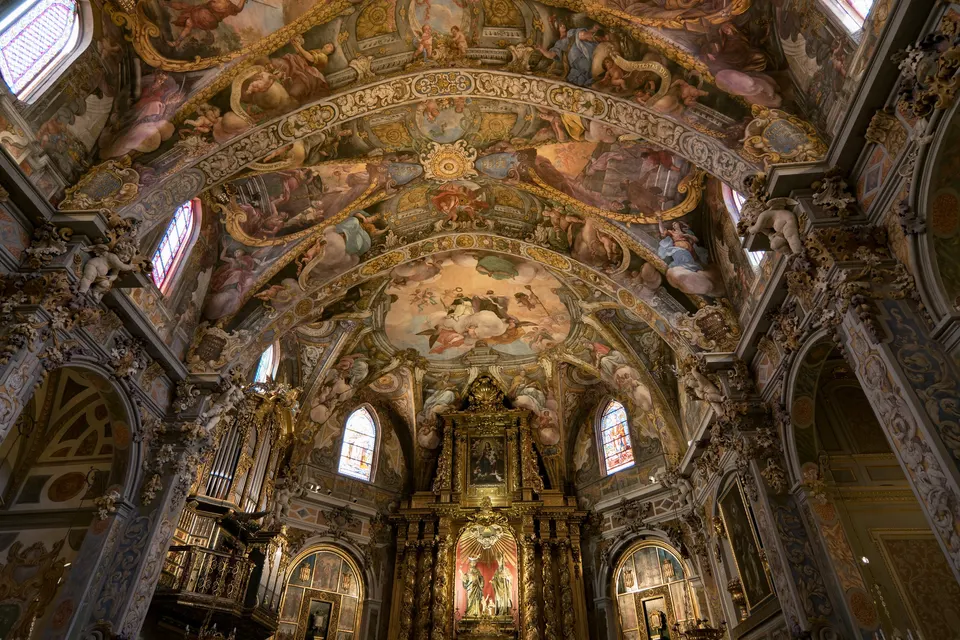
A sober Gothic facade that hides almost 2,000 square meters of Baroque frescoes. They will tell you it is the 'Valencian Sistine Chapel', but the rawness of its real history surpasses any advertising slogan.
- 40 min of audio
- Gothic and Baroque
Founded in 1238 on an old mosque after the conquest by Jaume I, this parish is a visual deception executed to perfection. For two centuries it kept its Gothic skeleton intact, methodical and calculating, until at the end of the 17th century it was decided to completely mask it under a skin of paint.
The clash between the cold discipline of the exterior stone and the interior chromatic chaos defies logic. It is not just a sacred space; it is a massive canvas where technique blurred the physical limits of the building, surviving fires, looting, and decades of abandonment before resurfacing.
Highlights
- 2,000 m² of Baroque frescoes
- Restoration with lasers and bacteria (2016)
- The footprint of the Borgia Pope
- Els Porxets and the scribes of the 17th century
If you are deciding what to see in the Church of San Nicolás, be wary of flat guides. The architecture of the Church of San Nicolás plays a game of misdirection and rarely shows its cards from the street. Built in 1238 on an old mosque, it seems to promise little more than classic medieval rigor. However, the secret history it guards on its ceilings justifies the visit. We are talking about papal ambitions, fire, systemic destruction, and a technological renaissance that bordered on science fiction. This is not an inert museum; it is a temple with scars. We explain why you need the audio guide to decipher what sight alone cannot comprehend.
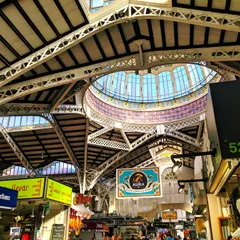
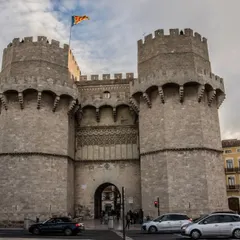
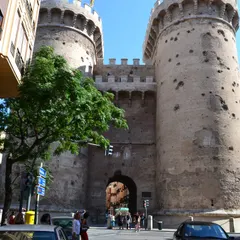
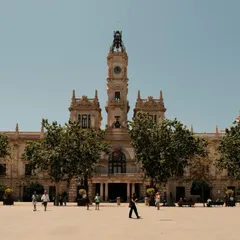
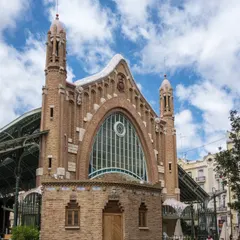
The Silk Exchange and the Central Market are very close by, and following Calle de Caballeros westwards leads to the Quart Towers.
The Gothic door that gives no warning
Exterior Gothic portal
Summary of this stop
Its main facade does not try to seduce you. The Gothic structure before you was topped off around 1455, maintaining the severity typical of the first 12 Christian parishes in the city. There are no unnecessary flourishes in the stone.
Anyone passing quickly will assume it is a minor building. How can such a raw exterior contain the visual avalanche that awaits inside? Before crossing the door, the audio guide will reveal which details betray the true scale of what you are about to step on.
Els Porxets: faith and paperwork
El Porxet
Summary of this stop
Going around the side towards Caballeros street, ‘Els Porxets’ appear. Around the year 1600, this portico did not smell of incense, but of ink and wax. It was the domain of the public scribes.
A mostly illiterate population came here to have wills and contracts drafted. The temple yielded its walls to resolve earthly bureaucracy. What kind of deals were signed in the shadow of the saints? We immerse you in the mercantile noise of that era.
A Baroque sky over Gothic bones
Main nave
Summary of this stop
Entering is falling into an optical trap. Between 1697–1700, almost 2,000 square meters of Baroque frescoes completely swallowed the Gothic sobriety. Antonio Palomino designed it, but it was his student, Dionís Vidal, who painted it during those three years.
Above, the lives of Saint Nicholas and Saint Peter Martyr unfold in parallel, to the left and right. The density of figures makes you dizzy. In the audio we set the exact pace so you know how to read this monumental overhead comic without getting lost in the visual noise.
The ceiling that survived the fire
Vaults with Baroque frescoes
Summary of this stop
It is hard to believe that this ceiling was about to be rubble. In 1936, the Civil War brought looting and a fire that devoured the main altarpiece, burying the frescoes under a thick, sticky layer of soot. They were considered lost for decades.
In 2016, the Polytechnic University of Valencia used lasers and bacterial strains to devour the dirt, unearthing the original color. And thankfully so, because the canvas includes explicit violence, such as the murder of Saint Peter Martyr writing Credo in Deum with his own blood. We will tell you exactly where on the ceiling to look for this scene.
The Borgias, Mondays, and a living church
Borgia Chapel
Summary of this stop
Power also passed through here. Alfonso de Borgia was the rector of this parish from 1419, long before becoming Pope Callixtus III in 1455. His surname remains anchored to the shields of his side chapel.
But San Nicolás is not just archaeology and lineages. Every week it hosts the ‘Walks of Saint Nicholas’. Hundreds of people come to make three wishes for three consecutive Mondays, keeping alive a relentless machinery of popular faith. Download the app and listen on site to why the city continues to trust in these stone walls.