Historical Garden
Campo Grande Audio Guide
The great romantic and historical green lung of Valladolid and a unique urban zoo populated by peacocks. A tour of what to see at the Campo Grande of Valladolid and its history as a fairground and military wasteland.
- 45 min of audio
- Historical Garden
The Campo Grande of Valladolid represents the great green and sentimental parlor of the city. Listed today as a Historical Garden, this space of winding paths and cool shade was not born with its current design: for centuries it was a rough wasteland located outside the walls of the medieval town, useful precisely for its size for holding fairs, markets, and exercises of military discipline and parades, already documented under this name by the council in the Late Middle Ages.
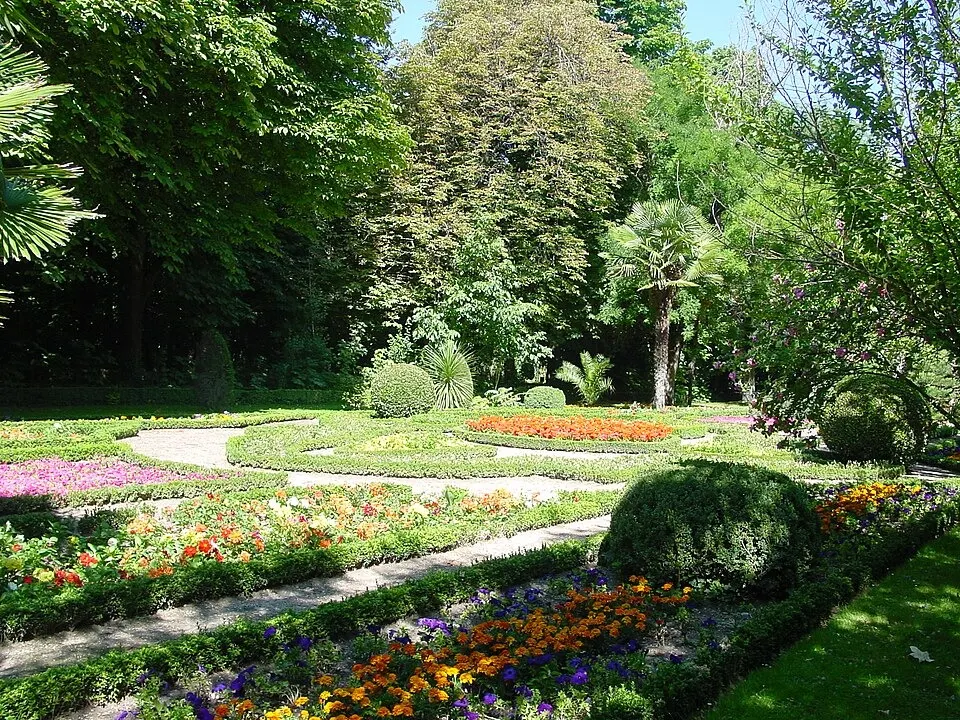
In 1787, under the enlightened impulse in the times of Charles III, its layout as a regular tree-lined walk was approved, a physiognomy that would evolve in the 19th century towards the current romantic aesthetic, with curved paths, century-old trees, waterfalls, and a pond. Bordered by the elegant Acera de Recoletos and a few meters from the North railway station of 1860, the park acts as the first botanical welcome for travelers and as a daily refuge where the bourgeois walk, literature, and the presence of its famous free-roaming peacocks coexist.
Highlights
- Romantic paths — Curved ways and mature trees that break the straight urban layout
- Peacocks — Exotic birds in semi-freedom turned into the sentimental emblem of the park
- Pond and waterfall — The water corner designed for contemplation and bourgeois leisure
- Monument to Zorrilla — The great sculptural group from 1900 that pays tribute to the local poet
- Fountain of Fame — Monumental 19th-century sculpture moved to the interior of the park
Few parks in Spain manage to dampen the urban beat so drastically in just a few steps as the Campo Grande. Crossing its main gate immediately transfers the walker from the asphalt and concrete sidewalk to a forest enclosure with its own temperature, a gentle humidity that rises from the walks, and a constant concert of birds that drowns out the noise of engines. This great park in Valladolid is, above all, a sentimental and botanical refuge that has accompanied the evolution of the city for centuries.
Unlike uniform modern parks, the Campo Grande reads like a picturesque 19th-century style garden, planned to surprise and pleasantly disorient those who traverse it. To understand what to see at the Campo Grande of Valladolid and decipher the architecture of the Campo Grande of Valladolid, it is necessary to walk its paths without haste, paying attention to the monumental remains it has absorbed and the fauna that inhabits them. The EarGuide audio guide accompanies stop-by-stop along its paths under the canopy of century-old trees to reveal the history hidden beneath the green mantle.
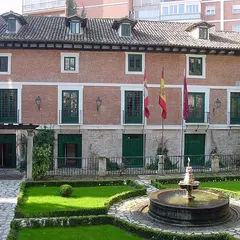
The Cervantes House Museum is very close to the park, and Calle de Santiago leads to the Plaza Mayor.
The gate where Valladolid changes
Main gate and fence
Summary of this stop
The tour begins at the edge where the Acera de Recoletos is interrupted and a change in temperature begins to be noticed. Stopping before the large iron gate of the main entrance, the gaze is oriented towards the interior grove, although it is advisable to first observe the exterior surroundings. This elegant Acera de Recoletos was urbanized in the middle of the 19th century as the great representative facade of the bourgeoisie of Valladolid, acting as a link between the enlargement and the North station inaugurated by the Caminos de Hierro in 1860. The Campo Grande became the first welcoming landscape for those descending from the train.
Crossing the main gate functions as a real threshold: in a few meters, the hard pavement and the carriages of the era gave way to gravel and calm. The influence of the arrival of the railway in the consolidation of this tree-lined walk is part of the stories of the enlargement explained in the guide, which details how the traveler’s path to the center was designed expressly through this botanical anteroom, converting an old boundary of the city into its most noble calling card.
Under the shade, an ancient wasteland
Interior curved paths
Summary of this stop
Entering through the curved paths and letting the tree canopies cover the perspective of the city, a dense and cool shade is perceived. This tranquility is, however, the result of a historical transformation. For centuries, this Campo Grande was a flat and dusty wasteland outside the walls, used by the Council of Valladolid since the Late Middle Ages for livestock fairs, festivities, and cavalry and military discipline exercises.
Due to its marginal condition outside the walls, the place was also the scene of exemplary punishments and public executions in the Modern Age. The stories of local history recall the esplanade as a theater of punishment and military laws, a severe memory that contrasts vividly with the current plant placidity. The transition from a wasteland of executions and military maneuvers to a tree-lined civil walk began in 1787, when the city council approved a reform inspired by the ideas of embellishment of the Enlightenment promoted by Charles III, ordering the regular walks whose details are revealed by the audio on-site.
The pond and the invention of the romantic park
Pond
Summary of this stop
Upon reaching the edge of the pond, the geography of the park becomes decidedly picturesque. The water, the paths that curve their layout to hug the shore, and the artificial grotto show a very precise ordering of the landscape that was consolidated throughout the 19th century. The straight and enlightened walks of the previous century were abandoned to conceive a romantic garden, made for slow contemplation, visual mystery, and the simulation of an indomitable nature on a Valladolid scale.
The vegetation in this environment becomes denser, combining mature botanical specimens that create the illusion of a semi-closed natural forest in the heart of the city. The pond was not designed only as a static decorative element, but as a stage for bourgeois leisure, with boat rides and small viewpoints where neighbors came to shelter from the sunlight. This corner proves that the park did not grow by chance: it was composed with care to temper the city and suggest romantic emotions detailed when listening to the route on the ground.
The peacocks and the lived park
Peacocks
Summary of this stop
Continuing the journey along the paths, it is common to find peacocks walking quietly on the gravel or resting in the treetops. The park incorporated aviaries, duck ponds, and birds in semi-freedom at the beginning of the 20th century, but the peacocks adapted in such a way that they ended up becoming the most popular sign of identity of the enclosure. Each spring, the display of the peacocks’ tails constitutes an informal popular ritual that attracts families and walkers.
This daily coexistence with fauna endows the Campo Grande with a character of a sentimental zoo and lived park, moving it away from the coldness of a strictly historical garden and closed design. The park has known how to combine in the 20th century its function of distinguished walk with a vocation of popular leisure with boats and aviaries, so that the inhabitants of Valladolid conserve their own sentimental memories linked to this space of leaves and chirps, whose final plots await in the audio guide.
Zorrilla and the park as public memory
Monument to Zorrilla
Summary of this stop
The final stretch of the route advances towards the monument dedicated to José Zorrilla, inaugurated in 1900. This imposing sculptural work by the artist Aurelio Rodríguez Vicente pays tribute to the most famous local poet, creator of Don Juan Tenorio, consolidating the commemorative and literary weight of the Campo Grande in the civic imagination. But Zorrilla is not the only statue housed in the park: a few steps away stands the Fountain of Fame, a monumental 19th-century sculpture moved to the enclosure from another sector of the city.
The Campo Grande has functioned as the great monumental showcase of Valladolid, absorbing monuments, fountains, and plaques that testify to the pride of the city. In 1932, the park served as the framework for a civic tribute to Miguel de Unamuno with the planting of a representative tree in an act of great intellectual and epochal weight. Contemplating the statue of Zorrilla surrounded by protected vegetation, one understands that the park not only offers shade and freshness to Valladolid: it guards the sentimental, literary, and historical layers with which the city narrates itself.