Urban Model
Plaza Mayor of Valladolid Audio Guide
The regular arcaded square that turned the great fire of 1561 into an urban model imitated across half of Spain, beginning with Madrid. An overview of what to see at the Plaza Mayor of Valladolid.
- 25 min of audio
- Urban History
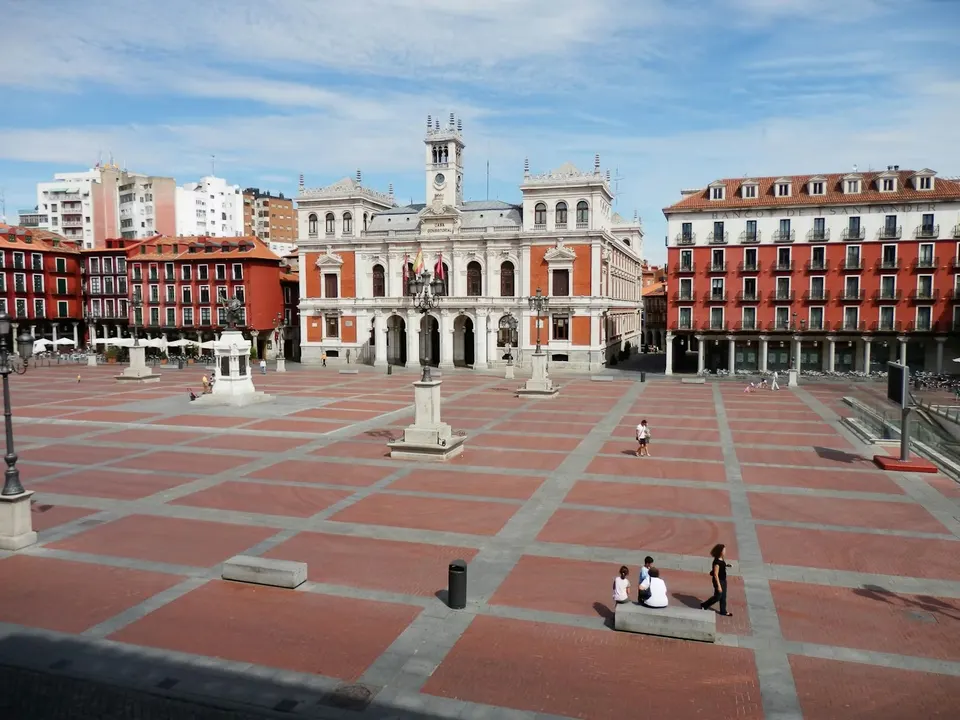
The Plaza Mayor of Valladolid constitutes the undisputed heart of the city, characterized by its wide, open rectangle, continuous arcades, and the City Hall presiding over the main front. This regular and geometric design was not born from leisurely planning, but from a catastrophe: the devastating fire of September 21, 1561, which destroyed a large part of the area around the town's main market, documented since the 13th century.
Philip II commissioned the reconstruction to Francisco de Salamanca, who ordered the space by creating a rectangular arcaded square with homogeneous facade heights. Considered the first regular Plaza Mayor in Spain, its layout served as a direct reference for the subsequent Plaza Mayor of Madrid in 1617. Visiting this point allows for an understanding of the close relationship between medieval trade, the ceremonial of the court of Valladolid of 1601-1606, and the theater of large civic demonstrations and punishments.
Highlights
- Fire of 1561 — The great urban disaster that prompted the regular design of the square
- Francisco de Salamanca — The royal architect who designed the uniform arcades
- Model for Madrid — The antecedent that served as a reference for the Madrid square in 1617
- Statue of Count Ansúrez — The central landmark from 1903 dedicated to the medieval founder of the resettlement
- City Hall — The historicist town hall inaugurated in 1908 to replace the 16th-century work
Few Castilian squares concentrate so much history under such a disciplined appearance. The Plaza Mayor of Valladolid presents itself to the visitor as a wide rectangle free of obstacles, surrounded by arcaded fronts that unify the urban environment. Far from the capricious and irregular growth typical of medieval towns, this space responds to a conscientious geometric layout. Since the 13th century, the site occupied the main market of the town, the core where trade and council proclamations were concentrated.
After the great fire of 1561, the royal intervention of Philip II and the design of Francisco de Salamanca redefined the center of Valladolid, creating a model of a regular arcaded square that would set the course for Spanish urban planning. To understand what to see at the Plaza Mayor of Valladolid and delve into the architecture of the Plaza Mayor of Valladolid, it is necessary to break down its fronts and analyze its monumental evolution. The EarGuide audio guide offers a detailed route stop-by-stop on the ground to reveal the secret history of this emblematic civic hall.
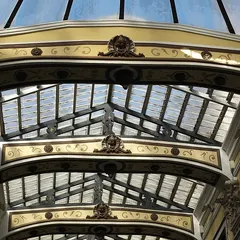
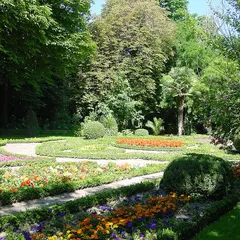
A few streets away are the Gutiérrez Passage, a 19th-century shopping arcade, and Valladolid Cathedral; to the south, the Campo Grande is the city’s great park.
The rectangle that does not look medieval
Plaza Mayor of Valladolid
Summary of this stop
In the center of the square, next to the central statue, a large open esplanade opens up, contrasting immediately with the narrow network of surrounding streets. This sector housed the main market of Valladolid since the Late Middle Ages, acting as the great point of daily exchange and council proclamations. The space was the true Castilian social and commercial lung.
The clarity of this rectangle breaks with the disorganized image of the medieval era. The regular physiognomy visible today was born from the fire of 1561, a tragedy that devastated the surroundings but offered the opportunity to design a uniform arcaded square from its foundations. The planning of the new layout highlighted the political and institutional decisions aimed at ordering the heart of Valladolid, a radical reconstruction whose details are explained when listening to the audio guide at this first stop.
Under the arcades
Arcades of the Plaza Mayor
Summary of this stop
Passing under the sequence of continuous arches introduces the pedestrian into an acoustic and thermal space differentiated from the central esplanade. After the disaster of 1561, the ordering of Francisco de Salamanca provided uniform porticoes and perfectly aligned facade fronts. In this way, the mercantile activity of the ground floor premises and the daily circulation were integrated under a single protective architectural solution.
The regularity of the building heights responds to a desire for unprecedented visual unification. This urban pattern of continuous arcades served as a direct reference for the construction of the Plaza Mayor of Madrid, initiated in 1617 under the reign of Philip III with plans by Juan Gómez de Mora. Careful observation of the arcades allows for an understanding of the impact of this pioneering urban trial in the kingdom, a constructive influence that is revealed in greater detail during the audio route.
The square as a stage of power
Statue of Count Ansúrez
Summary of this stop
From the center of the square, the homogeneity of the balconies and facade fronts creates the effect of a large urban grandstand. Throughout the centuries, the central void served to gather the entire population around celebrations, public shows, and bullfights organized in the administrative center of Valladolid. During the years of the court capital (1601-1606), the square was also consolidated as a sounding board for the rituals of royal power and the rumors of the court of Philip III.
That same capacity to gather crowds turned the space into the theater of fear of the Holy Office, hosting the celebration of solemn autos-da-fé and public executions that attracted thousands of onlookers. In 1903, the statue dedicated to Count Pedro Ansúrez, the work of Aurelio Rodríguez Vicente, was installed in the center, erected as a point of orientation and memory of the medieval founder of the town’s resettlement. The historical significance of these public ceremonies and the symbolism of the central statue are explained in depth through the on-site narration.
The town hall that came later
City Hall
Summary of this stop
The northern front of the square is dominated by the City Hall, a monumental building of historicist appearance that serves as the main facade and whose construction is much later than the 16th-century layout. The old Renaissance town hall that occupied this site was demolished in 1879, proceeding to erect the current headquarters of the city council between 1892 and 1908 according to plans by the architect Enrique María Repullés y Vargas.
The construction of this historicist town hall illustrates the constant adaptation of the square to the needs and tastes of each era, always maintaining its civic and representative use in Valladolid. The space continues to host demonstrations, municipal festivities, and daily transit, demonstrating a persistence of use that defines the strength of the complex. The details of this 19th-century municipal reconstruction and the role of the town hall in the social pulse of Valladolid are completed when viewing the building with the audio guide.