UNESCO World Heritage
Moon Pond Audio Guide (Yuezhao)
A half-moon of water at the exact centre of Hongcun, dug over a spring that, tradition says, never stopped flowing. In the early fifteenth century the whole village was reorganised around it, and it still looks at its own reflection there.
- 25 min of audio
- Ming Hydraulic Engineering
The Moon Pond was born of an engineering decision: in the Yongle period of the Ming dynasty (1403–1424), the heads of the Wang clan had a geomancy master survey the land, redrew the layout of the buildings and brought water inside the village. Wang Siqi hired the geomancer He Keda three times to plan the ox-shaped water system with the elders, and the pond became its centre, set over a natural spring. Together with Xidi, Hongcun has been a World Heritage Site since 2000.
Its shape was neither accidental nor achieved in one go: the clan's descendants kept digging for generations until it became a half-moon rather than a circle. A family story, with no document to back it, credits that choice to a woman, Hu Zhongniang, and puts a proverb in her mouth: the open flower falls, the full moon wanes. Local sources, by contrast, share the credit between Wang Siqi and his descendant Wang Shengping.
Highlights
- Half moon, not full moon — One straight edge and one curved, over a spring that flows winter and summer
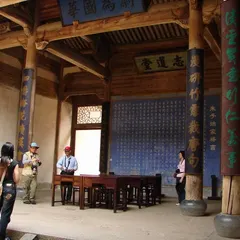
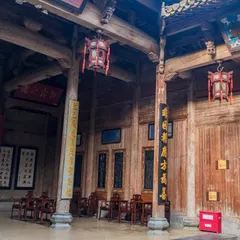
- Lexu Hall — The ancestral hall of the Wang clan, the only Ming building left in the village
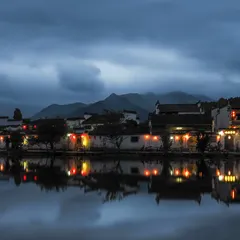
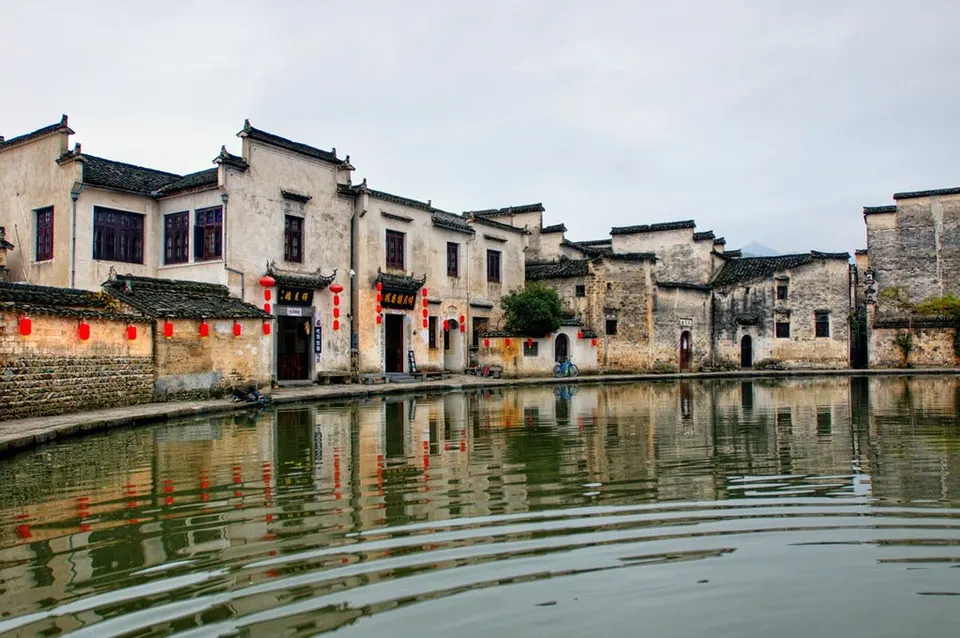
- Ring of mirrored houses — White walls and black roofs turned upside down in the still water
- Water against fire — A reserve for firefighting and drinking, a junction in the channel that runs on to South Lake
- Red lanterns — The shore lit up around 7 pm and doubled on the surface
At the centre of Hongcun lies a sheet of still water in which the whole village is reflected. The Moon Pond — Yuezhao in pinyin, 月沼 in Chinese — is no ornament: it is the outcome of a complete reorganisation of the village in the early fifteenth century, when the Wang clan decided that water had to live inside the home rather than on the outskirts. Hongcun dates back to 1131, the first year of the Shaoxing era, and the pond arrived almost three centuries later, during the Yongle period of the Ming dynasty (1403–1424).
The history of the Moon Pond belongs to a larger system: around 1405 a channel was opened to bring fresh water from the West Stream, and some 200 years later the circuit was closed with South Lake. Since 2000, Xidi and Hongcun have been inscribed together on the World Heritage List. Knowing what to see at the Moon Pond means learning to read that system from the shore: the shape of the water, the clan hall, the ring of houses and the stone channels. The EarGuide audio guide covers it in three stops, from one tip of the half moon to the other.
At the centre of the north shore stands Lexu Hall, the ancestral hall of the Wang clan, and water enters the pond through the Hongcun water channels, which then carry on towards South Lake.
A half moon that took generations
Moon Pond (月沼)
Summary of this stop
From the western end, something photographs miss becomes clear: the pond is not a circle. One straight edge and one curved edge trace a half moon, and beneath it lies a natural spring that, according to the traditional description, flowed without pause in winter and summer alike. Wang Siqi brought the water to this point, hiring the geomancer He Keda of Haiyang (present-day Xiuning) three times to draw up the plan of the water system with the clan elders.
The work was not completed in a single generation. Descendants such as Wang Shengping spent, according to the sources, “more than ten thousand” — the currency is not recorded — on extending the channel and digging the pond to its final form, finishing what their ancestors had left half done. Hence a popular nickname, “the half moon rises”, a play on the moon in the sky climbing its way down into the water.
Who chose the half moon over the circle is still a matter of debate: against the Wang version runs that of Hu Zhongniang, a woman from Xidi whom a family story credits with directing the work. The narration on the shore saves for this moment the argument with which, according to legend, a moon only half full was defended.
A village that turned to face the water
Moon Pond (月沼)
Summary of this stop
On the south shore comes the central revelation of the visit. A village founded almost three centuries earlier reorganised itself in the early fifteenth century to bring the water inside: the heads of the Wang clan had a geomancy master survey the land and redrew the layout of the buildings. The result can be read at a glance, because houses with white walls and black roofs close in the pond on every side and are reflected upside down in the still water.
Opposite, at the centre of the north shore, Lexu Hall faces the water head-on. It is the ancestral hall of the Wang clan and the only Ming building preserved in the village; together with the pond it forms “breeze and lotuses on the Moon Pond”, one of the eight classic views of Hongcun. That dialogue between the clan hall and the water explains much of the architecture of the Moon Pond.
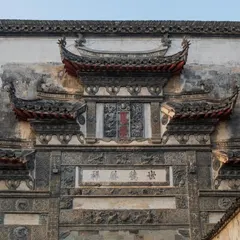
The ring of houses is also said to have had its own social order. The large houses with high walls and wide gateways along the shore were reportedly reserved for the clan members of the most senior generation and greatest prestige: living with a view of the water would not have been a matter of luck.
Water against fire, a shore full of life
Moon Pond (月沼)
Summary of this stop
From the eastern end, beauty gives way to utility. The pond’s original function was to store water from the channel for putting out fires and for drinking; it also tempers the air and serves household needs. Here the stone channels can be seen bringing the water in and carrying it out towards South Lake: the pond is a junction in the system, not an isolated puddle. In the ox metaphor applied to Hongcun, the channel would be the intestines, though which organ the pond corresponds to is something the sources do not agree on.
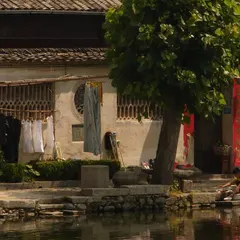
The flagstone shore is still a space of everyday life: neighbours chatting, clothes being washed, children playing and bamboo shoots laid out to dry by the water. It also has a cinema memory, because Crouching Tiger, Hidden Dragon was shot in Hongcun; one version places at this pond the shot in which Yu Jiaolong skims the water with the tips of her toes, while another links it to the bridge on South Lake. And there remains a contrast the narration points out without forcing it: according to one account of the founding, the first families arrived in 1131 fleeing the danger of fire in their previous village, although no source connects that flight with the pond.
Around 7 pm the red lanterns light up around the water and are doubled on its surface. At Mid-Autumn, Hongcun’s lantern festival, listed as intangible heritage of Yi County, sends a parade of handmade lanterns along this very shore.