
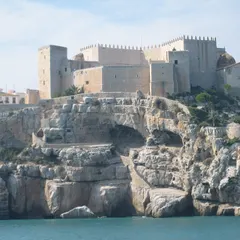
Templar Fortress
Peñíscola Castle
The only Templar fortress that ever became a papal seat: parade ground, basilica, conclave hall, terraces over the Mediterranean and the legendary staircase of 147 steps.
Peñíscola, Spain
Walk the walled town of the Papa Luna with 30 audio stops narrated by experts. From the Templar castle to the Sierra de Irta, every corner of the crag keeps a story worth hearing.


Templar Fortress
The only Templar fortress that ever became a papal seat: parade ground, basilica, conclave hall, terraces over the Mediterranean and the legendary staircase of 147 steps.
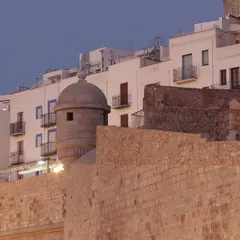
Renaissance Fortification
The bastioned ring of the crag: the tunnel of the Portal Fosc signed by Philip II, the cobbled ramp, the Baluarte del Príncipe above the cliff and the gate the Papa Luna opened to the water.
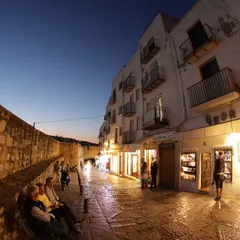
Historic Ensemble
The white maze of the crag: the bent gate of the Portal Fosc, the Calle Mayor turned into Meereen, the parish of two popes, the house of shells and the crack through which the sea breathes.
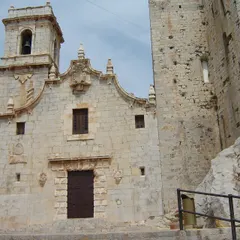
Valencian Baroque
The Baroque chapel fused to the castle of the Papa Luna: a doorway with carved cannons, the arms of Philip V, the shrine chamber of the patroness and the esplanade where Peñíscola dances every September.
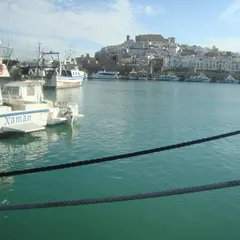
Working Harbour
The harbour Peñíscola built in 1922 after the storm of 1911: the sailors' monument, the trawling fleet, the descending auction at the fish market and the crag seen from the water.
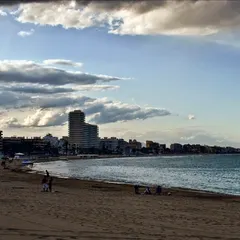
Tombolo and Cinema
The shore that explains Peñíscola: the tombolo that tied an islet to the mainland, the hotel front of the sixties and the sand where the battle of Valencia from 'El Cid' was filmed.
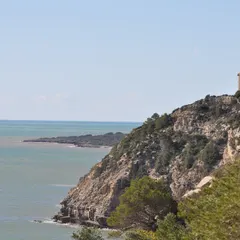
Natural Park
The last undeveloped coastline of the Valencian shore: dirt tracks through dwarf fan palm, the anti-pirate watchtower of Torre Badum, a flower that exists nowhere else and the sandy coves of the Pebret.
Peñíscola Audio Guide
Peñíscola concentrates eight centuries of history on a crag of barely five hectares: Papa Luna Castle, raised by the Templars between 1294 and 1307 and turned in 1411 into the third papal seat in history alongside Rome and Avignon; the Renaissance walls Philip II commissioned from Vespasiano Gonzaga and the engineer Antonelli between 1576 and 1578; the old town, a Historic Ensemble since 1972, with the crack of the Bufador through which the sea breathes; the Sanctuary of the Virgin of the Ermitana, of 1708-1714, with cannons carved into its doorway; the fishing harbour begun in 1922 after the storm that killed 34 of the town's sailors; the Playa Norte, five kilometres of sand where the battle of Valencia from 'El Cid' was filmed; and the Sierra de Irta Natural Park, with Torre Badum of 1554 above the cliff.
With the EarGuide Peñíscola audio guide, every place reveals its history through professional narration prepared by guides who know the town inside out. Unlike a free walking tour or a conventional guided visit, you set the pace, the order and the stops. No groups, no timetables, no internet connection.
No internet needed
Download the routes before you head out and explore without using data.
Smart geolocation
The narration starts by itself when you reach the point of interest.
Frequently asked questions
The EarGuide app is free to download, and the first route, Papa Luna Castle, is free to listen to. The other six routes — the walls and the Portal Fosc, the old town, the sanctuary of the Ermitana, the harbour, the Playa Norte and the Sierra de Irta — unlock together with a one-off purchase of €9.99, with no subscription. The unlock is tied to your EarGuide account, so it works in every EarGuide app, on iPhone and on Android.
No. EarGuide works entirely offline. Download the routes over WiFi before you set out and you can use the audio guide with no connection and no data use throughout your walk around Peñíscola. The map shows your GPS position in real time even without coverage.
The narration of the Peñíscola audio guide is available in Spanish and English, prepared by guides and experts in the history of the Maestrazgo and the Western Schism.
The audio guide brings together 7 independent routes with some 58 minutes of narration in Spanish — around an hour — spread over 30 audio stops. Walking them takes considerably longer: each route is best enjoyed over 30 to 90 minutes depending on how much you walk and how long you look. You can do them separately or string several together in a single day.
They are different experiences. The EarGuide audio guide lets you walk Peñíscola without timetables or groups, pause and resume whenever you like, and replay any explanation as often as you need. It suits independent travellers, families and anyone who prefers a more flexible and deeper tour than a conventional free walking tour.
The Peñíscola audio guide covers 7 main sites: Papa Luna Castle, the Renaissance walls and the Portal Fosc, the old town, the Sanctuary of the Virgin of the Ermitana, the fishing harbour, the Playa Norte and the Sierra de Irta with Torre Badum.
Yes for the sites visited from the inside. Papa Luna Castle is managed by the Diputación de Castellón and has its own admission, as do some of the museum spaces within the walled enclosure. The streets of the old town, the walls from the outside, the harbour, the Playa Norte and the Sierra de Irta Natural Park are all freely accessible.
Yes. Purchases belong to your EarGuide account, not to one app or one phone. A city unlocked in the EarGuide app is also unlocked in that city's own app, and the other way round, on both iPhone and Android. Just sign in with the same account on the other device. The store's “restore purchases” button only covers the app the purchase was made in, so signing in is what carries it across.
The EarGuide app is free and puts every Peñíscola audio guide in your pocket. Offline, at your own pace.
More destinations
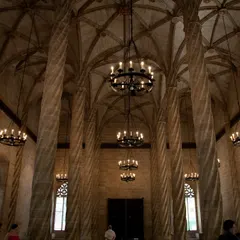
From the City of Arts and Sciences to the Carmen neighbourhood. Discover 2,000 years of Valencian history with audio guides.
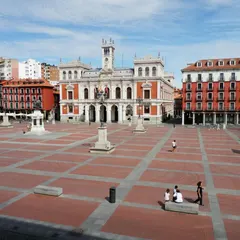
From the Plaza Mayor that inspired Madrid to the house where Cervantes wrote Don Quixote. Discover the former capital of the court of Philip III with audio guides.

From the sacred mountain of Doi Suthep to the market built over the royal cemetery. Explore the old capital of the Lanna kingdom with audio guides.

From the Art Nouveau town reborn out of the 1904 fire to a wooden lighthouse on the edge of the Atlantic. Explore Ålesund and its islands with audio guides.

From a half-moon pond over a spring to the gilded mansion of a salt merchant. Explore the Wang clan's village, shaped by water, with audio guides.

From the stilt houses of Hongyadong to the train that crosses a building at Liziba. Explore the mountain city of the Yangtze and the Jialing with audio guides.

From the stone archway the clan nearly turned into lime to the corner a prefect gave up to the street. Explore the Hu clan's village, in Huizhou, with audio guides.
We are working to bring EarGuide to more cities in Spain and Europe. Where do you want to discover culture?