Historic Qing-era district
Kuanzhai Alley Audio Guide (Kuanzhai Xiangzi)
The Wide and Narrow Alleys are all that is left standing of the Manchu city the imperial garrison built in Chengdu in 1718. They survived by being humble and in 2008 were reborn, house by house, as a showcase of the city's slow life.
- 60 min of audio
- Qing-era Manchu hutongs
In 1718, after the campaign against the Dzungars in Tibet, more than a thousand soldiers stayed in Chengdu for good, and the governor-general of Sichuan, Nian Gengyao, directed the building of a city within the city: the Manchu city, or Mancheng, walled, closed to the Han and with 33 soldiers' hutongs laid out like a spine along Changshun Street. Kuanzhai Xiangzi, the Wide and Narrow Alleys, together with Well Alley, are the only Qing-era streets left in Chengdu: northern soldiers' hutongs with Sichuan courtyard houses, wooden gates and grey brick, small tiles and light wells.
In March 2004, when the district's renovation was already being discussed, the Taiwanese writer Long Yingtai took tea in Wide Alley with Song Zhongwen, an old neighbour who wrote poetry, and afterwards wrote to him wishing that the two alleys would keep their original flavour, that they would not be demolished and that he would go on reciting verses and drinking tea. In a 2006 CCTV documentary, Song summed up that what had to be preserved was “a poetic life”. Two years later the alleys reopened dismantled and rebuilt house by house, and of 944 households only 110 had stayed.
Highlights
- Manchu city of 1718 — The only Qing-era streets left in Chengdu, the legs of the Changshun Street “centipede”
- Wide Alley — More than 20 well-preserved courtyards behind wooden gates and grey brick
- Horse-tethering stone — About 1.2 m off the ground at No. 32 Narrow Alley, a trace of the Manchu and Mongol riders
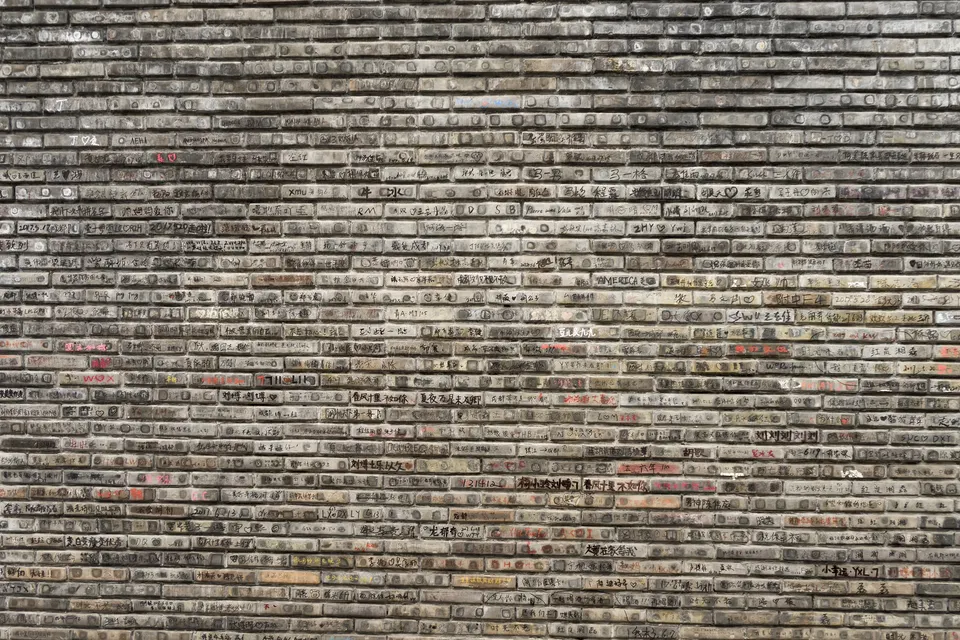
- “Brick” wall — 400 m of bricks from different eras in Well Alley
- 45 rebuilt courtyards — Dismantled and raised again on the same plots before the 2008 reopening
Chengdu once had a city within the city. It was built in 1718 by the bannermen who stayed after the Kangxi-era campaign against the Dzungars in Tibet: the Manchu city, less than 1 km² of walled ground with five gates, eight official streets and 33 hutongs, closed to the Han and home to more than 20,000 bannermen and relatives. Of that garrison not a stretch of wall or a single gate remains standing. What remains is Kuanzhai Xiangzi (宽窄巷子), the Wide and Narrow Alleys, and their neighbour Well Alley: three parallel streets that are the only Qing-era ones Chengdu preserves.
The history of Kuanzhai Alley is that of a military caste fallen on hard times and of a district saved by its modesty: they were side streets lived in mostly by ordinary people, and thanks to that humble condition they suffered no major demolitions and kept their old Chengdu street look until after the Reform and Opening begun in 1978. Its architecture, of wooden gates and grey brick, single-storey courtyards with a light well and the odd Western-style doorway, is also that of a contested renovation: the project was approved in 2003 and the alleys reopened on 14 June 2008, with every house dismantled and rebuilt. What to see in Kuanzhai Alley is arranged in four stops, from Changshun Street to the wall of Well Alley, and the question of what is old and what is rebuilt memory makes real sense when walked with the audio guide.
The same Manchu city opened People’s Park in 1911, less than a kilometre from the alleys. To the west, a stroll of a little over a kilometre away, waits the Taoist temple of Qingyang Palace.
Changshun, the back of a centipede without walls
Kuanzhai Xiangzi (宽窄巷子)
Summary of this stop
The natural entrance to the district is on Changshun Street, the north-south avenue that runs along the eastern edge of the alleys. Today it is just another street in central Chengdu, but it was the axis of the Manchu city, and the chronicler Fu Chongju, in his “Chengdu Tonglan” (Panorama of Chengdu), gave it an image that still helps you get your bearings: the city was a centipede. The general’s residence was the head, the great street to the north gate the body and the hutongs lined up left and right the legs. The Wide, Narrow and Well Alleys are three of those legs, on the right wing, southwest of Changshun.
The city was built on the site of the old Shaocheng, the “little city”, under the direction of Nian Gengyao, governor-general of Sichuan, in the 57th year of the Kangxi reign. Its walls, around one zhang and four chi high in traditional Chinese measures, were torn down in stretches at the beginning of the Republic of China, in the 1910s, and the hutongs came to be called streets or alleys. Only the outline of the centipede is left, and at the mouth of Wide Alley the narration teaches you to read it on the ground.
Gates of a garrison fallen on hard times
Kuan Xiangzi (宽巷子)
Summary of this stop
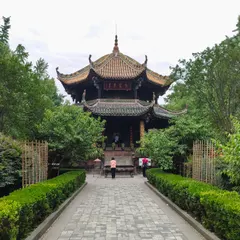
Wide Alley, Kuan Xiangzi (宽巷子), is a succession of wooden gates and grey brick behind which open Qing- and early Republic-style courtyard houses: more than 20 well-preserved courtyards, the largest concentration in the district. Under the Qing it was not called that. It was Xingren Hutong, just as Narrow Alley was Taiping Hutong; the present names replaced the northern-style ones after the 1911 Revolution. A folk etymology associates the wide with high officials and the narrow with common folk, but the records only note the change of name, and the chronicle places ordinary people in both alleys.
Those ordinary people are the key to the street. At the end of Wide Alley, in a low house, lived the Wu family, third-generation bannermen of the old Manchu city: Wu Lisheng descended from the Manchu Wuzhebule clan, of the Bordered Red Banner, and his grandfather had been an official. After 1911 the family sank into poverty, and when the father died in 1963 it was the neighbours of the alley who collected the money to bury him.
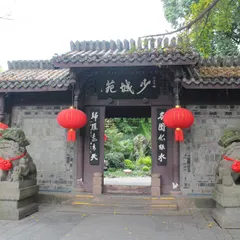
At No. 11, Kai Lu (恺庐) preserves an arched gateway of Western flavour with a plaque in seal-script characters. The Sichuan press presents it as the former residence of Chen Xihe, director of the West Sichuan radio and a subordinate of Liu Wenhui, and links it to the telegram of allegiance of 1949, while another chronicle records those stories as legends of doubtful accuracy. In front of these gates, the audio guide explains why it was precisely modesty that saved the street.
A riders’ stone and a poets’ bar
Zhai Xiangzi (窄巷子)
Summary of this stop
Narrow Alley, Zhai Xiangzi (窄巷子), is the most mixed of the three: Qing houses coexist with Western-style buildings. The clearest example is at No. 1, with a gate of four pillars and three gables adorned with curling-leaf mouldings and an entrance wall that combines red, black and grey bricks of different periods. At No. 27, a little Western-style house holds the alley’s saddest story: legend has it that in the 1930s it was bought by a Kuomintang officer named Wang, who soon afterwards was called to the front of the war against Japan and never returned, and that his wife, after waiting for him in the house, ended up selling it to go back to her homeland.
At No. 32, set into the old entrance wall about 1.2 m off the ground, juts out a horse-tethering stone, a trace of the garrison of Manchu and Mongol riders. At that same number stood the Baiye (“White Night”) bar, run by the poet Zhai Yongming: there she met her friends to recite, talk and debate, and the place hosted film screenings, painting exhibitions and small concerts until it became a meeting place for poets and young artists. Two eras of Chengdu fit in a single doorway, and the narration crosses them right there.
A new wall made of old bricks
Jing Xiangzi (井巷子)
Summary of this stop
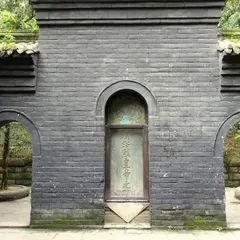
Well Alley, Jing Xiangzi (井巷子), owes its name to a well dug during the Kangxi reign; in the Qing period it was called Ruyi Hutong or Mingde Hutong. Today something else defines it: a 400 m wall running east to west, titled “Brick” (砖) and built in 2008 with bricks from different eras that reproduce fragments of platforms, walls, partitions, paths, steles and gates, with reliefs of scenes of old Chengdu. It is a new wall made of old materials, and that paradox sums up the whole district.
Every house on the route was dismantled and raised again on its same plot and with its original look. The project was approved in 2003, although sources place the start of the big works between 2005 and 2007, and with an investment of nearly 600 million yuan it produced 45 quadrangle courtyards in the late Qing and early Republic style, almost all single-storey with a light well (tianjing) and from 173 to over 1,000 m². Of 944 households only 110 stayed, among them merchants, officials, teachers, artists and descendants of Manchus. Since then each alley has an assigned role: Wide Alley is the “leisurely life” of teahouses, guesthouses and traditional cooking; Narrow Alley, the “slow life” of brand-name shops and cafés; and Well Alley, the “new life” of bars and young leisure. The official line speaks of restoring the old as it was; part of the academic criticism sees in Kuanzhai a case of over-commercialisation that compromises the integrity of the site.
The reopening, on 14 June 2008, came barely a month after the Wenchuan earthquake. The municipal culture and tourism group decided to open then to tell the world that “Chengdu is still beautiful”, and Mayor Ge Honglin explained that a place so loved by the neighbours had been chosen to awaken attachment to the city. How that ceremony went in Wide Alley, under a sky little disposed to celebration, is told by the narration in front of the wall.