UNESCO World Heritage
Zhangjiajie National Forest Park
Zhangjiajie National Forest Park: a sandstone pillar forest, Golden Whip Stream, the Bailong Elevator, the Avatar mountain and the First Bridge Under Heaven.
Zhangjiajie, China
Explore Zhangjiajie with 20 audio stops and researched, fact-checked narration. From the Avatar pillar forest to the Heavenly Gate of Tianmen, every place explains how an ancient seabed, a forestry farm planted by hand and a Tujia citadel ended up giving a city its name.
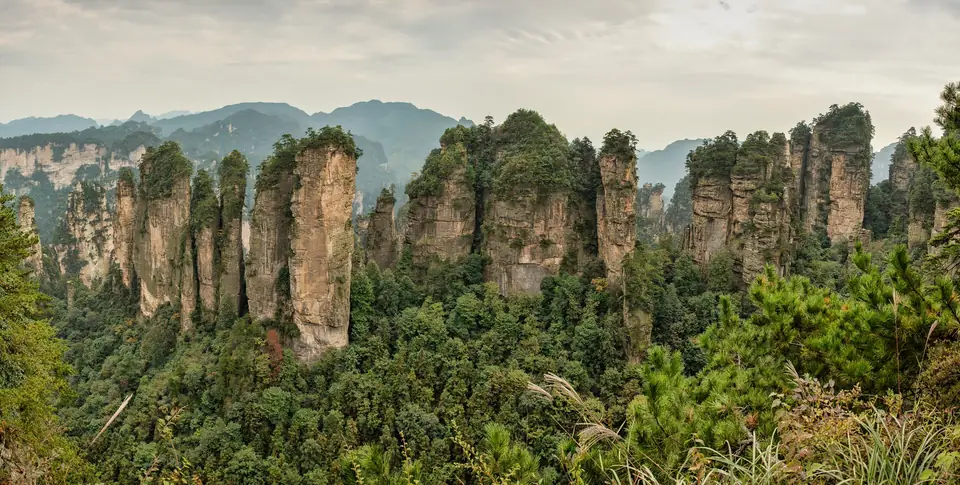
Photo: chensiyuan, CC BY-SA 4.0
UNESCO World Heritage
Zhangjiajie National Forest Park: a sandstone pillar forest, Golden Whip Stream, the Bailong Elevator, the Avatar mountain and the First Bridge Under Heaven.
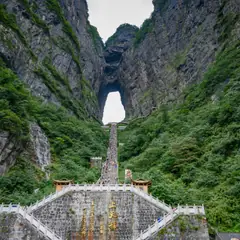
Sacred mountain
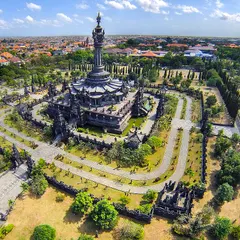
Tianmen Mountain in Zhangjiajie: cable car from the city, a 99-bend road, glass walkways, a Buddhist temple and the Heavenly Gate arch.
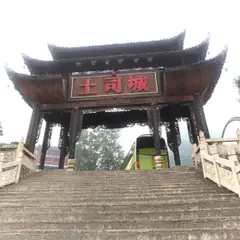
Tujia culture
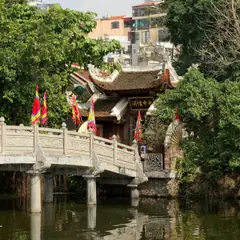
Tujia Folk Custom Park in Zhangjiajie: a walled tusi city, the 48-metre Jiuchongtian without nails, Maogusi dances and the white tiger pillar.
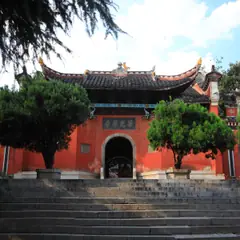
Ming Buddhist monastery
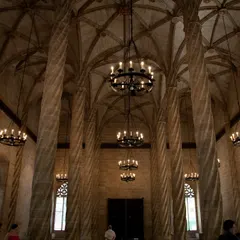
Puguang Temple in Zhangjiajie: a 1413 Buddhist monastery with gilded dragons, water and fire ponds, leaning columns and the Jade Emperor Pavilion.
Zhangjiajie Audio Guide
Zhangjiajie, in northwestern Hunan, was called Dayong until 1994, when the city took the name of its park. Zhangjiajie National Forest Park, China's first since 1982 and part of the Wulingyuan World Heritage Site since 1992, raises thousands of quartzite sandstone pillars above a seabed 380 million years old; at Yuanjiajie, the Bailong elevator climbs 326 metres up the rock face to the column renamed in 2010 “Avatar Hallelujah Mountain”. South of the city, Tianmen Mountain opens into a 131-metre natural arch reached by cable car from the centre, along the 99-bend road and a staircase of 999 steps. In the urban area itself, the Tujia Folk Custom Park gathers straw dances and a twelve-storey stilt house assembled without a nail, and Puguang Temple, founded in 1413 by a Ming garrison commander, is still active facing the mountain.
With the EarGuide Zhangjiajie audio guide, every place reveals its history through narration researched and fact-checked against historical sources. Unlike a free walking tour or a conventional guided visit, you set the pace, the order and the stops. No groups, no timetables, no internet connection.
No internet needed
Download the routes before you head out and explore without using data.
Smart geolocation
The narration starts by itself when you reach the point of interest.
Frequently asked questions
The EarGuide app is free. The Zhangjiajie audio guide includes 4 independent routes with about six hours of narration spread across 4 sites and 20 audio stops, and it is found inside the app itself.
No. EarGuide works entirely offline. Download the routes over WiFi before you set out and you can use the audio guide with no connection and no data use throughout your visit, including on top of the pillars and on Tianmen Mountain. The map shows your GPS position in real time even without coverage.
The Zhangjiajie audio guide is available in Spanish and English, with researched, fact-checked narration on the geology of Wulingyuan, Tujia culture and the history of Dayong.
The audio guide brings together 4 independent routes with about six hours of narration in total, from 45 to 120 minutes per route. They are designed to be spread over two or three days: one day for the National Forest Park, another for Tianmen Mountain and an afternoon in the city for the Tujia Folk Custom Park and Puguang Temple.
They are different experiences. The EarGuide audio guide lets you explore Zhangjiajie without timetables or groups, pause and resume whenever you like, and replay any explanation as often as you need. It suits independent travellers, families and anyone who prefers to understand the place at their own pace, with no prior knowledge of China.
The Zhangjiajie audio guide covers 4 main sites: Zhangjiajie National Forest Park, Tianmen Mountain, the Tujia Folk Custom Park and Puguang Temple, with stops that range from the Bailong elevator and the Avatar column to the Heavenly Gate and the hall of the crooked columns.
Only in part. The Tujia Folk Custom Park and Puguang Temple are in the urban centre, about two and a half kilometres from each other, and the Tianmen Mountain cable car leaves from the city centre. The National Forest Park lies about 25 kilometres to the north, in Wulingyuan, so it is best reached by bus or taxi; inside the park, the routes combine trails, elevator and cable car.
Yes. Purchases belong to your EarGuide account, not to one app or one phone. A city unlocked in the EarGuide app is also unlocked in that city's own app, and the other way round, on both iPhone and Android. Just sign in with the same account on the other device. The store's “restore purchases” button only covers the app the purchase was made in, so signing in is what carries it across.
The Zhangjiajie audio guide is inside the EarGuide app, free and ready to use offline. Carry it in your pocket and explore the city and its mountains at your own pace.
More destinations

From the throne of the Forbidden City to the battlements of Mutianyu and the hill where the last Ming emperor hanged himself. Six centuries of imperial capital, with audio guides.

From the tomb mound of Liu Bei that nobody has opened to the nurseries of the giant pandas. Explore the capital of Sichuan, its temples and its teahouses, with audio guides.

From the stilt houses of Hongyadong to the train that crosses a building at Liziba. Explore the mountain city of the Yangtze and the Jialing with audio guides.

Timber stilt houses hanging over the Tuo River, a red sandstone wall and a bridge from 1670 that was market, road and market again. Old Fenghuang, with audio guides.
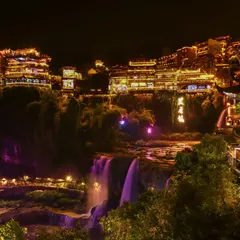
From the waterfall that splits the town in two to the bronze pillar that sealed a peace in 940. Explore old Wangcun, hanging over the You River, with audio guides.

From a half-moon pond over a spring to the gilded mansion of a salt merchant. Explore the Wang clan's village, shaped by water, with audio guides.

From the waterfront of banks and customs house raised by the foreign concessions to the eleven-sphere tower that founded Pudong. Shanghai district by district, with audio guides.

From the bronze Deng Xiaoping striding south to a liner stranded on land and the village that copied Mona Lisas on an assembly line. The city of reform, with audio guides.

From the Ming wall that still closes the city to the clay soldiers farmers found digging a well in 1974. Old Chang'an, with audio guides.

From the stone archway the clan nearly turned into lime to the corner a prefect gave up to the street. Explore the Hu clan's village, in Huizhou, with audio guides.

From the Li River of the 20-yuan note to the arch of Moon Hill and the stone bridges of the Yulong. The karst of southern China, with audio guides.