UNESCO heritage
Burgos Cathedral
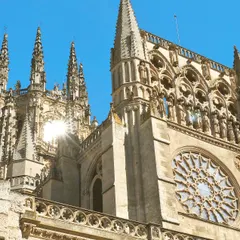
Gothic cathedral of Burgos, a World Heritage Site since 1984: openwork stone spires, the tomb of El Cid, the Papamoscas and the Golden Staircase.
Burgos, Spain
Burgos in 25 audio stops, with researched, fact-checked narration. From the Gothic cathedral to the Atapuerca museum, every place explains how the capital of Castile, the Way of El Cid and the memory of its kings overlap on the banks of the Arlanzón.
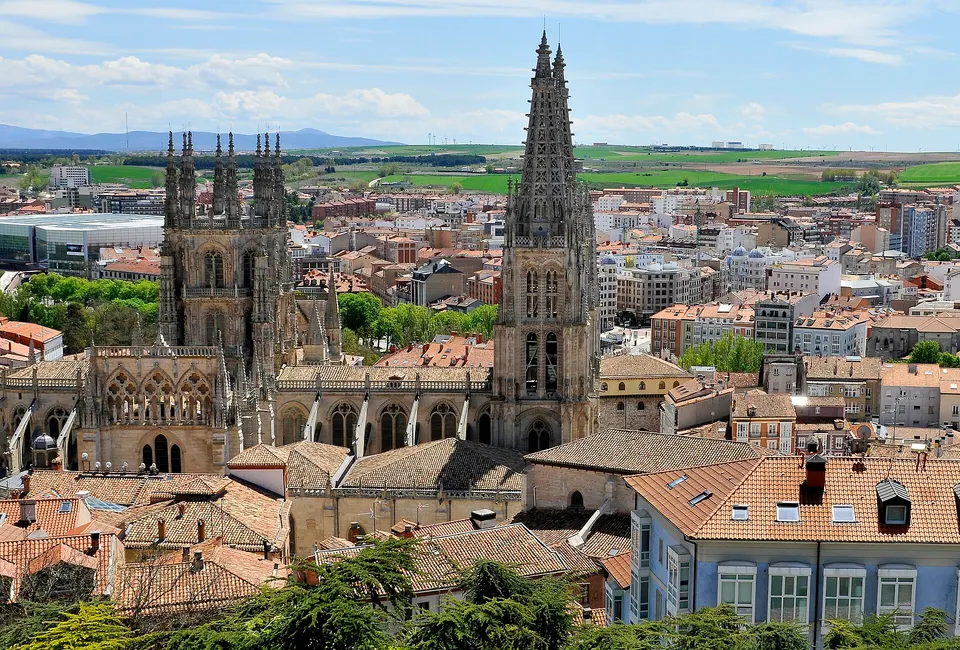
Photo: LBM1948, CC BY-SA 4.0
UNESCO heritage
Gothic cathedral of Burgos, a World Heritage Site since 1984: openwork stone spires, the tomb of El Cid, the Papamoscas and the Golden Staircase.
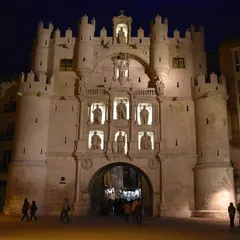
Medieval wall
What to see at the Arch of Santa María in Burgos: the monumental gate of the wall, its façade of statues with El Cid and Charles V, and the threshold to the cathedral.
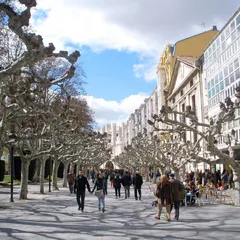
Historic promenade
Tree-lined promenade on the bank of the Arlanzón, with a vault of plane trees, statues of Castilian kings and the Teatro Principal.
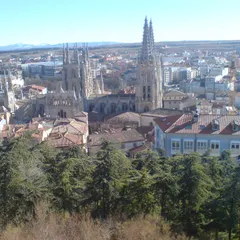
Viewpoint and history
San Miguel hill, cradle of Burgos: castle remains, a medieval well and the best panorama of the cathedral.
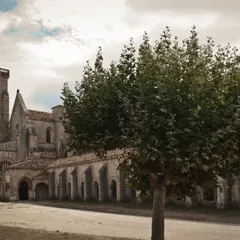
Cistercian royal pantheon
Cistercian monastery in Burgos, founded in 1187: royal pantheon of Castile, an abbess with near-bishop power and exceptional medieval fabrics.
Carthusian monastery
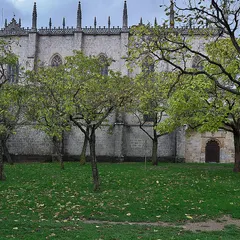
What to see at the Miraflores Charterhouse in Burgos: a Carthusian monastery with monks in silence, royal tombs by Gil de Siloé and a gilded altarpiece.

Atapuerca
Glass museum beside the Arlanzón with the Atapuerca fossils, the Miguelón skull, the Excalibur hand axe and Darwin's ship.
Burgos Audio Guide
Burgos was born in 884 on San Miguel hill, by order of Count Diego Rodríguez Porcelos, and today keeps its layers between the hill and the Arlanzón river. At the top, the Castle Viewpoint gathers the remains of the fortress, a medieval well dug into the rock and the marks of the French demolition during the War of Independence. Below, Burgos Cathedral, whose first Gothic stone was laid in 1221, was declared a World Heritage Site in 1984 and keeps El Cid and Doña Jimena beneath its Plateresque crossing tower; a few metres away, the Arch of Santa María, the best-preserved gate of the city wall, displays a 16th-century gallery of counts and heroes of Castile, and the Paseo del Espolón lines up “the stone kings” beneath a vault of interlaced plane trees. To the west, the Las Huelgas Monastery, founded in 1187 by Alfonso VIII and Eleanor Plantagenet, still houses a Cistercian community, some thirty royal tombs and the Museum of Medieval Fabrics. In the east, the Miraflores Charterhouse, from 1442, keeps a community of monks in silence beside Gil de Siloé's star-shaped tombs, and on the banks of the Arlanzón the Museum of Human Evolution, opened in 2010, displays the skull nicknamed Miguelón and the finds of Atapuerca.
With the EarGuide Burgos audio guide, every place reveals its history through narration researched and fact-checked against historical sources. Unlike a free walking tour or a conventional guided visit, you set the pace, the order and the stops. No groups, no timetables, no internet connection.
No internet needed
Download the routes before you head out and explore without using data.
Smart geolocation
The narration starts by itself when you reach the point of interest.
Frequently asked questions
The EarGuide app is free. The Burgos audio guide includes 7 independent routes with almost six hours of narration spread across 7 sites and 25 audio stops, and it is found inside the app itself.
No. EarGuide works entirely offline. Download the routes over WiFi before you set out and you can use the audio guide with no connection and no data use throughout your visit. The map shows your GPS position in real time even without coverage.
The Burgos audio guide is available in Spanish and English, with researched, fact-checked narration on medieval Burgos, El Cid, the royal monasteries and the Atapuerca sites.
The audio guide brings together 7 independent routes with almost six hours of narration in total, from 25 to 90 minutes per route. They can be spread over two days: one for the Cathedral, the Arch of Santa María, the Paseo del Espolón, the Castle Viewpoint and the Museum of Human Evolution, and another for the Las Huelgas Monastery and the Miraflores Charterhouse.
They are different experiences. The EarGuide audio guide lets you explore Burgos without timetables or groups, pause and resume whenever you like, and replay any explanation as often as you need. It suits independent travellers, families and anyone who prefers to understand the city at their own pace, with no prior knowledge of Castilian history.
The Burgos audio guide covers 7 main sites: Burgos Cathedral, the Arch of Santa María, the Paseo del Espolón, the Castle Viewpoint, the Las Huelgas Monastery, the Miraflores Charterhouse and the Museum of Human Evolution.
Almost all of it. The Cathedral, the Arch of Santa María, the Paseo del Espolón, the Castle Viewpoint and the Museum of Human Evolution are all within a kilometre of one another, and the Las Huelgas Monastery is a kilometre and a half west of the cathedral. The Miraflores Charterhouse is the exception: it lies about four kilometres east of the centre, on the outskirts, and about five from the Las Huelgas Monastery, so it is best reached by taxi, bus or car.
Yes. Purchases belong to your EarGuide account, not to one app or one phone. A city unlocked in the EarGuide app is also unlocked in that city's own app, and the other way round, on both iPhone and Android. Just sign in with the same account on the other device. The store's “restore purchases” button only covers the app the purchase was made in, so signing in is what carries it across.
The Burgos audio guide is inside the EarGuide app, free and ready to use offline. Carry it in your pocket and explore the city at your own pace.
More destinations
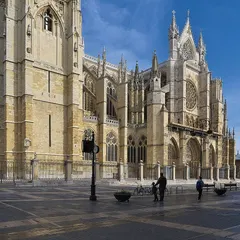
From 1,800 square metres of Gothic stained glass to a Gaudí castle and a painted Romanesque pantheon. Explore León, its cathedral and its old town, with audio guides.
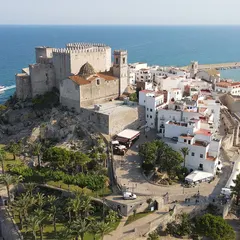
From the Templar castle where a pope refused to stop being one to the range this coast deliberately left wild. Explore the walled town of the Papa Luna with audio guides.
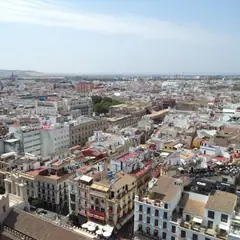
From the Almohad mosque still standing inside the largest Gothic cathedral to the oldest royal palace in use in Europe. Explore Seville, its squares and the banks of the Guadalquivir, with audio guides.
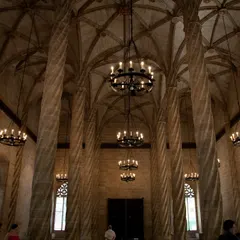
From the City of Arts and Sciences to the Carmen neighbourhood. Discover 2,000 years of Valencian history with audio guides.
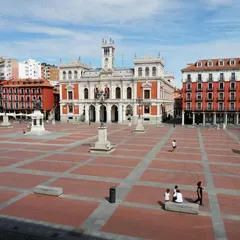
From the Plaza Mayor that inspired Madrid to the house where Cervantes wrote Don Quixote. Discover the former capital of the court of Philip III with audio guides.