Historic promenade
Paseo del Espolón Audio Guide
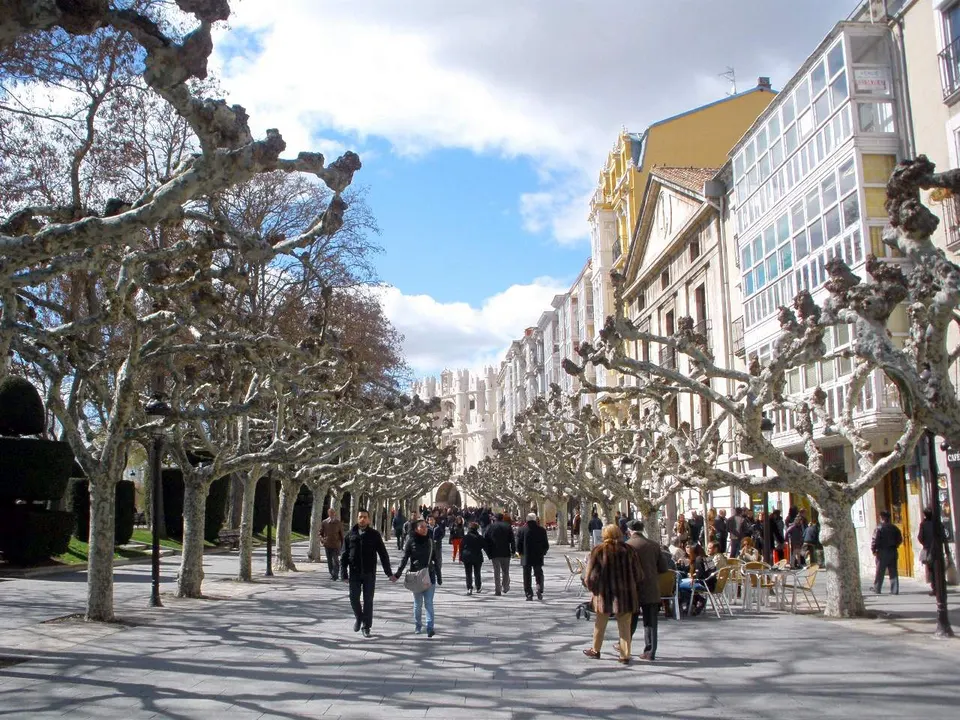
The main tree-lined promenade of Burgos combines a vault of interlaced plane trees, statues of Castilian kings and the bank of the Arlanzón. It is the green drawing room where the everyday life of the city beats.
- 30 min of audio
- Tree-lined promenade
The Paseo del Espolón runs along the bank of the Arlanzón river, in the very heart of the historic centre of Burgos. Its layout as a public promenade took shape in the 18th century, and since then it has served as a place for strolling and meeting. The name alludes to its former function as an embankment, or defence against the river's floods.
The plane trees are pruned so that their crowns interlace and form a continuous green vault. Beneath that green roof stand the statues of the kings of Castile and León, known as “the stone kings”, among stately buildings, historic façades and the Teatro Principal.
Highlights
- Continuous vault of pruned, interlaced plane trees
- Statues of the kings of Castile and León, “the stone kings”
- Bank of the Arlanzón, the river that structures the urban fabric of Burgos
- 19th-century Teatro Principal beside the promenade
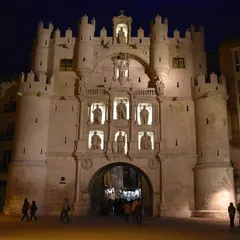
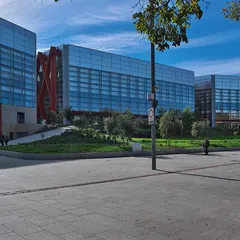
What to see at the Paseo del Espolón is, to a large extent, a matter of atmosphere: the main tree-lined promenade of Burgos, beside the Arlanzón river and in the heart of the historic centre, has served for centuries as the city’s great open-air drawing room. Its layout as a public promenade dates from the 18th century, and the history of the Paseo del Espolón is that of a space designed for walking, meeting and being seen. It links the Arch of Santa María with the area of the Teatro Principal and the Espoloncillo, and so ties the centre to the water. The full experience is best enjoyed by walking it with the audio guide, which keeps its most surprising details for each point. The promenade starts beside the Arch of Santa María and, crossing the Arlanzón, leads to the Museum of Human Evolution.
Beneath the green vault
Paseo del Espolón
Summary of this stop
The entrance to the promenade, beside the Arch of Santa María, leads into a space of shade and coolness. The plane trees, famous throughout the city, are pruned and interlaced until they form a continuous green vault over the promenade, and that architecture of branches is the most recognisable feature of the place.
The layout was born in the 18th century as a public promenade and became the meeting place of the people of Burgos. The name “Espolón” recalls an older function: that of an embankment, or defence against the river’s floods.
Garden tradition holds that the plane trees are pruned with such care that the branches end up reaching for one another and interlacing on their own, as if the promenade stitched its own green roof year after year. The audio guide keeps the most surprising detail for this point.
The stone kings
Statues of the kings
Summary of this stop
In the middle of the promenade, statues of the kings of Castile and León stand in a row on pedestals, popularly known as “the stone kings”. They form an open-air gallery of monarchs that converses with the memory of Castile.
Around them, the Espolón is flanked by stately buildings and historic façades, among them that of the former town hall. The whole reinforces the idea of an urban drawing room that for centuries has served as a stage for the social life of Burgos.
The people of Burgos say that these statues have heard so many lovers’ confidences and so much gossip whispered in passing that, if they could speak, they would know more about the city than any history book.
The river and the pulse of the city
Arlanzón bank
Summary of this stop
Beside the railing opens the bank of the Arlanzón, the river that crosses Burgos from east to west and structures much of its urban fabric. The promenade runs parallel to the water and links the centre with the area of the Teatro Principal and the Espoloncillo.
The Teatro Principal, opened in the 19th century, looks out over the promenade and the river as a cultural landmark of the city. Among trees, water and façades, the place sums up the daily rhythm of Burgos.
Local tradition calls the Espolón “the city’s drawing room”, and it is said that deals were struck here, courtships arranged and the pulse of Burgos taken simply by seeing who strolled, and with whom, lap after lap beneath the trees.