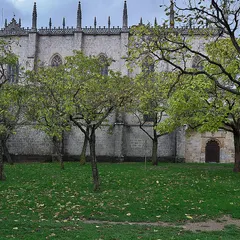
Medieval wall
Arch of Santa María Audio Guide (Arco de Santa María)
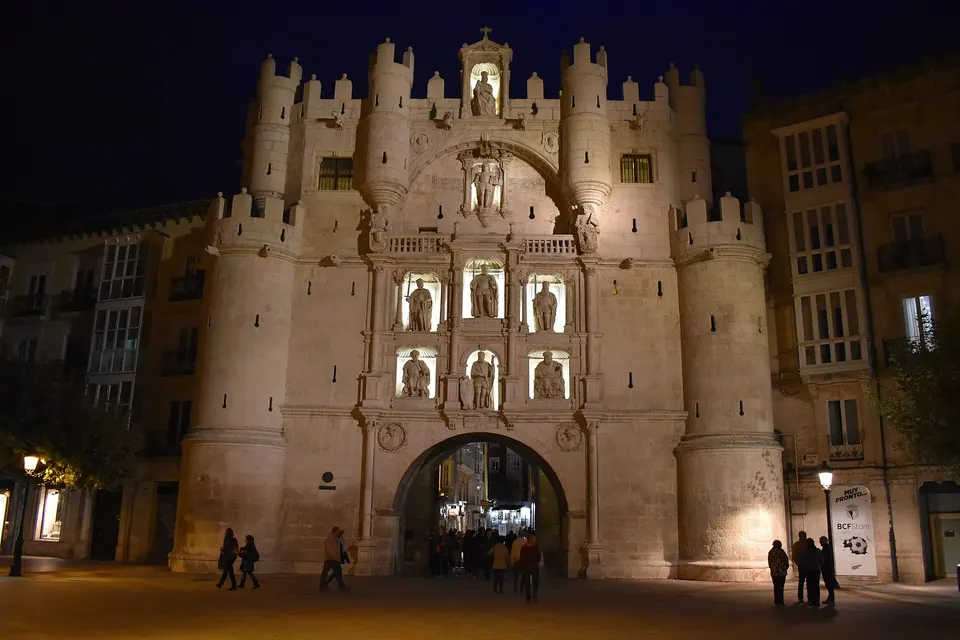
The old gate of Burgos's city wall presents itself as a 16th-century triumphal arch, with a gallery of counts, judges and heroes of Castile carved into its façade.
- 25 min of audio
- Gate of the wall
The Arch of Santa María was one of the old gates of Burgos's medieval wall and served as the main entrance to the town from the bridge over the Arlanzón. Of all the gates in that circuit, it is the best preserved and the most representative. Its present monumental look dates from the 16th century, during the reign of Charles I, the emperor Charles V.
The façade was conceived in part as a gesture of reconciliation between the city and Charles V after the Revolt of the Comuneros of Castile, in which Burgos had taken part. Its niches hold figures tied to the city, from Count Diego Rodríguez Porcelos to El Cid, and the emperor himself is included in that gallery.
Highlights
- Old gate of the medieval wall, the best preserved in Burgos
- 16th-century triumphal-arch façade, from the time of Charles I
- Niches with Porcelos, Nuño Rasura, Fernán González, El Cid and Charles V
- Interior with historic rooms, among them the council's Sala de Poridad
- Passage to Santa María square and the main façade of the cathedral
Anyone looking for what to see at the Arch of Santa María in Burgos finds a monument that condenses several centuries of the city’s history. A former gate of the medieval wall, it is today one of the most recognisable and most photographed symbols of Burgos, above all lit up at night. Its history and architecture are best understood by walking it with the audio guide, stop by stop, between the river and the cathedral. The arch opens onto the square of the Burgos Cathedral and, on the other side, onto the Paseo del Espolón, beside the river. About 580 m away, across the Arlanzón, stands the Museum of Human Evolution.
The gate by the river
Arch of Santa María
Summary of this stop
The arch stands beside the Arlanzón river, at the end of the promenade that leads to the cathedral. Seen from the bridge over the Arlanzón, this was the main entrance to the town, and of the old gates of the wall it is the best preserved and the most representative.
Burgos tradition recalls that kings, pilgrims and merchants came in this way, so that passing through it meant, symbolically, being admitted to the city. Some still say that entering through this arch brings the traveller good luck, a popular belief that remains alive at the spot.
The detail that best explains why this gate has weighed so heavily on the imagination of Burgos is kept for the narration on site.
The heroes on the façade
Arch façade
Summary of this stop
Its present monumental look, in the manner of a triumphal arch, dates from the 16th century, during the reign of Charles I. In its niches the façade gathers statues of figures tied to the city: Count Diego Rodríguez Porcelos, the judge Nuño Rasura, Fernán González, El Cid and the emperor Charles V.
At the top centre stands the image of the Virgin, who gives the arch its name. With its row of niches and its turrets, the façade works as a gallery of founders and heroes of Castile carved in stone.
It is said that the statues were placed facing the river so that the old judges and counts of Castile could keep watching from above anyone who meant to enter Burgos. It is a popular legend, and the narration places it before the figures themselves.
Beneath the arch, pardon and passage
Archway
Summary of this stop
The façade was conceived in part as a gesture of reconciliation between the city and Charles V after the Revolt of the Comuneros of Castile, in which Burgos had taken part. According to tradition, placing the emperor’s image at the very top was the city’s way of asking his pardon in stone, a gesture that, they say, softened the monarch.
The interior of the arch houses historic rooms, among them the Sala de Poridad, the former meeting room of the city council. Beyond the archway, the passage leads into Santa María square, from which the main façade of the cathedral can be reached.
What happens on crossing this threshold, with the city and the cathedral ahead, is completed by the audio guide in the archway itself.