Surf cove
Padang Padang Beach Audio Guide (Pantai Padang Padang)
A crack in the cliff, some hundred and ten metres of white sand and, out at sea, the wave they call the Balinese Pipeline: Padang Padang is tiny, hidden and famous across half the world, all at once.
- 45 min of audio
- Surf beach between cliffs
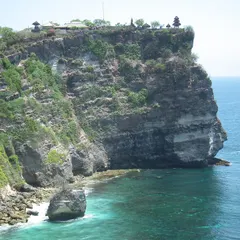
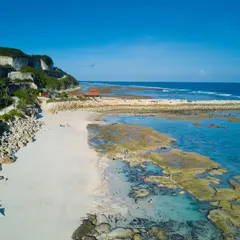
Padang Padang, which locals call Labuan Sait, is a cove of fine white sand in Pecatu, on the west coast of the Bukit peninsula, enclosed between high limestone cliffs. Those cliffs are layers of Tertiary limestone that the collision of plates, with the Indo-Australian plate sinking beneath the Eurasian, lifted above the sea. It is reached by a staircase of about a hundred and twenty steps and a narrow passage between a fallen boulder and the cliff wall.
Its fame came twice over. In 1972 the surf film Morning of the Earth put the Uluwatu coast on the map and surfers began arriving from all over the world; in 2010, Julia Roberts shot scenes of Eat Pray Love here, and the cove became internationally known. And off the sand breaks Padang Padang Left, a reef wave that ranks among the best on the planet when conditions line up.
Highlights
- Bridge and staircase — About a hundred and twenty steps lead down from the Labuan Sait road to the sand
- The crack in the rock — A narrow passage between a fallen boulder and the cliff serves as the beach's gateway
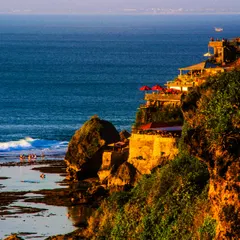
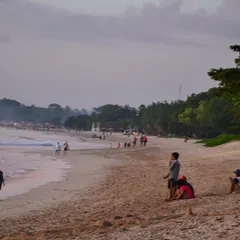
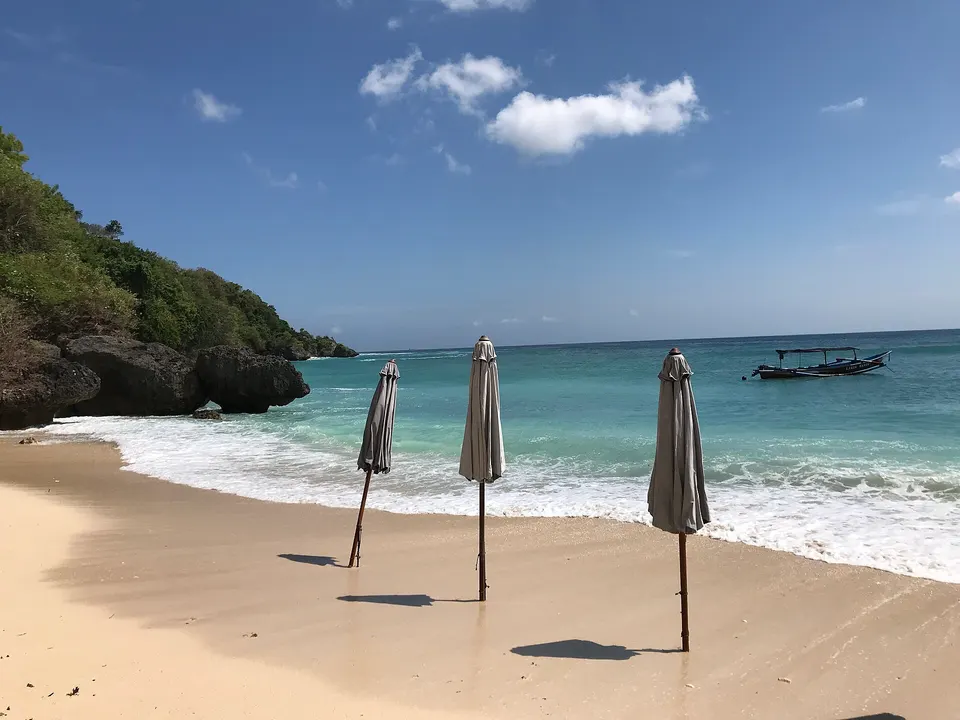
- The cove — Some hundred and ten metres of white sand closed in by limestone at both ends
- Padang Padang Left — The reef wave nicknamed the Balinese Pipeline, home of the Rip Curl Cup
- Eat Pray Love — Location of the 2010 shoot with Julia Roberts
What to see at Padang Padang Beach fits into very little space: some hundred and ten metres of white sand in Pecatu, on the west coast of the Bukit peninsula, wedged between limestone walls and open to one of the most famous waves in the world. Locals call it Labuan Sait, and the turn-off is at the end of the Uluwatu road, near the temple, about an hour by car from Denpasar and some three kilometres from Bingin beach.
The history of Padang Padang Beach is that of a corner that belonged to a few before it belonged to everyone. Surfers reached this coast after the film Morning of the Earth, from 1972; the secluded coves of Pecatu, tucked between cliffs, were also nudist territory, with warungs and cheap rooms growing up around them before the tourist complexes of the late nineties. Today the cove hosts the Rip Curl Cup and keeps the memory of its role in Hollywood. The audio guide covers it in three stops, from the top of the staircase to the shore, to tell how limestone, swell and a film turned this cove into a legend.
Along the same Pecatu coast, other surf coves follow, such as Suluban Beach, and the cliff of Uluwatu Temple closes the landscape; a little further, some 8.4 km away, opens Jimbaran Bay.
A cove hidden under the bridge
Top of the stairs
Summary of this stop
The route begins on the bridge of the Labuan Sait road, next to the ticket booth, where the staircase to the beach starts. From above, the cove can barely be guessed at: it is a short strip of fine white sand, closed in by high cliffs.
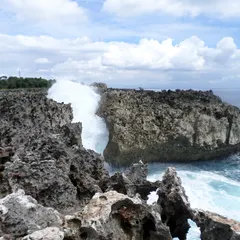
Those cliffs tell a story far older than the beach. The architecture of Padang Padang Beach is geological: layers of Tertiary limestone that the push of the Indo-Australian plate, sinking beneath the Eurasian, raised above the sea until it formed the Bukit peninsula.
Fame was slow to find this corner. It was in 1972, with the film Morning of the Earth, that the Uluwatu coast was “discovered” for surfing and surfers began arriving from around the world. What that discovery meant for this cliff is revealed by the narration on the ground.
The stone gate
The crack
Summary of this stop
At the foot of the staircase, of about a hundred and twenty steps, the path narrows into a tight passage between a fallen boulder and the cliff wall. Everyone who goes down to the sand has to squeeze through that crack, a kind of natural door in the stone. Entry to the beach is paid.
The beach is also known for its monkeys, which steal visitors’ belongings. And long before the crowds, these Pecatu coves were territory for surfers and, being so remote, for nudists, while warungs and cheap rooms sprang up around them in the years before the tourist complexes of the late nineties.
A popular belief circulates on the peninsula: legend has it that the gods have blessed those who ride the waves of Uluwatu, because waves so perfect can only be divine. On the other side of the crack waits the wave that best embodies that idea.
The Balinese Pipeline
The cove
Summary of this stop
In the middle of the cove, on the sand and facing the reef, appears the reason for all the fame: Padang Padang Left, a left-hand wave that breaks over the reef and, with the big southwest swells, closes into a barrel. They nickname it the Balinese Pipeline, it ranks among the best waves in the world when conditions line up and every year it hosts the Rip Curl Cup, the competition for barrel specialists.
In 2010 the beach gained another kind of celebrity: it was one of the locations for the shooting of Eat Pray Love, with Julia Roberts, and the film gave it international fame.
Today the cove is also Uluwatu’s GoBoat terminal, a speedboat service that links it with Canggu in about thirty-five minutes. How some hundred metres of sand came to weigh so much on the surfing map is what the audio guide finishes telling on this shore.