Cliffs and ritual
Melasti Beach Audio Guide (Pantai Melasti)
A road cut through the rock descends to the sand, between white limestone walls that were once the seabed. Below waits the beach named after the great Balinese rite of purification.
- 60 min of audio
- Limestone cliffs
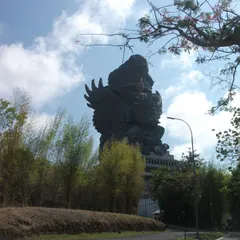
Melasti Beach lies in Ungasan, on the south coast of the Bukit peninsula, the same village that is home to the Garuda Wisnu Kencana park. For a long time it stayed hidden behind a limestone hill: it could only be reached by descending hundreds of steps, until a zigzag road cut its way through the cliff and made it a beach within everyone's reach.
Its name is no coincidence. Melasti is the Balinese Hindu ceremony in which, a few days before Nyepi, villages carry the sacred objects of their temples in procession to the sea to purify them. After the rite comes the day of silence, when the whole island stops and even the airport closes.
Highlights
- Zigzag road excavated in the limestone of the cliff
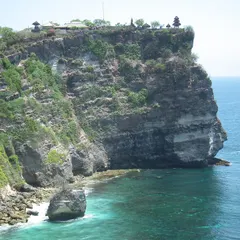
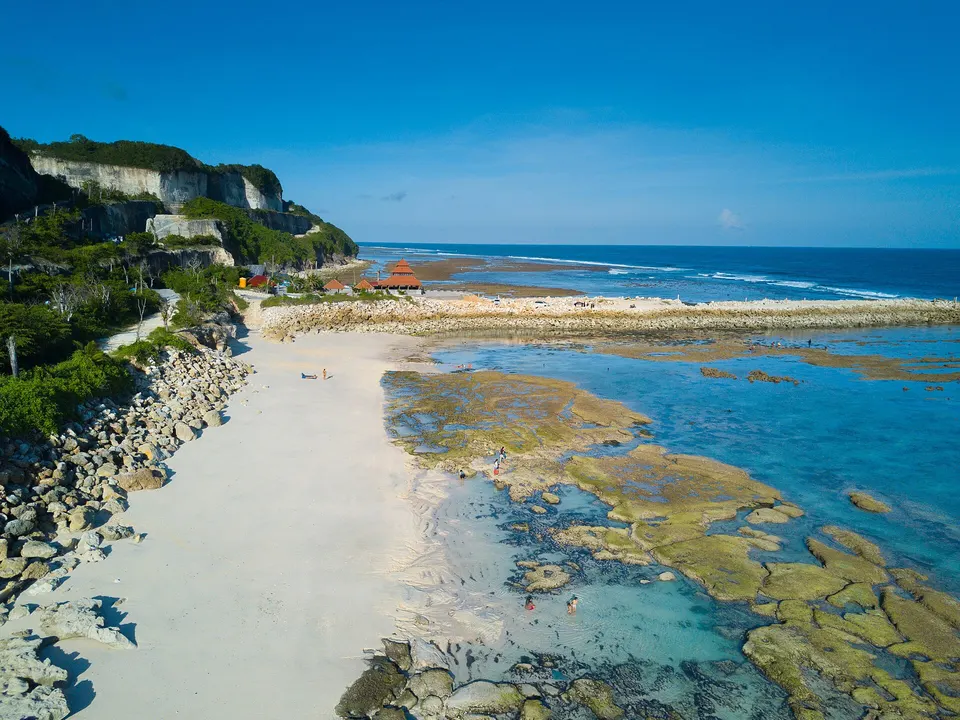
- White Tertiary limestone cliffs rising from the sea
- Calm natural lagoon behind the reef at low tide
- Kecak at sunset on the Karsa Segara Mandapa stage
- The Melasti rite, purification in the sea before Nyepi
What to see at Melasti Beach begins before setting foot on the sand. This beach in Ungasan, in the South Kuta district of Badung regency, spent years hidden behind a limestone hill reached only by descending hundreds of steps. The zigzag road that now cuts through the cliff changed its story: what had been an almost secret corner of the village became a public beach, wedged between white walls on the south coast of the Bukit peninsula.
The history of Melasti Beach, however, goes far beyond the asphalt. Its name refers to one of the most important rites of the Balinese calendar, the purification in the sea that precedes Nyepi, the day of silence. Geology and ritual meet here on the same sand, and the full experience unfolds on the walk with the audio guide, stop by stop, from the first bend of the road to the shoreline.
In the south of the Bukit, Uluwatu Temple shares with this beach the Kecak at sunset, and the Garuda Wisnu Kencana Cultural Park lies in the same village of Ungasan; on the east coast, the Nusa Dua Water Blow shows another stretch of reefs and swell.
The road that split the rock
Cliff road
Summary of this stop
At the first bend of the road, with the sea already in sight, the route starts between two almost vertical limestone walls. It is the cut opened through the hill that for a long time hid the beach, and its zigzag layout is the reason anyone can now go down to it, when before one had to descend hundreds of steps.
Those walls tell a story far older than the road. The cliffs of the Bukit peninsula are layers of Tertiary limestone that were once under the sea and that the subduction of the Indo-Australian plate beneath the Eurasian plate gradually raised into the air. The architecture of Melasti Beach, in that sense, was signed by tectonics.
Ungasan, the village the beach belongs to, is also the village of the Garuda Wisnu Kencana park. What the cut in the rock reveals about the ancient seabed is left for the narration at this very spot.
The lagoon behind the reef
Beach entrance
Summary of this stop
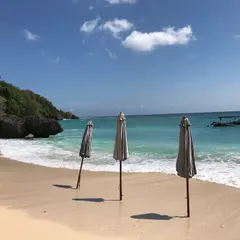
Next to the entrance, beside the car park, the view opens onto the sand, the white cliffs rising behind it and the water. At the gate of the cliff road a small entrance and parking fee is charged, the last threshold before the beach that the rock kept apart for so long.
Off the shore, a coral reef acts as a natural breakwater. When the tide drops, a broad, calm lagoon appears near the beach, still and shallow water that contrasts with the open ocean breaking beyond.
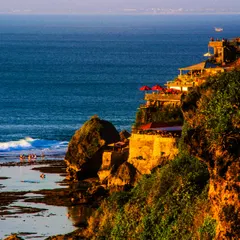
The beach also has its own stage, the Karsa Segara Mandapa, where the kecak dance is performed at dusk with the sea as a backdrop.
Melasti, the sea that purifies
Shoreline
Summary of this stop
At the water’s edge, the route reaches the origin of the name. Melasti is the Balinese Hindu ceremony of purification held by the sea a few days before Nyepi: the sacred objects of the village temples, the pratima or pralingga, are carried in procession to the water and cleansed together with the people. According to Balinese belief, the rite purifies the world of the filth of sin and bad karma through the symbolic obtaining of Tirta Amerta, the water of life; the sea and lakes are regarded as sources of life.
It is a living, documented tradition. Days before Nyepi, thousands of villagers dressed in white walk to beaches like this one with the effigies and sacred objects of their temples to bathe them in the sea. Bali’s sea temples, the pura segara, then take on a special role, because they receive the processions that come from the inland temples.
Then comes the silence. Nyepi marks the new year of the Saka calendar: from six in the morning until six the next day, the island keeps silence, fasting and meditation, with no work, no travel, no fire and no leisure, and even the airport closes. Only the pecalang, the villages’ traditional guards, walk the streets. The next day, Ngembak Geni, which means relighting the fire, social life resumes. How this same sand passes from rite to silence is told facing the water.