Fish market and grilled seafood
Jimbaran Bay Audio Guide (Teluk Jimbaran)
A crescent of sand between the airport runway and the Bukit hills, where the night's catch is auctioned at dawn and grilled at sunset over coconut husks. Its beach cafés were not invented by any resort: the fishermen invented them.
- 75 min of audio
- Fishing and food
Jimbaran is a fishing village and tourist area on the neck of the Bukit peninsula, south of Ngurah Rai Airport, in the South Kuta district of Badung regency. It began as a settlement of fishermen and farmers, and its name, according to the village chronicles, comes from jimbar, “wide”, the great forest where its founder settled. Today its Kedonganan fish market and its seafood cafés on the sand have made it one of Bali's culinary destinations.
Jimbaran's fish is not grilled over charcoal but over a fire of coconut husks, whose smoke cooks it evenly without burning the skin, and it reaches the table with sambal matah, a raw sambal of shallot, chilli, lemongrass and lime. On 1 October 2005 this same beach lived the darkest night in its history, and its cafés filled up again.
Highlights
- Kedonganan fish market — The night's catch, on ice, weighed and auctioned from six in the morning
- Jukung on the sand — Painted outrigger boats beached behind the market
- Seafood cafés — Tables on the sand and coconut-husk grills behind
- Sambal matah — Raw shallot, chilli, lemongrass and lime to go with the grilled fish
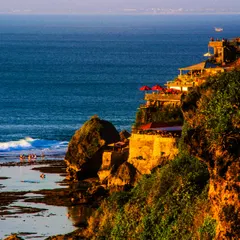
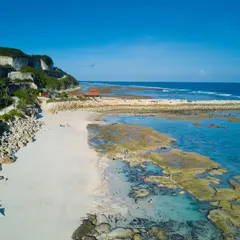
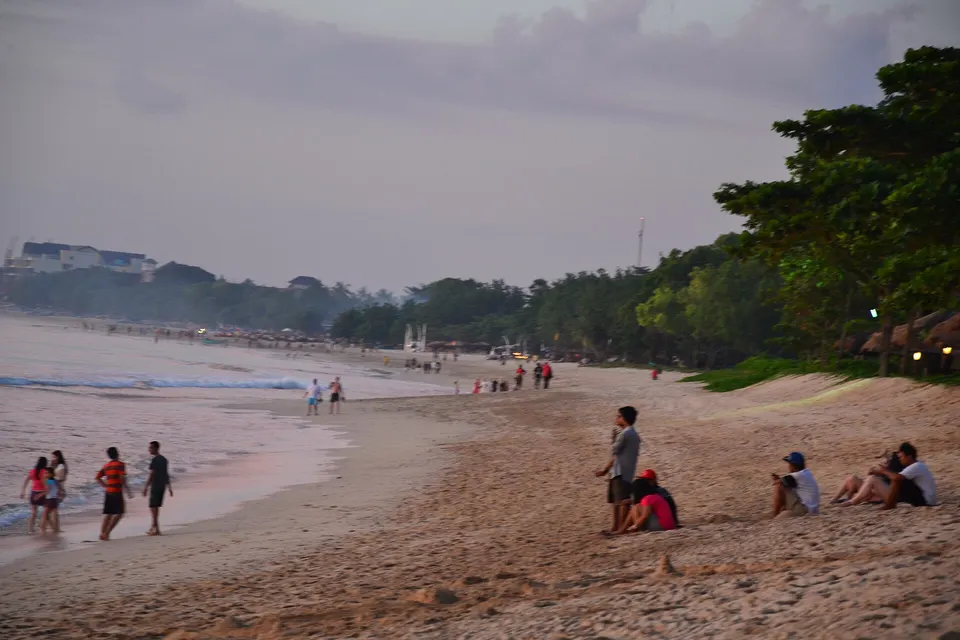
- The bay at sunset — A crescent of sand between the airport runway and the Jimbaran hills
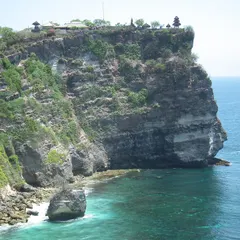
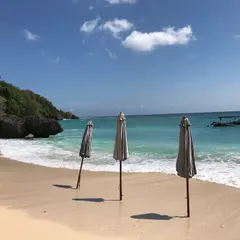
South of Ngurah Rai Airport, right where Bali narrows to make way for the Bukit peninsula, Jimbaran Bay draws a crescent of sand that runs from the landing strip, in the north, to the Jimbaran hills, in the south. It is a fishing village and a tourist area in the South Kuta district of Badung regency, known above all for two things: the Kedonganan fish market and the beach cafés that grill the day’s catch over coconut husks.
The history of Jimbaran Bay is that of a settlement of fishermen and farmers that ended up living from tourism. Its traditional village is organised into twelve banjar and keeps temples tied to its trades, and along the bay today stand five-star resorts such as the Four Seasons, InterContinental and Raffles. But the invention that made the place famous, the seafood restaurant on the sand, did not come out of any hotel: it came from the fishermen themselves.
What to see in Jimbaran Bay is arranged in three stops, from the market at dawn to the Kedonganan cafés and to Jimbaran Beach at sundown, and the thread that ties them together, a bay that feeds Bali, is completed on the walk with the audio guide.
Above the bay rises the hill of the Garuda Wisnu Kencana Cultural Park, and the sunsets of this west coast of the Bukit are shared with those of Uluwatu Temple.
The catch comes in
Kedonganan fish market
Summary of this stop
The Kedonganan fish market occupies a covered hall beside the beach, with its entrance on Jalan Pantai Kedonganan. It opens around six in the morning and closes around six in the evening, and in that time the night’s catch is landed, haggled over and weighed for the auction. In the ice tubs lie large and small fish, lobster, prawns, crab and octopus, and the stalls also sell fruit, vegetables and rice. Buyers for restaurants and hotels arrive early to take the best of the catch, and behind the market, beached on the sand, wait the painted jukung in which the fishermen go out.
The market also has a practical custom: the surrounding warungs grill whatever is bought there for a small fee per kilo, so the fish can go straight from the tub to the grill.
The name of the place holds its own story. According to the village chronicles, Jimbaran comes from jimbar, “wide”, the great forest where the founder, Dhalem Putih, settled and where his son Petak Jingga was born. Tradition holds that Dhalem Putih lived alone in that thicket and named the place “the wide” because there was no one else in it. What he did next, and why a whole village bears the name of a solitude, is revealed by listening to the narration on the spot.
The fishermen’s idea
Kedonganan cafés
Summary of this stop
On the sand of Kedonganan the seafood cafés line up: venues open at the sides, tables on the beach and grills at the back. The ritual is always the same: the diner chooses live seafood and it is cooked on the spot, almost always over a fire of coconut husks rather than charcoal. The husk smoke cooks the fish evenly, without burning the outside, and the dish arrives with sambal matah, a raw sambal of shallot, chilli, lemongrass and lime.
The origin of these cafés is modest. Fishermen sold drinks on the beach and took their own grilled fish as lunch; tourists asked to try it, and locals opened the first grilled-fish warungs, which became the first seafood restaurants of southern Bali.
That idea changed the village. Since the arrival of the seafood restaurants and the international hotels, most local livelihoods have shifted towards tourism, and the bay has filled with five-star resorts. How a fisherman’s lunch ended up becoming Bali’s table is told in the audio guide, among the grills.
Sunset, and the night the beach came back
Jimbaran Beach
Summary of this stop
The last stop is on Jimbaran Beach, beside the village’s seafood cafés and facing the sunset. It is the hour when the bay fills with tables on the sand, but this same shore holds the darkest night in its history. On 1 October 2005, several suicide bombers attacked two warungs on Jimbaran Beach and a restaurant in Kuta; twenty people died and more than a hundred were injured. The beach cafés recovered afterwards.
Behind the sand lies the village that sustains all this. Jimbaran’s traditional village is made up of twelve banjar, and among its temples are Pura Ulun Swi, with an eleven-roofed meru; Pura Gaing Mas, the salt-makers’ temple; and Pura Tegal Wangi, the fishermen’s temple. A village of fishermen and farmers that now lives mainly from tourism, with the big resorts spread around the bay.
One night of violence and the ordinary evenings that came back afterwards, on the same sand. How the two live together at this point of the bay is revealed by listening to the narration facing the sea.