Cradle of surfing in Bali
Suluban Beach Audio Guide (Pantai Suluban)
A cave in the limestone, a beach hidden beneath the cliff and a wave nobody had surfed until a camera arrived in 1972. At Suluban, also called Blue Point, the story of surfing in Bali began.
- 60 min of audio
- Surfing history
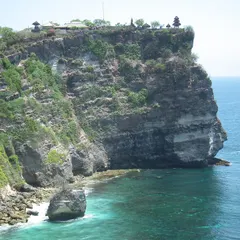
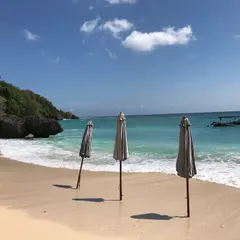
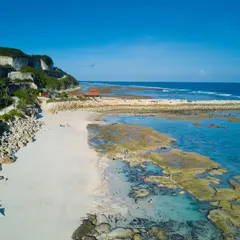
Suluban Beach, also known as Blue Point, hides beneath the cliffs of Uluwatu, in the village of Pecatu, just west of Padang Padang. Its name comes from the Balinese word mesulub, to pass beneath something, because the sand can only be reached through tunnels in the rock. Through that cave surfers come and go to the famous Uluwatu reef, and through it in 1972 went down the first to surf it in front of a camera.
Here geography explains almost everything. The rugged limestone coast of Pecatu isolates small, short beaches, which for a long time could only be reached on foot or by long staircases. When the first recorded wave at Uluwatu was filmed there were no roads to the beach; today cafés, villas and beach clubs lean over the cliffs, and the transformation has raised concern about the fragility of the coastal ecosystem and about traffic.
Highlights
- Suluban Cave — The tunnel in the limestone that gives the beach its name and opens the way to the reef
- Five waves in a row — Bombie, Temples, Outside Corner, Racetracks and the Peak, facing the cave
- Morning of the Earth — The 1972 film that put Uluwatu on the surfing map
- Steve Cooney — At fifteen, author of the first recorded wave at Uluwatu
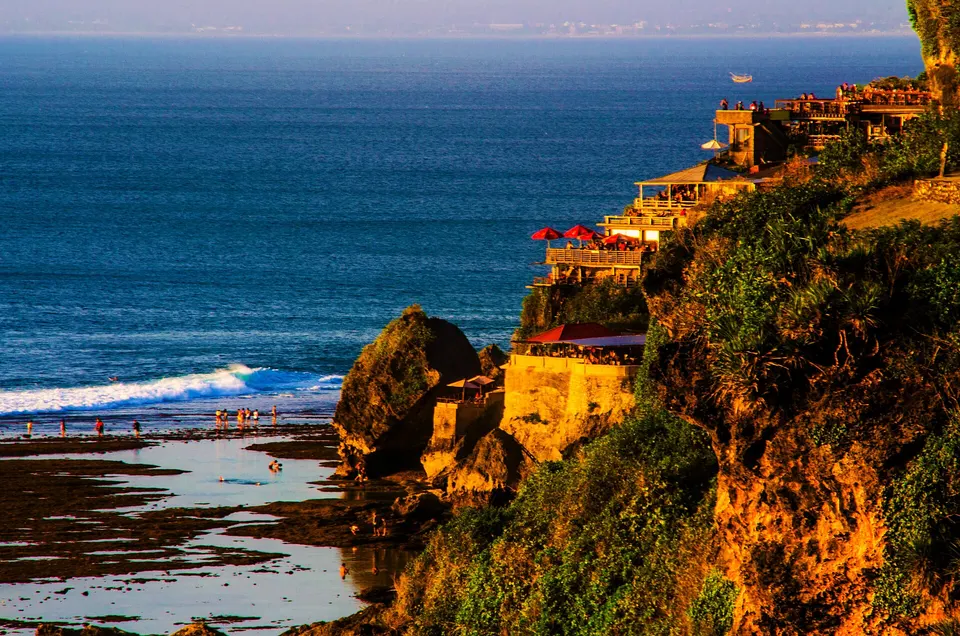
- Cliff terraces — Cafés and surf shops stacked above the reef
On 25 February 1972 Morning of the Earth premiered, the film by Alby Falzon and David Elfick that changed the fate of this corner of Bali. Its crew had travelled to the island meaning to film the waves of Kuta, but ended up at Uluwatu, and with those images the area was “discovered” as a surfing destination. The gateway to that wave was, and still is, Suluban Beach, also called Blue Point: a strip of sand beneath the cliff that can only be reached through a cave.
Knowing what to see at Suluban Beach means following a descent: from the café terraces high on the cliff to the staircase that zigzags between warungs and, at the end, to the limestone tunnel that opens onto the sand and the Peak channel. The history of Suluban Beach is written in that route, from the first surfers who walked down carrying everything to the luxury Uluwatu of today. The audio guide tells it in three stops, on the spot.
On the same cliff stands Uluwatu Temple, and along the Pecatu coast the surf coves continue, with Padang Padang Beach as the best-known neighbour.
Cafés hanging over the reef
Cliff terraces
Summary of this stop
High on the Suluban cliff, cafés and surf shops are piled one on top of another, and from their terraces the whole Uluwatu reef unfolds. Down there five waves line up, from outside to inside: Bombie, Temples, Outside Corner, Racetracks and the Peak, the last one right at the mouth of the cave, the point where surfers enter and leave the water. Temples owes its name to an old temple on the cliff that overlooks it; Racetracks is an extremely fast wave that ends, at low tide, in shallow barrels over the reef.
The best conditions come with the southwest swell during the dry season, from May to October, with southeast winds; on the biggest days, the outer Bombie can reach about twenty feet. That same landscape tells another story: in recent decades, a barely inhabited coast has become one of Bali’s most prominent luxury destinations, with resorts, villas and beach clubs on the cliffs, and with growing concern for the fragile coastal ecosystem and for traffic. What that transformation says about the wave that triggered it is revealed in the narration, facing the five breaks.
The staircase and the film crew
Foot of the stairs
Summary of this stop
A concrete staircase zigzags down between warungs to the rock, just above the cave. That descent has a geological reason: the rugged limestone coast of Pecatu isolates small, short beaches, and for a long time their waves could only be reached on foot or by long staircases.
In 1972 there were not even roads to the beach. For the shooting of Morning of the Earth, a fifteen-year-old boy, Steve Cooney, caught the first recorded wave at Uluwatu, and the surfers of the time walked down with all their supplies on their backs until they reached the water through the cave. A crew that had come to film Kuta ended up portraying the birth of another myth.
Islanders’ popular belief holds that the gods blessed those who surf the Uluwatu wave, because a wave so perfect can only be divine. How that blessing fits with the story of that first descent is part of what the audio guide reserves for this point on the staircase.
Passing beneath
The cave
Summary of this stop
At the end of the descent the sea cave opens: a tunnel in the limestone that leads out onto the sand and the Peak channel. It is here that the name of the beach is understood without the need for translation. Suluban comes from the Balinese word mesulub, to pass beneath something, because the beach lies under the cliff and is reached through rock tunnels.
Located in the village of Pecatu, just west of Padang Padang, Suluban tends to be calmer than its neighbours. But its cave is also the gate to the reef: the Peak breaks right at its mouth, and through it come and go the surfers heading for the five waves of Uluwatu. The audio guide’s final stop, at the edge of the sand, closes the route right where the beach explains itself.