Sea temple on the cliff
Uluwatu Temple Audio Guide (Pura Luhur Uluwatu)
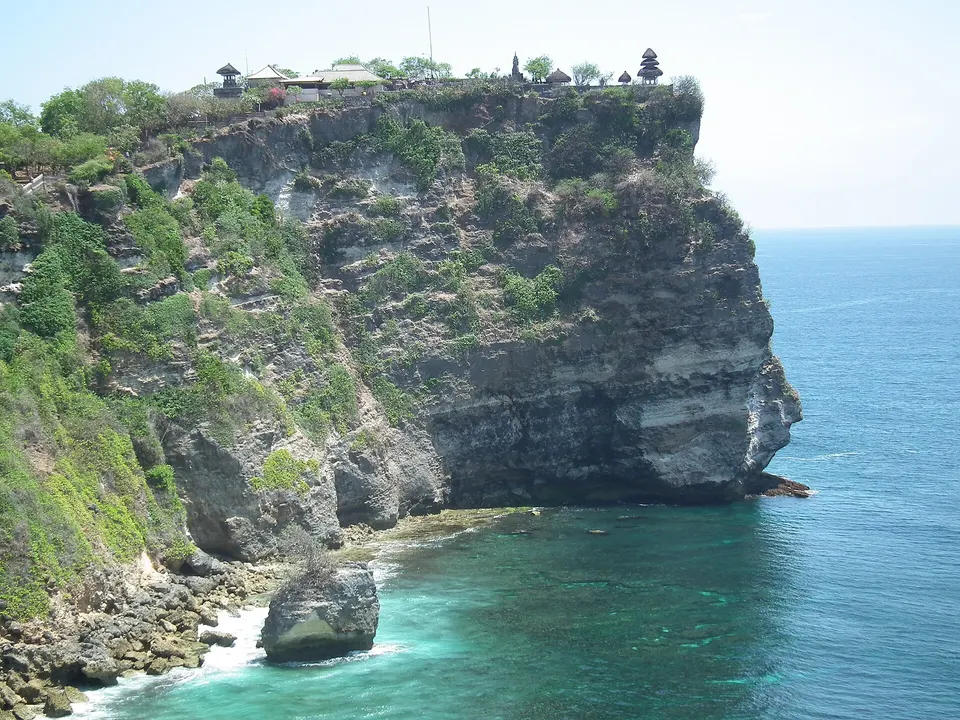
At the southwestern tip of Bali, on the edge of a limestone cliff some seventy metres high, a sea temple watches over the island. Every evening at six, a chorus of men chanting “cak” turns the sunset into the Ramayana.
- 90 min of audio
- Kecak dance at sunset
Pura Luhur Uluwatu stands on the southwestern tip of the Bukit peninsula, and its name joins ulu, the end or edge, with watu, rock. It is the only sea temple in Bali that is also one of the directional temples, the Pura Kahyangan Jagat that, according to Balinese Hindu belief, keep the island in spiritual balance. It is dedicated to Sang Hyang Widhi Wasa in his manifestation as Rudra, and was notably expanded by the Javanese sage Empu Kuturan in the 11th century.
The priest Dang Hyang Nirartha, who arrived from Java in the late 15th century, is credited with the padmasana shrine, and he is said to have attained moksha here, liberation from the cycle of rebirth. The Balinese call that ascent ngeluhur, to rise, and that is where the temple's epithet Luhur comes from. Meanwhile, along the railings patrols a troop of macaques that steal sandals, glasses and phones and trade them for food.
Highlights
- Uluwatu cliff — Temple on the edge of a limestone wall some seventy metres above the sea
- North cliff walk — Paved path with the temple perched on the promontory to the south
- Candi bentar — Split gate of carved stone before the inner courtyard and its tiered meru
- Uluwatu macaques — A troop that steals objects and has learned to trade them for food
- Kecak amphitheatre — Stone seating for 1,400 people and a daily dance at six facing the sunset
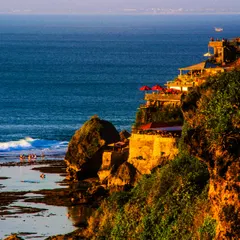
On the southwestern tip of the Bukit peninsula, where Bali runs out against the ocean, Uluwatu Temple (Pura Luhur Uluwatu) leans over the edge of a limestone cliff some seventy metres high. The name itself sums it up: ulu, the end, and watu, the rock. This is no ordinary temple. It is the only sea temple on the island that is also among the directional temples, the Pura Kahyangan Jagat that, according to Balinese Hindu belief, hold Bali in spiritual balance. It is consecrated to Sang Hyang Widhi Wasa in his manifestation as Rudra, and forms part of the chain of sea temples that protect the coast: according to tradition, each one can see the next.
The history of Uluwatu Temple is written with the names of sages. A small shrine is said to have existed here before, but it was the Javanese Empu Kuturan who notably expanded it in the 11th century. In the late 15th century the Shaivite priest Dang Hyang Nirartha arrived from Java, credited with introducing the padmasana shrine and said by tradition to have attained moksha here. Today the complex also hosts a troop of long-tailed macaques famous across Bali and an amphitheatre where the Kecak dance is performed every evening at six. What to see at Uluwatu Temple is arranged in four stops, from the gate to the amphitheatre, and the 90-minute audio guide accompanies the route as the sun sinks over the sea.
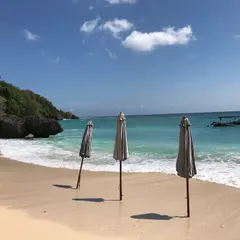
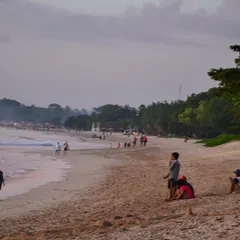
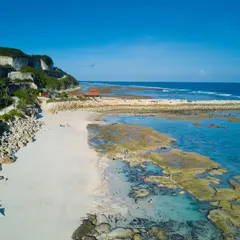
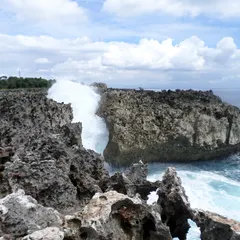
Visitors to the temple usually complete the day on the same stretch of the Bukit: the wave breaking at its feet is the one at Suluban Beach, the cliffs continue towards Padang Padang Beach, and the Kecak at sunset has its echo in the south of the peninsula, at Melasti Beach.
Wrapped in a sarong at the entrance
Temple entrance
Summary of this stop
The route begins just past the ticket booth, on the esplanade before the cliff paths. Here every visitor receives a sarong and a sash, included with the ticket: without them the temple precinct cannot be entered. It is the first gesture that separates the outside from the sacred space.
That threshold makes sense once one knows where one is. Pura Luhur Uluwatu is a pura segara, a sea temple, and at the same time one of Bali’s directional temples, a combination found nowhere else on the island. Its dedication to Rudra and the reason for dressing to enter are unpacked in the narration, on the same esplanade.
The temple on the promontory
Cliff viewpoint
Summary of this stop
From the railed viewpoint of the north cliff walk, the temple appears perched on the southern promontory, on the edge of the limestone, with the sea seventy metres below. It is the view that explains the place: the island ends here and the temple plants itself right on that edge. Bali’s sea temples form, according to tradition, a chain of spiritual protection around the coast, and Uluwatu’s is credited with the mission of protecting the island against evil.
From this point also starts the story of the sages who chose the cliff: Empu Kuturan, who expanded the temple in the 11th century, and Dang Hyang Nirartha, credited with the padmasana shrine. And alongside them, the most visible inhabitants of the precinct: the long-tailed macaques, famous for snatching sandals, sunglasses and phones. Primatologists have documented that the monkeys of Uluwatu learn to trade what they steal for food and pass that skill on to their young. How that bartering works is told at the viewpoint, with the troop in sight.
The split gate and the forest that guards it
Split gate
Summary of this stop
Before the outer courtyard rises the candi bentar, the split gate of carved stone. Beyond lies the inner courtyard, closed to those who do not come to pray, with the tiered meru peeking over the top. Rudra’s shrine can be sensed, but not entered.
This temple lives by its own calendar. Its piodalan, the anniversary festival, falls every 210 days, on the day Selasa Kliwon of the Medangsia week of the Balinese calendar. And it has a plant guardian: in front of the temple grows a small forest, the alas kekeran, protected by the customary law of the village of Pecatu as a cushion for the sanctity of the place. A provincial regulation of 2009 that tried to ban construction within five kilometres around led to years of lawsuits with the village.
Here too comes the documented tradition about Nirartha: the sage is said to have ended his earthly journey on this cliff by attaining moksha, liberation from the cycle of rebirth, and from that ascent, ngeluhur, “to rise”, comes the name Luhur. A holy man who, according to the tale, simply rose from here and never came down.
A chorus of voices for the sunset
Kecak amphitheatre
Summary of this stop
The stone seating of the Kecak amphitheatre, open-air above the sea, holds up to 1,400 people. Every evening at six, the Kecak dance based on the Ramayana begins there, with the sunset as a backdrop: Uluwatu is Bali’s most popular place to see it. The performance lasts a little under an hour and the torches are lit only in the final act.
The Kecak took its form in the 1930s, when the German painter Walter Spies and the Balinese dancer Wayan Limbak turned the sanghyang trance ritual and its male chorus into a Ramayana drama. There are no instruments: a chorus of men chanting “cak” replaces them. Bare-chested, the singers form concentric circles around a coconut-oil lamp and embody Rama’s monkey army, in a story that runs from the golden deer and the abduction of Sita to Hanuman’s search and the final battle against Ravana.
Beneath the seating, the rock holds its own legend: according to local folklore, the crag on which the temple stands is a fragment of the petrified boat of the goddess Dewi Danu. What that legend adds to the spectacle is reserved for the narration in the amphitheatre, as the sun falls into the sea.