Gaudí in León
Casa Botines Audio Guide (Casa Fernández y Andrés)
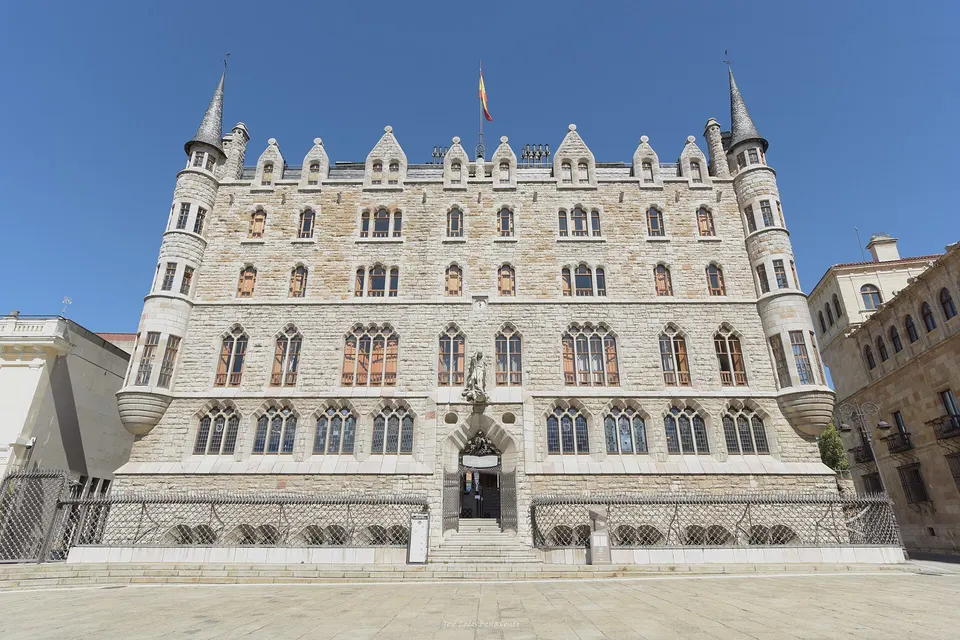
A castle with a medieval air that Antoni Gaudí raised in the very centre of León, far from Catalonia. Turrets, a moat, a Saint George with a secret and a bronze architect keeping watch over his work.
- 40 min of audio
- Neo-Gothic architecture
Casa Botines was designed by Antoni Gaudí and built between 1891 and 1892, in the architect's professional youth. It is one of his few works located outside Catalonia, which makes it a rarity within his career. It stands in the Plaza de San Marcelo, next to the Palacio de los Guzmanes, and is declared a Bien de Interés Cultural.
The building began as a textile warehouse with homes on the upper floors, commissioned by the merchants Fernández and Andrés. Gaudí gave it a medieval, neo-Gothic look, with corner turrets and a moat around it, and above the door he placed a Saint George that, according to the story, guarded the plans signed by the architect himself.
Highlights
- Turrets and moat: a small urban castle in the centre of León
- Saint George and the dragon above the main door
- Plans signed by Gaudí found in the base of the sculpture
- Bronze Gaudí seated on a bench in front of his work
- A museum dedicated to Gaudí and to the house itself
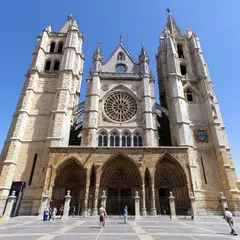
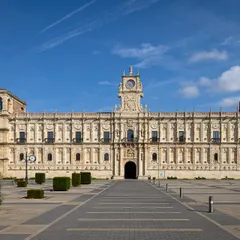
The history of Casa Botines begins between 1891 and 1892, when a still-young Antoni Gaudí designed in León one of the very few buildings of his located outside Catalonia. Anyone looking for what to see at Casa Botines finds a neo-Gothic palace with an almost fairy-tale silhouette, in the Plaza de San Marcelo, next to the Palacio de los Guzmanes. Declared a Bien de Interés Cultural, the house mixes commercial history, signature architecture and a small mystery hidden in stone. The full experience comes from walking it with the audio guide, stop by stop. A few steps away stands Leon Cathedral, and along the Ordoño II axis monumental León links up with the Convent of San Marcos and, as more recent signature architecture, with the MUSAC.
A castle in the city
Casa Botines
Summary of this stop
In front of the façade, Casa Botines presents itself as a small urban castle. Gaudí gave it a medieval, neo-Gothic-inspired look, with conical turrets at the corners and a moat around it that reinforces the image of a fortress in the very centre of León.
The history of Casa Botines also has its share of oddity: it is an early work and one of the few by Gaudí outside Catalonia. The name, moreover, comes from a surname: “Botines” derives from Joan Homs i Botinàs, the previous owner of the textile business, Castilianised by popular use.
A Leonese tradition recounts that the neighbours distrusted the project and predicted that the building would come down for lack of the central columns they expected. According to the account, Gaudí defended his calculations, and the house is still standing more than a century later. The full outcome of that wager is saved for the narration on site.
The Saint George with a secret
Saint George of Casa Botines
Summary of this stop
Above the main door stands the sculpture of Saint George fighting the dragon, patron saint of Catalonia and a recurring motif in Gaudí’s work. It is the point where the architecture of the building becomes most symbolic.
The sculpture holds a documented story: when a restoration removed it, a tube with the original plans signed by Gaudí appeared in its base, hidden there by the architect himself. According to tradition, it worked as a time capsule or a secret signature, a wink to whoever might one day touch his work.
This stop also sets out the original commission: the house was built as the seat of a textile warehouse with homes on the upper floors, for the merchants Fernández and Andrés. Hence the local official name, Casa Fernández y Andrés.
Gaudí looks at his work
Statue of Gaudí, Casa Botines
Summary of this stop
In front of the building, a bronze sculpture shows Gaudí seated on a bench, taking notes as he observes his own work. It is the image that closes the walk and one of the most photographed in the square.
After decades as the seat of a bank, the house was restored and opened as a museum dedicated to Gaudí and to the house itself, with original elements preserved. With that new life, the building remains in use beside the Palacio de los Guzmanes, in the Plaza de San Marcelo.