Historic beach
Kuta Beach Audio Guide (Pantai Kuta)
Two and a half kilometres of sand where a fishing village met a Danish trader, an American with a redwood board and, later, the whole world.
- 60 min of audio
- Surf history
Kuta began as a small fishing village some twelve kilometres south of central Denpasar. From the 1930s it attracted Western visitors, in the 1960s its waves made it a surfers' destination and in the 1970s it filled with hotels, souvenir shops and restaurants. Today it is the capital of the Kuta district, in Badung regency.
Before tourism there was trade: Mads Lange, a Danish merchant, ran a trading post here from 1839, mediated between the Dutch and the Balinese kings and died in Kuta in 1856. His tomb, topped by an obelisk of 1927, still stands a few steps from the beach.
Highlights
- Sunset Beach — about 2.5 km of sand facing Sanur, the sunrise beach
- Kuta Beach Hotel — the first tourist hotel on Bali's south coast, opened in 1936
- Bob Koke's redwood board — brought from Hawaii; his boards are still in Bali
- Pura Batu Bolong Kuta — a small Hindu temple that survives from the fishing village
- Mads Lange obelisk — raised in 1927 over the Danish merchant's tomb
The history of Kuta Beach begins long before rental boards and crowded sunsets. First it was a fishing village; in the mid-19th century, a Dane’s trading post; in 1936, the setting of the first tourist hotel on Bali’s south coast. From the 1930s the first Western visitors arrived, in the 1960s the waves drew surfers and in the 1970s the coastal strip filled with hotels, shops and restaurants. Its two and a half kilometres of sand, known as Sunset Beach, hold each of those layers, and the route with the audio guide unearths them one by one, from the shoreline to the obelisk hidden in an alley.
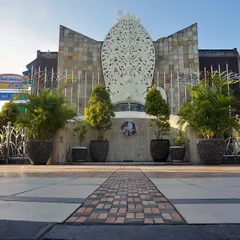
On the same main street of Kuta stands the Bali Bombing Memorial, and the same strip of sand continues to Double Six and Legian Beach. Bali’s surf, from the first boards of Kuta, reaches the waves of Pura Batu Bolong and Echo Beach.
Bali’s first surfboard
Kuta Beach
Summary of this stop
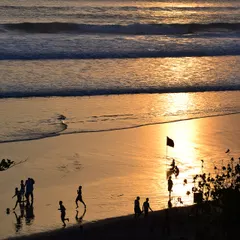
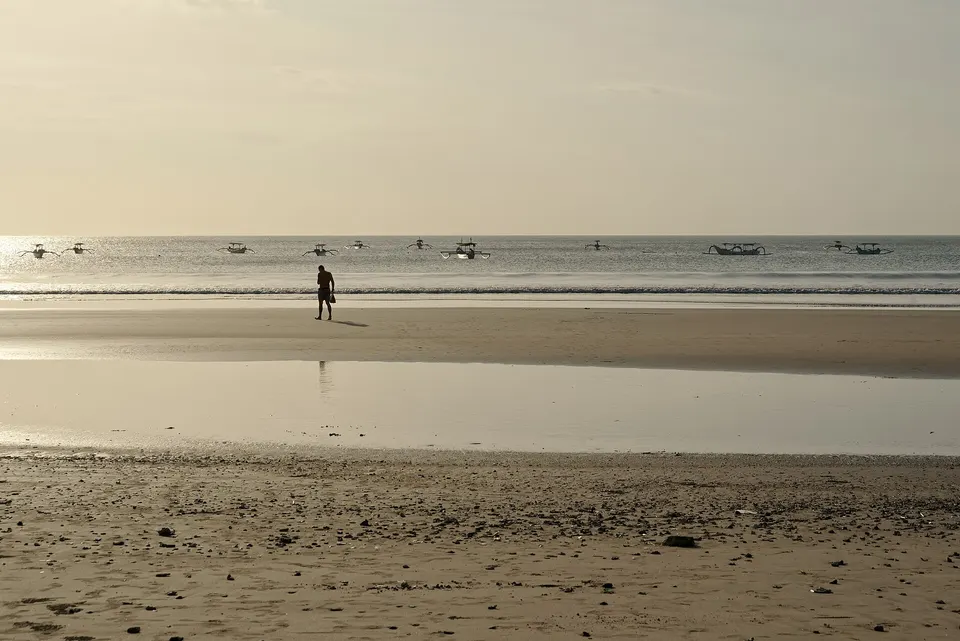
The route starts on the sand facing Beachwalk, the open-air shopping centre on Jalan Pantai Kuta, with tropical gardens, sheets of water, a design inspired by the island’s rice terraces and a cinema. In front break the long sandy-bottomed waves where surf schools now teach beginners. It is Bali’s sunset beach, in contrast with Sanur, the sunrise one on the east coast.
In 1936 the American Bob Koke and Louise Garrett opened the Kuta Beach Hotel here, the first tourist hotel on the south coast, on the beachfront now occupied by the Hard Rock Hotel. Koke had his redwood board brought from Hawaii and had shorter wooden boards carved on the island to teach guests and village children; those boards are still in Bali. The hotel burned during the Japanese occupation, and after Koke the island went some thirty years without anyone surfing on a board.
Even the name has its story: it is said that the spelling Kuta took hold because Western guests pronounced the Dutch Koeta that way, and the Kokes named their hotel after the sound. What that sand learned in those years is revealed by listening to the narration right there.
The village beneath the resort
Beach temple
Summary of this stop
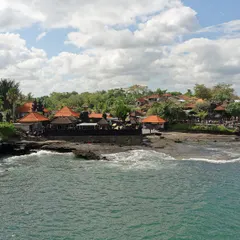
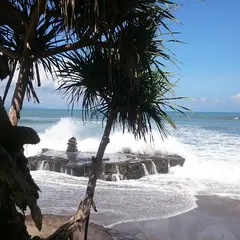
On the beach road, among hotels and shops, a small Hindu temple survives: Pura Batu Bolong Kuta. It is a remnant of the fishing village Kuta was before Western visitors arrived in the 1930s, and it recalls that the sea fed this place long before becoming its draw.
Kuta lies some twelve kilometres south of central Denpasar and is the capital of the Kuta district, in Badung regency. The village was swallowed by the resort, but its temple remains on the front line.
This stop also takes in the wound of 2002: on 12 October that year, two bomb attacks in Kuta killed 202 people and injured 209. The narration ties the village, the sea and that date together at a single point on the shore.
The Dane of Kuta
Mads Lange's tomb
Summary of this stop
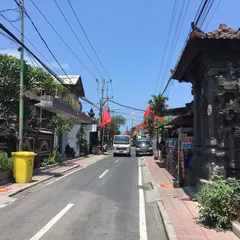
At the end of Gang Tuan Lange, far from the front line, stands the stone obelisk of Mads Lange. This Danish merchant, born in 1807, settled in Bali in 1839 and ran a trading post in Kuta, which turned the village into a port long before tourism existed.
In the late 1840s he acted as mediator between the Dutch and the Balinese kings. He died in Kuta on 13 May 1856 and is buried here; the obelisk raised over his tomb in 1927 commemorates his eighteen years on the island.
The monument closes the route with the oldest layer: before surf and hotels, the fishing village was already opening to the outside world through trade. How a Dane came to that role is left for the audio guide, in front of the stone.