Balinese sea temple
Pura Batu Bolong and Echo Beach Audio Guide (Pura Batu Bolong Canggu / Pantai Batu Mejan)
A centuries-old temple consecrated to the lord of the sea stands on the black sand of Canggu, with a slow longboard wave breaking right in front of it. It is the newest Bali, thrown up in a hurry on top of the oldest.
- 60 min of audio
- Sea temples and surf
Canggu is a coastal village in south-west Bali, with a ten-kilometre beach some ten kilometres north-west of Kuta, in the North Kuta district of Badung regency. Two important temples rise along that shore, Pura Batu Bolong and Pura Batu Mejan, both hundreds of years old and, according to tradition, built on the initiative of Dang Hyang Nirartha. Batu Bolong means hollow rock, and the temple is dedicated to Ida Bhatara Segara, the lord of the sea.
The contrast defines the place: where there were once rice paddies and coconut groves, tourist development has raised a surf town, and in front of the black-roofed shrines longboards wait for the Old Man's wave. Fresh water springs from the hollow in the rock and is used as holy water, a few steps from one of the island's gentlest breaks.
Highlights
- Pura Batu Bolong — Sea temple dedicated to Ida Bhatara Segara, with holy water springing from the hollow rock
- Meru shrines — Tiered roofs of hardwood and black palm fibre
- Old Man's — One of the few Bali waves suited to longboards, right in front of the temple
- Echo Beach — Canggu's westernmost beach, of black volcanic sand
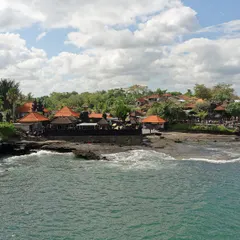
- Pura Batu Mejan — The sister temple on the rocks, with its staircase and its gateway over the water
Canggu has become the newest Bali: cafés, board workshops and motorbikes occupy a coast that used to be rice paddies and coconut groves. But beneath that new layer the oldest one keeps working. On the black volcanic sand of this village in the island’s south-west, some ten kilometres north-west of Kuta, stand two sea temples with hundreds of years of history, Pura Batu Bolong and Pura Batu Mejan, attributed by tradition to the priest Dang Hyang Nirartha.
To understand what to see at Pura Batu Bolong and Echo Beach and the history of Pura Batu Bolong, the route moves through three points of the beach: the gate of the temple dedicated to the lord of the sea, the Old Man’s wave breaking in front of it, and Echo Beach, at the foot of the sister temple. The EarGuide audio guide accompanies that walk on the sand, where the two Balis can be seen at once.
On the same west coast, Tanah Lot and Pura Petitenget complete the chain of sea temples facing the sunset, and the story of surfing in Bali begins a few kilometres south, at Kuta Beach.
The lord of the sea
Batu Bolong Temple
Summary of this stop
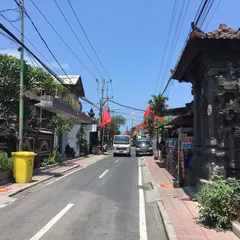
The route starts at the temple gate, on the street that runs down to Batu Bolong beach. The name says it all: Batu Bolong means hollow rock, and fresh water springs from that pierced stone and is used as holy water. The shrine is consecrated to Ida Bhatara Segara, the lord of the sea, and is a temple in full use on the newest stretch of the coast.
From the street, the meru shrines peer over the wall, tiered towers with roofs of hardwood and black palm fibre, the most recognisable feature of the architecture of Pura Batu Bolong. The compound keeps its rules: no one enters the shrine without traditional dress, nor do women during menstruation.
On the ground and on the altars the canang sari appear daily, trays of palm leaf with flowers and incense. What that hollow stone says about Bali’s relationship with the ocean is revealed by listening to the narration right there.
Old Man’s and the surf town
Batu Bolong Beach
Summary of this stop
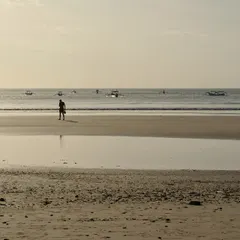
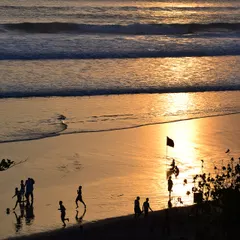
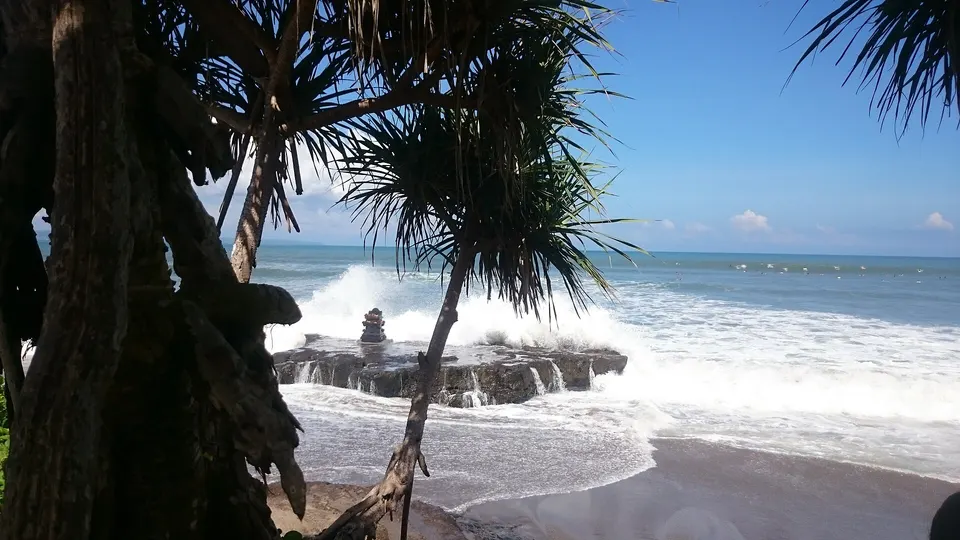
Right in front of the temple, on the sand of Batu Bolong, Old Man’s breaks, a gentle wave suited to longboards: among surfers Canggu is known as one of the few places on the island for long boards. The Deus Ex Machina outpost holds classic single-fin longboard contests every year.
That scene has a recent beginning. Around 2010, Deus Ex Machina opened its Temple of Enthusiasm in Canggu, a café, workshop and board store in one, and the venue became the focus of the area’s surf and motorbike culture.
The price of the boom can also be seen from the shore. Canggu, a coastal village with a ten-kilometre beach, had views of rice paddies and coconut groves that tourist development has largely replaced. How that agricultural past lives alongside the surf town that grew around it is the thread of this stop.
Echo Beach and the sister temple
Echo Beach
Summary of this stop
The walk ends at Echo Beach, also called Batu Mejan beach, the westernmost of Canggu’s beaches. It has black volcanic sand and is the best-known break in the area. On the rocks stands Pura Batu Mejan, the sister temple, with its staircase and its gateway over the water.
The two shrines form a pair: both are hundreds of years old and, according to tradition, were built on the initiative of Dang Hyang Nirartha. Their ritual calendar is still alive. Pura Batu Bolong celebrates its anniversary, the piodalan, every two hundred and ten days on a Wednesday, and hosts purification rituals for sacred objects and ceremonies such as the Melasti.
At the end of the route, Echo Beach sums up the thesis of the place: Bali’s newest coast built at top speed on top of its oldest, with the sea temples still in their place. What looking at the two Balis side by side reveals is left for the narration on the sand.