Sacred water temple
Tirta Empul Temple Audio Guide (Pura Tirta Empul)
A water temple founded in the year 962 where the sacred is not merely contemplated: it is stepped into, with cold water up to the waist, beneath thirty spouts that spring from the source of the Pakerisan River.
- 60 min of audio
- Purification ritual
Pura Tirta Empul was founded in the year 962, in the time of the Warmadewa dynasty, and Indonesian sources attribute its construction to King Sri Candrabhayasingha Warmadewa. Beside the village of Tampaksiring, in the Gianyar regency, the temple is dedicated to Vishnu and is arranged in three courtyards, jaba pura, jaba tengah and jeroan, advancing towards the most sacred, which faces the mountain. Its water, considered amritha, holy water, is still that of the melukat purification ritual.
In the row of stone spouts there is one that nobody uses. It is the Pancuran Cetik, the spout of poison: according to a documented tradition, it recalls the water that the demon king Mayadenawa poisoned, before the god Indra drove his spear into the earth and made spring forth the water that brought his soldiers back to life.
Highlights
- Purification pools — Thirty stone spouts where the melukat ritual is performed
- Pancuran Cetik — The spout of poison tied to the legend of Indra and Mayadenawa
- Spring pool — Water wells up through the sand and gives rise to the Pakerisan River
- Foundation in 962 — A temple of the Warmadewa dynasty dedicated to Vishnu
- Cultural Landscape of Bali — The Pakerisan basin, inscribed by UNESCO in 2012
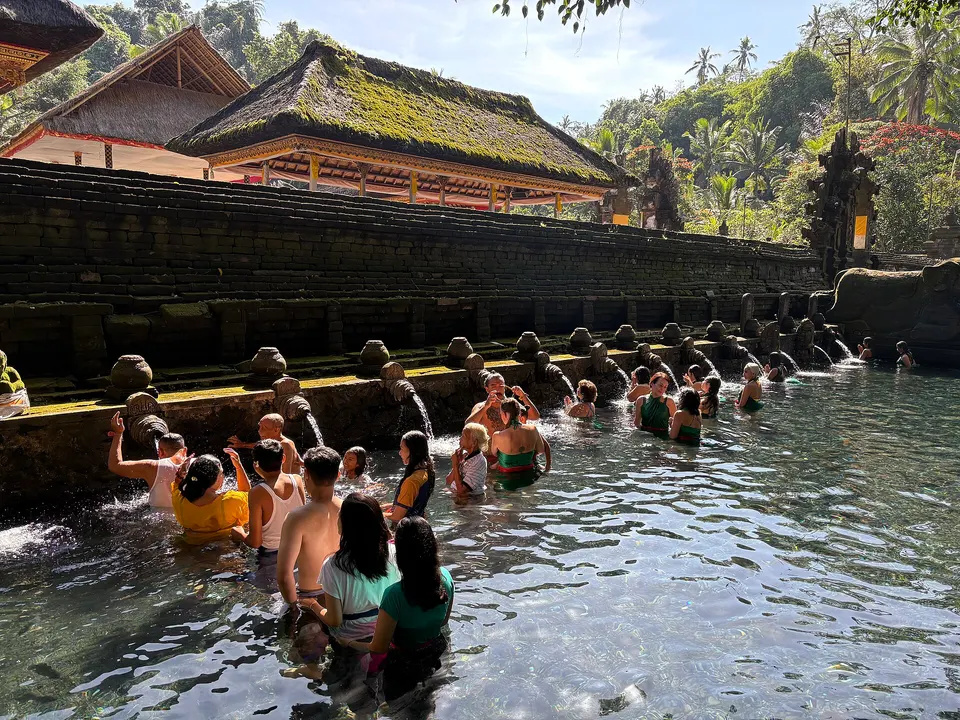
Near the village of Tampaksiring, in the Gianyar regency, water comes out of the earth and people step into it to become clean. The Tirta Empul Temple (Pura Tirta Empul) was founded in the year 962, during the Warmadewa dynasty, and Indonesian sources attribute its construction to King Sri Candrabhayasingha Warmadewa. More than a thousand years later it is still a living temple: Balinese Hindus queue, waist-deep in water, beneath the stone spouts to perform the melukat, the purification ritual.
The history of Tirta Empul is bound up with its spring. The temple is dedicated to Vishnu, the water that wells up inside it is considered amritha, holy water, and from that same spring is born the Pakerisan River. Its basin forms part of the Cultural Landscape of Bali Province, inscribed by UNESCO in 2012, together with the rock-cut shrines of Gunung Kawi.
To learn what to see at Tirta Empul, the audio guide covers it in three stops and 60 minutes of narration: from the outer courtyard to the purification pools and, at the far end, to the pool where the water bubbles through the sand. The whole route follows one idea: here the sacred is not looked at, it is stepped into.
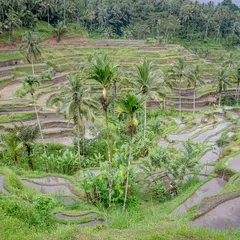
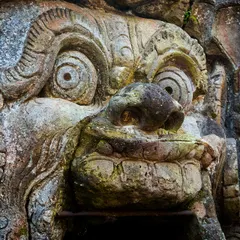
To the south, the water that sustains the subak rice fields can be seen at the Tegallalang Rice Terraces, and among the ancient sanctuaries of the sacred river valleys counts Goa Gajah.
A living temple a thousand years old
Outer courtyard
Summary of this stop
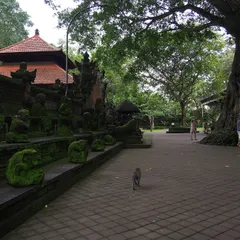
The route begins in the outer courtyard, just past the entrance and before the split gate, the carved-stone candi bentar that leads into the central courtyard. It is the first step of the architecture of Tirta Empul, which divides the temple into three courtyards: jaba pura, the front courtyard; jaba tengah, the central courtyard; and jeroan, the inner one.
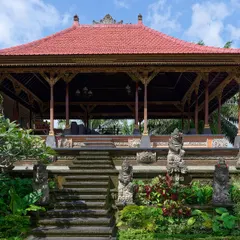
That order is no accident. In a Balinese temple the inner courtyard is the most sacred zone and faces the mountain, and the tower-shaped gate that separates the courtyards is the kori agung. That the temple was founded in 962, in the Warmadewa dynasty, does not make it a ruin: it is a place of worship in use, with its own rules for those who arrive.
In this first courtyard the audio guide explains how to move through a temple that is still in operation, and what changes on passing from one courtyard to the next.
The thirty spouts and the poisoned water
Purification pools
Summary of this stop
In the central courtyard wait two long rectangular pools with thirty carved stone spouts. Some have names of their own: Pengelukatan, Pebersihan, Sudamala and the Pancuran Cetik, the spout of poison. Beneath them, worshippers advance waist-deep in water for the melukat, purification with the holy water of a temple consecrated to Vishnu.
Documented tradition explains the origin of the spring. It is told that the demon king Mayadenawa poisoned the water and killed the troops of the god Indra; Indra then drove his spear into the earth and from it sprang the sacred water that brought the dead soldiers back to life. The Pancuran Cetik, according to that same tradition, recalls the water of Mayadenawa.
That is why in one row of spouts there is one that everyone skips. Beside the pool, the narration reveals the order of the spouts and why the ritual is not done just any way.
Where the river is born
Spring pool
Summary of this stop
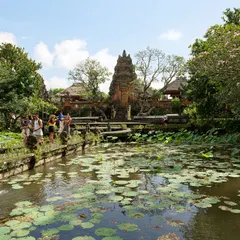
To the north, beneath the inner gate, a walled pool holds the origin of it all: the spring bubbles up through the sand, and that water is the source of the Pakerisan River. The Pakerisan basin is one of the areas of the Cultural Landscape of Bali Province that UNESCO inscribed in 2012, together with the rock-cut shrines of Gunung Kawi.
From here, on the western hill, can be seen the white buildings of a presidential villa built for the visit of President Sukarno in 1954, which today serves as a residence for important guests. The sacred water has not escaped its surroundings either: a 2017 report documented E. coli contamination in the temple’s water, attributed to waste from the surrounding area, and the Gianyar authorities opened investigations; for that reason bathers are advised not to swallow the water.
In front of the spring, the audio guide closes the route by joining the water that wells up, the river it forms and the recent history that peers from the hill.