


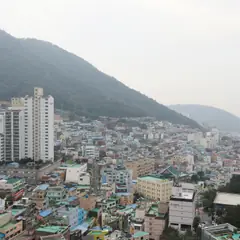
Refugee neighbourhood
Gamcheon Culture Village
What to see in Gamcheon Culture Village: stepped refugee houses, murals, the Little Prince above the ravine and viewpoints over Busan's harbour.
Busan, South Korea
Explore Busan with 32 audio stops and documented, fact-checked narration. From the markets that returnees and refugees built beside the South Port to the cliffs of Taejongdae, every place tells how the refugee city of the Korean War became the country's great port.
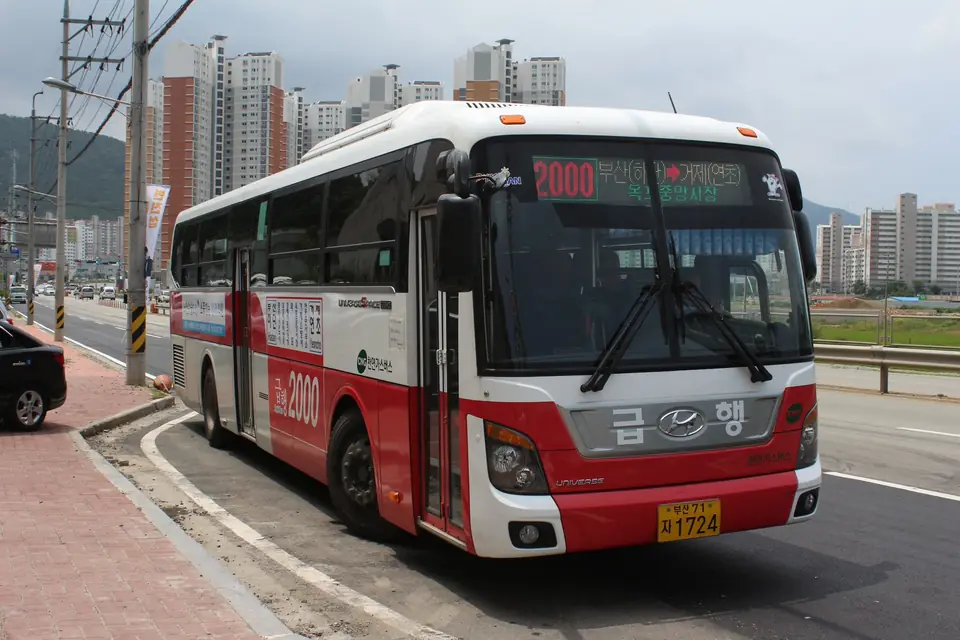
Refugee neighbourhood
What to see in Gamcheon Culture Village: stepped refugee houses, murals, the Little Prince above the ravine and viewpoints over Busan's harbour.
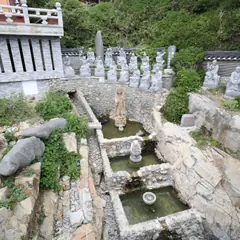
Buddhist temple by the sea
What to see at Haedong Yonggungsa: the 108 steps down to the sea, the pagoda against accidents, the cave hall of the Buddha who grants sons and the great stone Gwaneum.

Fish market
What to see at Jagalchi Market: the street ajimae, the live fish tanks, charcoal-grilled eel and the South Port waterfront of Busan.
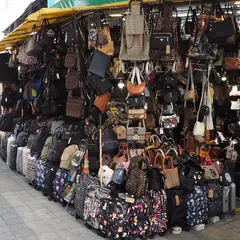
Busan Future Heritage
What to see at Gukje Market: twelve blocks born in 1945, the Korean War refugee bazaar and the Kkotbunine shop from the film Ode to My Father.
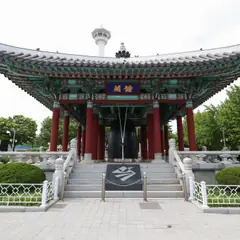
Viewpoint hill
What to see in Yongdusan Park in Busan: Busan Tower, the statue of Yi Sun-sin, the anti-fire stele and views over the harbour.
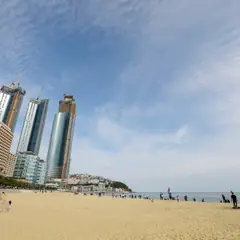
Urban beach
What to see at Haeundae Beach: the rock that gave it its name, the Dongbaekseom mermaid, its rows of parasols and the sand brought from the Yellow Sea.
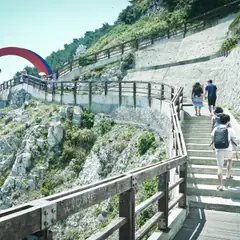
National scenic site
What to see at Taejongdae: 100 m cliffs, the 1906 Yeongdo Lighthouse, dinosaur footprints at Sinseon-bawi, the viewpoint over the Korea Strait and Taejongsa Temple.
Busan Audio Guide
Busan was Korea's provisional capital during the war, and much of what explains it was born of that refugee city. Beside the South Port, Jagalchi Market began in 1945 as street stalls of returnees on an old pebble beach, and its ajimae in red aprons still sell in the street; a few steps away, Gukje Market went from about 1,000 traders to tens of thousands with the war, burned in 1953 and was brought back to fame by a film in 2014. Above, Yongdusan Park occupies the hill that was the centre of the Japanese waegwan from 1678, today crowned by a 120-metre tower. On the slope of Gamcheon, the refugee shacks, stepped so as not to block each other's view, were painted in bright colours in 2009 instead of being demolished. To the south, the cliffs of Taejongdae, up to 100 metres high, hold a lighthouse lit since 1906 and dinosaur footprints; to the east, Haeundae Beach was rebuilt with 620,000 m³ of sand from the Yellow Sea, and on the Gijang coast Haedong Yonggungsa Temple is reached by going down 108 steps toward the sea.
With the EarGuide Busan audio guide, every place reveals its history through documented narration checked against historical sources. Unlike a free walking tour or a conventional guided visit, you set the pace, the order and the stops. No groups, no timetables, no internet connection.
No internet needed
Download the routes before you head out and explore without using data.
Smart geolocation
The narration starts by itself when you reach the point of interest.
Frequently asked questions
The EarGuide app is free. The Busan audio guide includes 7 independent routes with about eight hours of narration spread across 7 sites and 32 audio stops, and it is found inside the app itself.
No. EarGuide works entirely offline. Download the routes over WiFi before you set out and you can use the audio guide with no connection and no data use throughout your visit. The map shows your GPS position in real time even without coverage.
The Busan audio guide is available in Spanish and English, with documented, fact-checked narration on the Japanese waegwan, the colonial era, the refugee city of the Korean War and the transformation of the port.
The audio guide brings together 7 independent routes with about eight hours of narration in total, from 45 minutes to 2 hours per route. The most comfortable way is to split them over two or three days: Jagalchi, Gukje, Yongdusan and Gamcheon in the centre, beside the South Port; Taejongdae on Yeongdo island, and Haeundae and Haedong Yonggungsa on the east coast.
They are different experiences. The EarGuide audio guide lets you explore Busan without timetables or groups, pause and resume whenever you like, and replay any explanation as often as you need. It suits independent travellers, families and anyone who prefers to understand the city at their own pace, with no prior knowledge of Korea.
The Busan audio guide covers 7 main sites: Gamcheon Culture Village, Haedong Yonggungsa Temple, Jagalchi Market, Gukje Market, Yongdusan Park, Haeundae Beach and Taejongdae.
Partly. Jagalchi Market, Gukje Market and Yongdusan Park are in the Nampo district, less than a kilometre from one another, and Gamcheon Culture Village sits on a hillside about two kilometres to the west. Taejongdae is at the southern tip of Yeongdo island, and Haeundae Beach and Haedong Yonggungsa Temple, on the east coast, are more than ten kilometres from the centre: for those, the metro or the bus is the most comfortable way.
Yes. Purchases belong to your EarGuide account, not to one app or one phone. A city unlocked in the EarGuide app is also unlocked in that city's own app, and the other way round, on both iPhone and Android. Just sign in with the same account on the other device. The store's “restore purchases” button only covers the app the purchase was made in, so signing in is what carries it across.
The Busan audio guide is inside the EarGuide app, free and ready to use offline. Carry it in your pocket and explore the city at your own pace.
More destinations
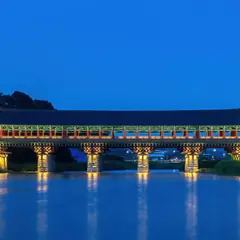
The ancient capital of Silla: hills that are royal tombs, a tower for watching the stars, a pond that pretended to be a sea and, on Mount Tohamsan, Bulguksa and Seokguram. Explore Gyeongju with audio guides.

The palace where the hangul alphabet was born, the court of a short-lived empire, a stream rescued from under a highway and a tower that changes colour with the air. Explore Seoul with audio guides.
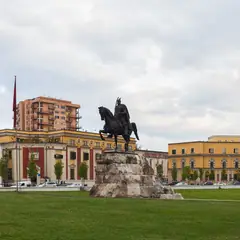
3 cities
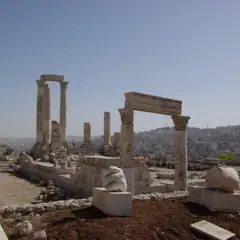
7 routes · ~6.5h of audio
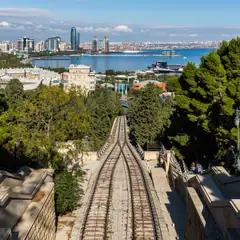
7 routes · ~6.5h of audio
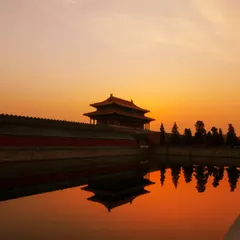
14 cities
3 cities
7 routes · ~7h of audio
7 routes · ~7.5h of audio
3 cities
3 cities

7 routes · ~5h of audio
4 cities
5 cities
9 cities
7 routes · ~5.9h of audio
3 cities
5 cities
4 cities

7 routes · 8h of audio
3 cities
4 cities
6 cities
3 cities
7 routes · ~5.5h of audio
7 routes · ~7.5h of audio
7 routes · ~5h of audio
7 routes · ~8.5h of audio

6 routes · 6h of audio
7 routes · ~6h of audio
7 routes · ~5h of audio
3 cities
7 routes · ~8.5h of audio
7 routes · ~7h of audio
10 cities
3 cities
7 routes · ~9h of audio
7 routes · ~5h of audio
7 routes · ~9h of audio

7 routes · ~6.5h of audio
8 cities
7 routes · ~9.5h of audio
4 cities
7 cities
7 routes · ~6h of audio