


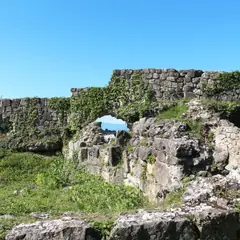
11th-century cathedral
Bagrati Cathedral
11th-century cathedral in Kutaisi, dated 1003 in Arabic numerals, blown up by the Ottomans and rebuilt in 2012 with a green dome and a modern arm.
Kutaisi, Georgia
Explore Kutaisi with 31 audio stops and documented, fact-checked narration. From the cathedral with which Bagrat III celebrated the unification of Georgia to the monastery David the Builder wanted people to tread on as they entered, every place tells how the old capital of the kingdom, the Colchis of the Golden Fleece, became the Georgia of today.
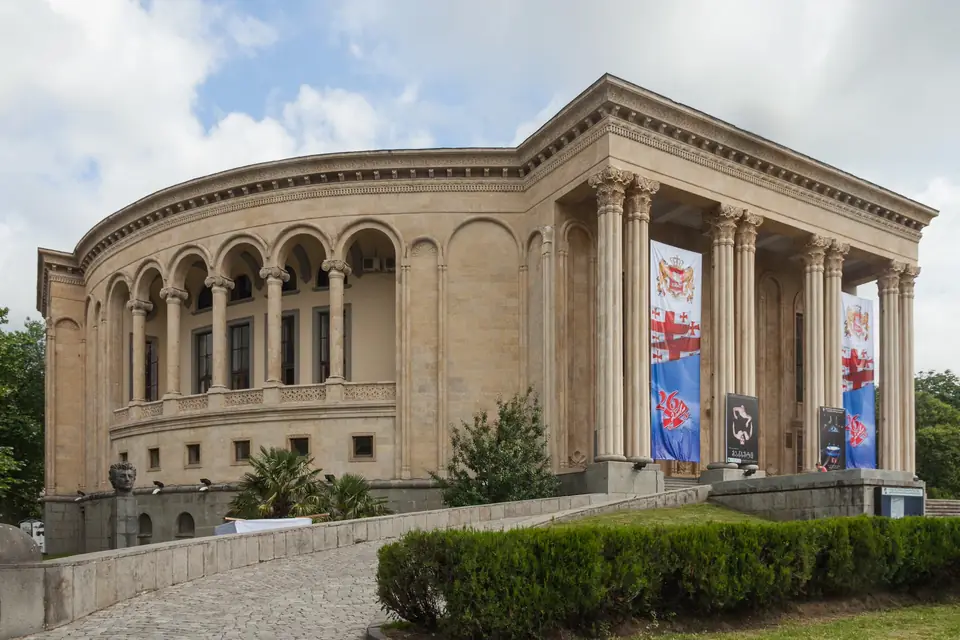
11th-century cathedral
11th-century cathedral in Kutaisi, dated 1003 in Arabic numerals, blown up by the Ottomans and rebuilt in 2012 with a green dome and a modern arm.
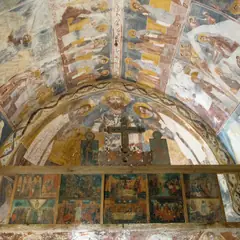
Royal pantheon of Georgia
Monastery of 1106 by Kutaisi: pantheon of the kings of Georgia, iron gate of Ganja, 12th-century gold mosaic and the medieval Academy.
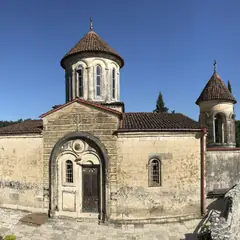
National monument of Georgia
Fortress-monastery above the Tskaltsitela canyon in Kutaisi, with the reliquary of two martyred 8th-century princes, wooden lionesses and a north-facing altar.
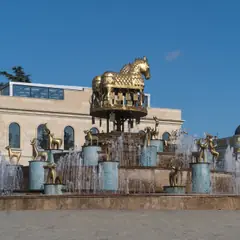
Icon of the central square
Cascading fountain in Kutaisi’s central square with some thirty golden figures that enlarge ancient jewels a few centimetres long: horses, a lion and a tamada.
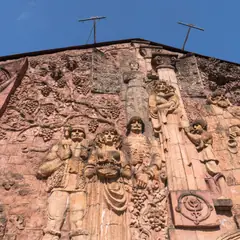
Traditional market
Large covered market in Kutaisi with the ceramic relief “Kolkheti” over the entrance, a Soviet hall of numbered stalls and the cheeses, churchkhela and tklapi of Imereti.
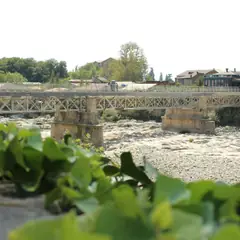
Historic bridge
Iron bridge of 1871-1872 over the Rioni in Kutaisi, with a glass floor, engraved Georgian verses and the bronze boy with two hats.
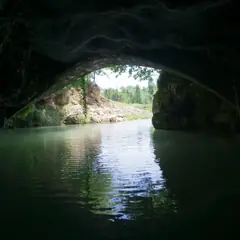
Karst cave
Karst cave near Kutaisi with stalagmites up to 10 m, six chambers named after the Argonauts and a boat exit along an underground river.
Kutaisi Audio Guide
Kutaisi was the capital of the kingdom of Georgia and is explored on both sides of the Rioni. On Ukimerioni Hill, Bagrati Cathedral bears the year 1003 in the oldest Arabic numerals in the country: blown up by the Ottomans, it spent three centuries without a roof and in 2012 regained its dome at the price of losing its UNESCO status. Across the river, the White Bridge, of iron and dating from 1871-1872, lets the water show beneath a glass floor and keeps on its railing a bronze boy with a hat in each hand. A few steps away, the Colchis Fountain enlarges to giant scale ancient jewels only a few centimetres long, and the Green Bazaar opens its halls of cheese, churchkhela and tklapi beneath a ceramic relief where King Aeëtes holds the Golden Fleece. On the outskirts lie Gelati Monastery, founded in 1106 by David IV the Builder, with the iron gate of Ganja and the only complete medieval mosaic in Georgia; Motsameta Monastery, hanging over a bend of the Tskaltsitela with the reliquary of two martyred princes; and Prometheus Cave, which is descended through chambers named after the Argonauts and left by boat along an underground river.
With the EarGuide Kutaisi audio guide, every place reveals its history through documented narration checked against historical sources. Unlike a free walking tour or a conventional guided visit, you set the pace, the order and the stops. No groups, no timetables, no internet connection.
No internet needed
Download the routes before you head out and explore without using data.
Smart geolocation
The narration starts by itself when you reach the point of interest.
Frequently asked questions
The EarGuide app is free. The Kutaisi audio guide includes 7 independent routes with about five hours of narration spread across 7 sites and 31 audio stops, and it is found inside the app itself.
No. EarGuide works entirely offline. Download the routes over WiFi before you set out and you can use the audio guide with no connection and no data use throughout your visit. The map shows your GPS position in real time even without coverage.
The Kutaisi audio guide is available in Spanish and English, with narration, documented and checked against sources, on the cathedral and the medieval monasteries, the centre on the banks of the Rioni and Prometheus Cave.
The audio guide brings together 7 independent routes with about five hours of narration in total, from 20 minutes to an hour and a quarter per route. The easiest way is to spread them over two days: one for the centre, with Bagrati Cathedral, the White Bridge, the Colchis Fountain and the Green Bazaar, and another for the outskirts, with Gelati and Motsameta monasteries and Prometheus Cave, the longest route.
They are different experiences. The EarGuide audio guide lets you explore Kutaisi without timetables or groups, pause and resume whenever you like, and replay any explanation as often as you need. It suits independent travellers, families and anyone who prefers to understand the city at their own pace, with no prior knowledge of Georgia.
The Kutaisi audio guide covers 7 main sites: Bagrati Cathedral, Gelati Monastery, Motsameta Monastery, the Colchis Fountain, the Green Bazaar, the White Bridge and Prometheus Cave.
The centre, yes. The Colchis Fountain, the Green Bazaar and the White Bridge are a few minutes’ walk from one another, and Bagrati Cathedral lies across the Rioni, on top of Ukimerioni Hill. Gelati and Motsameta monasteries are on the outskirts, above the Tskaltsitela valley, and Prometheus Cave is by the village of Kumistavi, on the Tskaltubo to Tsageri road: the practical way is to go by taxi, car or public transport.
Yes. Purchases belong to your EarGuide account, not to one app or one phone. A city unlocked in the EarGuide app is also unlocked in that city’s own app, and the other way round, on both iPhone and Android. Just sign in with the same account on the other device. The store’s “restore purchases” button only covers the app the purchase was made in, so signing in is what carries it across.
The Kutaisi audio guide is inside the EarGuide app, free and ready to use offline. Carry it in your pocket and explore the old capital of Georgia at your own pace.
More destinations
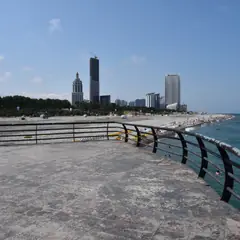
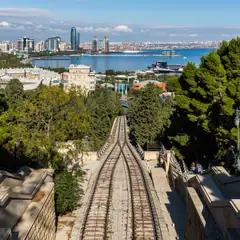
From the steel figures of Ali and Nino, who pass through each other every evening without touching, to the golden Medea of Europe Square and the garden above the Black Sea, with audio guides.
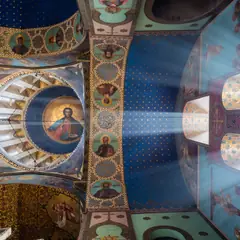
From Narikala Fortress to the sulphur baths that gave the city its name and the Dry Bridge flea market: the Georgian capital between domes, churches and glass, with audio guides.
3 cities
7 routes · ~6.5h of audio
7 routes · ~6.5h of audio
14 cities
3 cities
7 routes · ~7h of audio
7 routes · ~7.5h of audio
3 cities
7 routes · ~5h of audio
4 cities
5 cities
9 cities
7 routes · ~5.9h of audio
3 cities
5 cities
4 cities
7 routes · 8h of audio

3 cities
4 cities

6 cities
3 cities
7 routes · ~5.5h of audio
7 routes · ~7.5h of audio

7 routes · ~5h of audio

7 routes · ~8.5h of audio

6 routes · 6h of audio
7 routes · ~6h of audio
7 routes · ~5h of audio
3 cities
7 routes · ~8.5h of audio
7 routes · ~7h of audio
3 cities
10 cities
3 cities
7 routes · ~9h of audio
7 routes · ~5h of audio
7 routes · ~9h of audio
7 routes · ~6.5h of audio
8 cities
7 routes · ~9.5h of audio
4 cities
7 cities

7 routes · ~6h of audio