


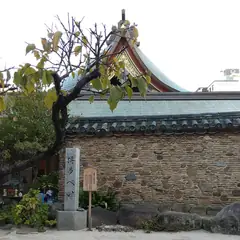
Shinto shrine
Kushida Shrine
Guardian shrine of Hakata: thousand-year-old ginkgo, haiden of three bells, Hakata-bei wall and the Yamakasa track with its giant 13-metre float.
Fukuoka, Japan
Explore Fukuoka with 34 audio stops and documented, fact-checked narration. From the 112-metre track where the Yamakasa floats race to the gate that still pleads for the Mongols' surrender, every place tells how the merchant town of Hakata and the Kuroda castle town ended up as one.
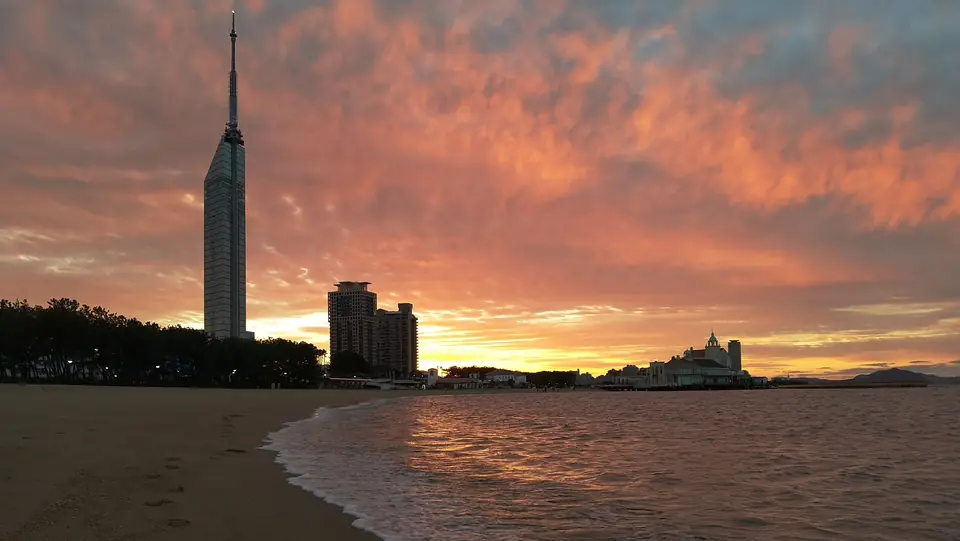
Shinto shrine
Guardian shrine of Hakata: thousand-year-old ginkgo, haiden of three bells, Hakata-bei wall and the Yamakasa track with its giant 13-metre float.
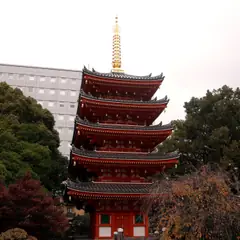
Kūkai's Shingon temple
What to see at Tochoji Temple: the Yamakasa gate, the hondō and five-storey pagoda, the hexagonal Rokkakudō, the tombs of the Kuroda lords and Fukuoka's great wooden Buddha.
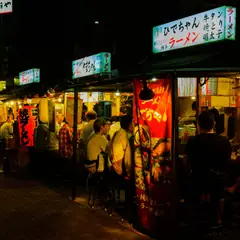
Street food
What to see at the Nakasu yatai: the row of night stalls beside the Naka river, their postwar history and Japan's first yatai law.
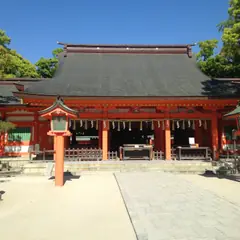
Shinto shrine
Shrine of the three sea gods in Hakata: honden of 1623, Noh theatre of 1938, ritual sumo and the one-night pine.
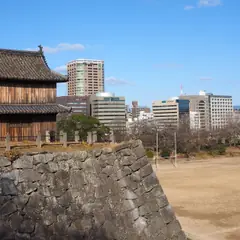
Castle of the Kuroda
Walls of the Kuroda, original towers, the Kōrokan of Asia's embassies and the enigma of the keep of Fukuoka Castle.
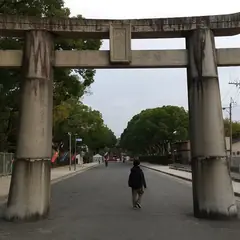
Hachiman shrine
What to see at Hakozaki Shrine in Fukuoka: the gate of the plea against the Mongols, an anchor from their fleet, the torii of 1609 and the path to the sea.
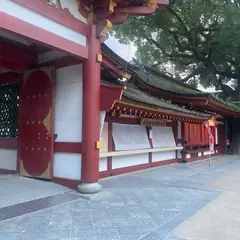
Shinto shrine
What to see at Dazaifu Tenmangu: Michizane's tomb, the sacred oxen, the three bridges of Shinji-ike, the rōmon gate, the honden of 1591 and the Tobiume plum.
Fukuoka Audio Guide
Fukuoka was born of two cities: Hakata, the merchant port town, and the castle town that the Kuroda raised across the Naka river. In Hakata, Kushida Shrine keeps in its courtyard the 112-metre track that the Yamakasa floats race down every 15 July at 4:59, and a few steps away Tochoji Temple, which tradition attributes to Kūkai, hides a 10.8-metre wooden Buddha and the tombs of the Kuroda lords. Sumiyoshi Shrine, dedicated to three gods of navigation, keeps a honden of 1623 on an old cape that the sea abandoned, and as evening falls the Nakasu yatai set up their pavement kitchens by hand beside the river. To the west, Fukuoka Castle holds the Kuroda walls on the hill that gave the city its name; to the north, Hakozaki Shrine displays on its gate the plea against the Mongols of 1274, and on the outskirts Dazaifu Tenmangu venerates the exiled minister Sugawara no Michizane as the god of study.
With the EarGuide Fukuoka audio guide, every place reveals its history through documented narration checked against historical sources. Unlike a free walking tour or a conventional guided visit, you set the pace, the order and the stops. No groups, no timetables, no internet connection.
No internet needed
Download the routes before you head out and explore without using data.
Smart geolocation
The narration starts by itself when you reach the point of interest.
Frequently asked questions
The EarGuide app is free. The Fukuoka audio guide includes 7 independent routes with about six hours of narration spread across 7 sites and 34 audio stops, and it is found inside the app itself.
No. EarGuide works entirely offline. Download the routes over WiFi before you set out and you can use the audio guide with no connection and no data use throughout your visit. The map shows your GPS position in real time even without coverage.
The Fukuoka audio guide is available in Spanish and English, with documented, fact-checked narration on its shrines, temples, castle and street stalls.
The audio guide brings together 7 independent routes with about six hours of narration in total, from 30 minutes to an hour and a half per route. The most comfortable way is to split them over two days: Kushida Shrine, Tochoji Temple, Sumiyoshi Shrine and the Nakasu yatai, all in Hakata, on one, and Fukuoka Castle, Hakozaki Shrine and Dazaifu Tenmangu on another.
They are different experiences. The EarGuide audio guide lets you explore Fukuoka without timetables or groups, pause and resume whenever you like, and replay any explanation as often as you need. It suits independent travellers, families and anyone who prefers to understand the city at their own pace, with no prior knowledge of Japan.
The Fukuoka audio guide covers 7 main sites: Kushida Shrine, Tochoji Temple, the Nakasu yatai, Sumiyoshi Shrine, Fukuoka Castle, Hakozaki Shrine and Dazaifu Tenmangu.
Partly. Kushida Shrine, Tochoji Temple, Sumiyoshi Shrine and the Nakasu yatai are in Hakata, less than a kilometre from one another. Fukuoka Castle is about two and a half kilometres west of Nakasu and Hakozaki Shrine, at a similar distance to the north, so it is best to reach them by subway or bus. Dazaifu Tenmangu is in neighbouring Dazaifu, about 15 kilometres to the southeast, and is visited by train.
Yes. Purchases belong to your EarGuide account, not to one app or one phone. A city unlocked in the EarGuide app is also unlocked in that city's own app, and the other way round, on both iPhone and Android. Just sign in with the same account on the other device. The store's “restore purchases” button only covers the app the purchase was made in, so signing in is what carries it across.
The Fukuoka audio guide is inside the EarGuide app, free and ready to use offline. Carry it in your pocket and explore the city at your own pace.
More destinations
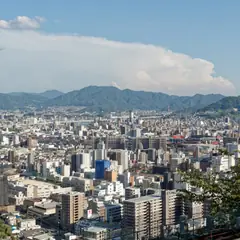
The ruin the city decided to save, a park over a buried district, a castle that fell without burning and a torii in the sea at Miyajima. Explore Hiroshima with audio guides.
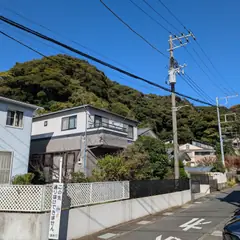
The capital of the Minamoto shoguns and the Hōjō regents: an open-air bronze Great Buddha, Japan's first Zen temple and a cave where money is washed. Explore Kamakura with audio guides.
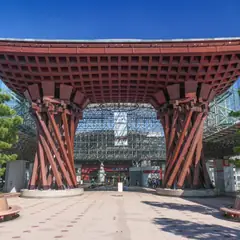
The city of the Maeda: a garden that unites six virtues, a castle with lead roofs, geiko and samurai districts and a temple full of traps. Explore Kanazawa with audio guides.
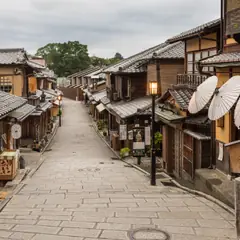
The old imperial capital: a mountain covered in torii, a wooden stage without nails, a golden pavilion reborn from the ashes and the district of the geiko. Explore Kyoto with audio guides.
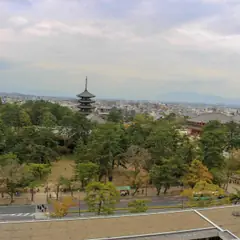
Japan's first great capital: a bronze Buddha of almost 15 metres, thousands of stone lanterns, bowing deer and a palace rescued from the rice fields. Explore Nara with audio guides.
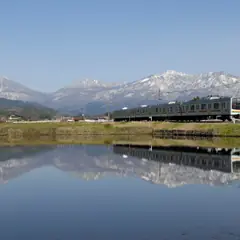
From the golden shrine where Ieyasu was made a god to the vermilion bridge only shoguns once crossed and a 97-metre waterfall that empties a lake. Explore Nikko with audio guides.
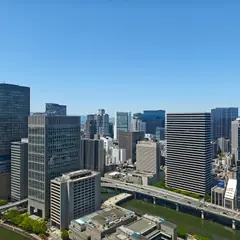
The merchants' city: a castle of three lives, a canal of theatres and neon, cooks' markets, a tower raised by its neighbours and temples that face the sea. Explore Osaka with audio guides.
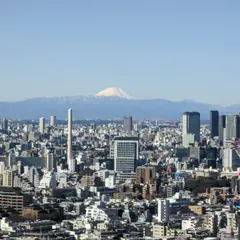
The capital that remade itself again and again: a temple around a Kannon nobody sees, a forest planted by hand, the Tokugawa's towerless castle and a crossing with a single diagonal. Explore Tokyo with audio guides.

3 cities
7 routes · ~6.5h of audio
7 routes · ~6.5h of audio
14 cities

3 cities
7 routes · ~7h of audio

7 routes · ~7.5h of audio
3 cities
3 cities

7 routes · ~5h of audio

4 cities
5 cities
7 routes · ~5.9h of audio
3 cities
5 cities
4 cities

7 routes · 8h of audio

3 cities

4 cities

6 cities
3 cities
7 routes · ~5.5h of audio
7 routes · ~7.5h of audio

7 routes · ~5h of audio

7 routes · ~8.5h of audio

6 routes · 6h of audio

7 routes · ~6h of audio

7 routes · ~5h of audio

3 cities
7 routes · ~8.5h of audio
7 routes · ~7h of audio
3 cities
10 cities
3 cities

7 routes · ~9h of audio
7 routes · ~5h of audio
7 routes · ~9h of audio
7 routes · ~6.5h of audio
8 cities

7 routes · ~9.5h of audio
4 cities

7 cities

7 routes · ~6h of audio