


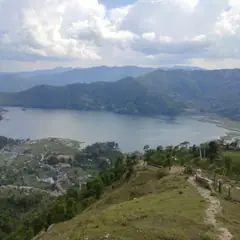
Himalayan lake
Phewa Lake
What to see at Phewa Lake: the reflection of Machhapuchhre, the wooden boats of Barahi Ghat, the island of Tal Barahi, the boundary markers on the shore and the Damside dam.
Pokhara, Nepal
Walk Pokhara with 29 audio stops and narration that is documented and checked against sources. From the lake that reflects Machhapuchhre over the trunks of a flooded forest to the Seti River, which vanishes into a crevice barely over a metre wide, each place tells how a city built on the debris of the Himalaya lives among temples, boats and eight-thousand-metre mountains.
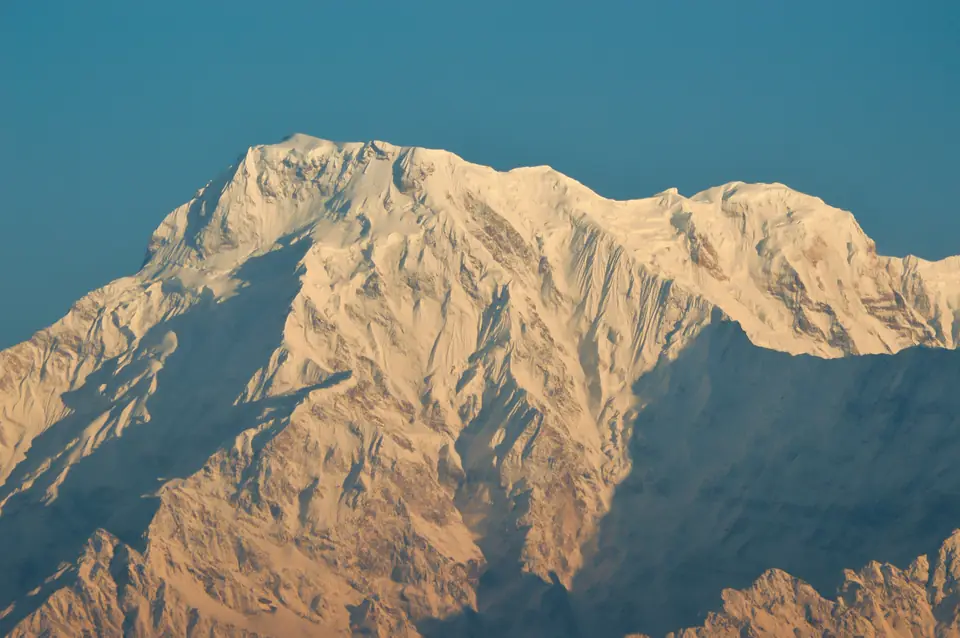
Himalayan lake
What to see at Phewa Lake: the reflection of Machhapuchhre, the wooden boats of Barahi Ghat, the island of Tal Barahi, the boundary markers on the shore and the Damside dam.
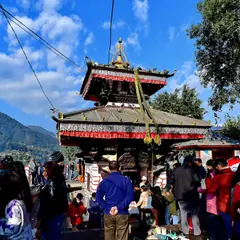
Island temple
What to see at the Tal Barahi Temple: the boat from Barahi Ghat, the wall that holds up the islet, the pagoda rebuilt after the 2015 earthquake and the sacred stone of the boar goddess.
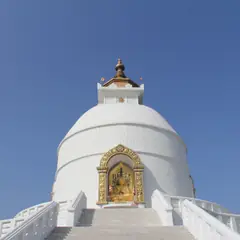
Buddhist shrine
What to see at the World Peace Pagoda in Pokhara: the white stupa torn down in 1974 and consecrated again in 1999, its four Buddhas from four countries and the views over Phewa and the Annapurnas.
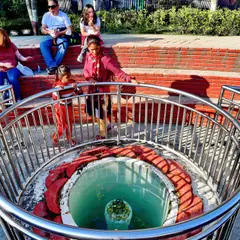
Natural site
What to see at Davis Falls in Pokhara: the 36-metre shaft that swallows the river from Phewa Lake, the mouth of the largest cave in the Himalaya and the wish pool.
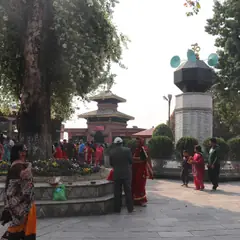
Hindu temple
What to see at the Bindhyabasini Temple: the white octagonal shikhara of the fossil goddess, the golden lions, the 26.5-foot trident and the viewpoint over the Annapurnas.
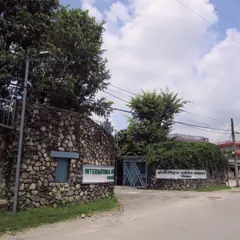
Mountain museum
What to see at the International Mountain Museum in Pokhara: the roof that imitates a mountain range, the Manaslu replica, Herzog's ice axe, the Yeti corner and Everest's rubbish.
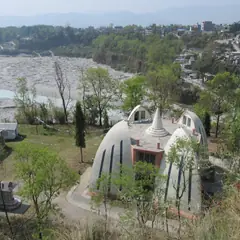
Natural site
What to see at the Seti River Gorge: the one-metre crevice under the K.I. Singh bridge, the debris walls from Annapurna, the white water of the river and Bhim's stone.
Pokhara Audio Guide
Pokhara sits on a thick layer of debris that came down from the Himalaya in medieval times, and its lakes were born of that geological history. Phewa Lake, at 742 m above sea level, reflects Machhapuchhre while the trunks of a drowned forest still stand on its bed; since 1961 it has been held by a dam whose break, in the winter of 1974-1975, let people walk to the island of the Tal Barahi temple, rebuilt piece by piece after the 2015 earthquake. On the hill opposite, the World Peace Pagoda was consecrated again in 1999 after the state tore down the first one in 1974. To the south, the water that drains the lake sinks at Davis Falls, into a shaft of about 36 m leading to the largest known cave in the Himalaya, and the International Mountain Museum holds Maurice Herzog's original ice axe from Annapurna I. To the north, the Bindhyabasini temple crowns the old Newar bazaar with its shaligram, and the Seti River runs between walls of about 40 m in a gorge just over a metre wide.
With the EarGuide Pokhara audio guide, each place reveals its story through narration that is documented and checked against historical sources. Unlike a free tour or a conventional guided visit, you decide the pace, the order and the stops. No groups, no schedules, no internet connection.
No internet connection
Download the routes before you set out and explore without using data.
Smart geolocation
The narration starts on its own when you reach the point of interest.
Frequently asked questions
The EarGuide app is free. The Pokhara audio guide includes 7 independent routes with about six hours of narration spread across 7 places and 29 audio stops, and it sits inside the app itself.
No. EarGuide works fully offline. Download the routes over WiFi before you leave and you can use the audio guide with no connection or data use throughout the walk. The map shows your GPS position in real time even without coverage.
The Pokhara audio guide is available in Spanish and English, with narration on the geology of its lakes, the city's Hindu and Buddhist temples, Himalayan mountaineering and life on the shores of Phewa Lake, documented and checked against sources.
The audio guide brings together 7 independent routes with about six hours of narration in total, from 30 to 90 minutes per route. It works best spread over two days: one for Phewa Lake, with the island of Tal Barahi and the climb to the World Peace Pagoda; and another for Davis Falls, the International Mountain Museum, the Bindhyabasini temple and the Seti River Gorge.
They are different experiences. The EarGuide audio guide lets you walk Pokhara with no schedules or groups, pause and resume whenever you like, and replay any explanation as often as you need. It suits independent travellers, families and anyone who prefers to understand the city at their own pace, with no prior knowledge of Nepal.
The Pokhara audio guide covers 7 main places: Phewa Lake, the Tal Barahi Temple, the World Peace Pagoda, Davis Falls, the Bindhyabasini Temple, the International Mountain Museum and the Seti River Gorge.
Not quite. Phewa Lake and the Barahi Ghat jetty are beside the Lakeside district, and the island of Tal Barahi is reached by boat in a few minutes. The World Peace Pagoda is on the hill on the other shore, with a climb on foot. Davis Falls and the International Mountain Museum are to the south, and the Bindhyabasini temple and the Seti Gorge to the north, in old Pokhara: for those the most practical way is a taxi.
Yes. Purchases are tied to your EarGuide account, not to a particular app or phone. A city unlocked in the EarGuide app is also unlocked in that city's own app, and the other way round, on both iPhone and Android. Just sign in with the same account on the other device. The store’s “restore purchases” button only covers the app where the purchase was made, so what carries it over is signing in.
The Pokhara audio guide lives inside the EarGuide app, free and ready to use offline. Carry it in your pocket and walk Phewa Lake, its temples and its gorges at your own pace.
More destinations
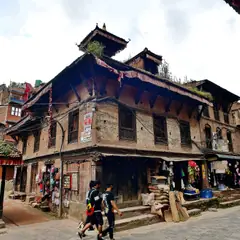
From the tallest pagoda in Nepal, raised in six months in 1702, to the Peacock Window and the oldest dated inscription in the country at Changu Narayan. Explore Bhaktapur with audio guides.
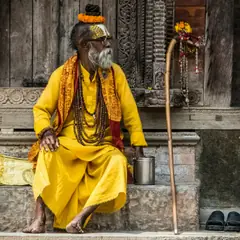
From the wooden pavilion that named the city to the pyres of the Bagmati and the painted-eyed dome of Boudhanath, by way of the palace of the 2001 royal massacre. Kathmandu with audio guides.
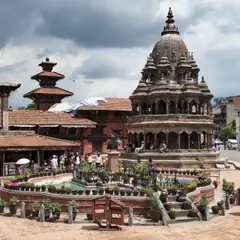
From Krishna's stone temple with its 21 pinnacles to a courtyard where a child priest serves the Buddha and a terracotta tower with a Buddha on every brick. Explore Patan with audio guides.

3 cities
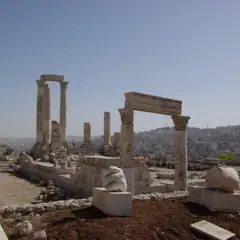
7 routes · ~6.5h of audio
7 routes · ~6.5h of audio
14 cities
3 cities

7 routes · ~7h of audio
7 routes · ~7.5h of audio
3 cities
3 cities

7 routes · ~5h of audio
4 cities
5 cities
9 cities
7 routes · ~5.9h of audio
3 cities
5 cities
4 cities

7 routes · 8h of audio

3 cities

6 cities
3 cities
7 routes · ~5.5h of audio
7 routes · ~7.5h of audio

7 routes · ~5h of audio

7 routes · ~8.5h of audio

6 routes · 6h of audio

7 routes · ~6h of audio

7 routes · ~5h of audio

3 cities
7 routes · ~8.5h of audio
7 routes · ~7h of audio
3 cities
10 cities
3 cities

7 routes · ~9h of audio
7 routes · ~5h of audio
7 routes · ~9h of audio

7 routes · ~6.5h of audio
8 cities
7 routes · ~9.5h of audio
4 cities
7 cities

7 routes · ~6h of audio