


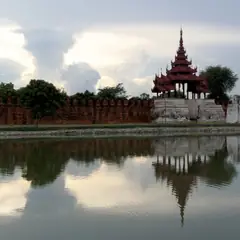
Burmese royal citadel
Mandalay Palace
The citadel of Burma's last king: 2-km walls on each side, a 64-metre moat, the clock and relic towers, the golden spire of the Lion Throne and the Watch Tower.
Mandalay, Myanmar
Walk Mandalay with 33 audio stops and researched, fact-checked narration. From the 2-km-a-side citadel around the last palace of the kings of Burma to the stone book of Kuthodaw and the Arakan Buddha covered in gold, every route explains how King Mindon's capital was born and how it is told today.
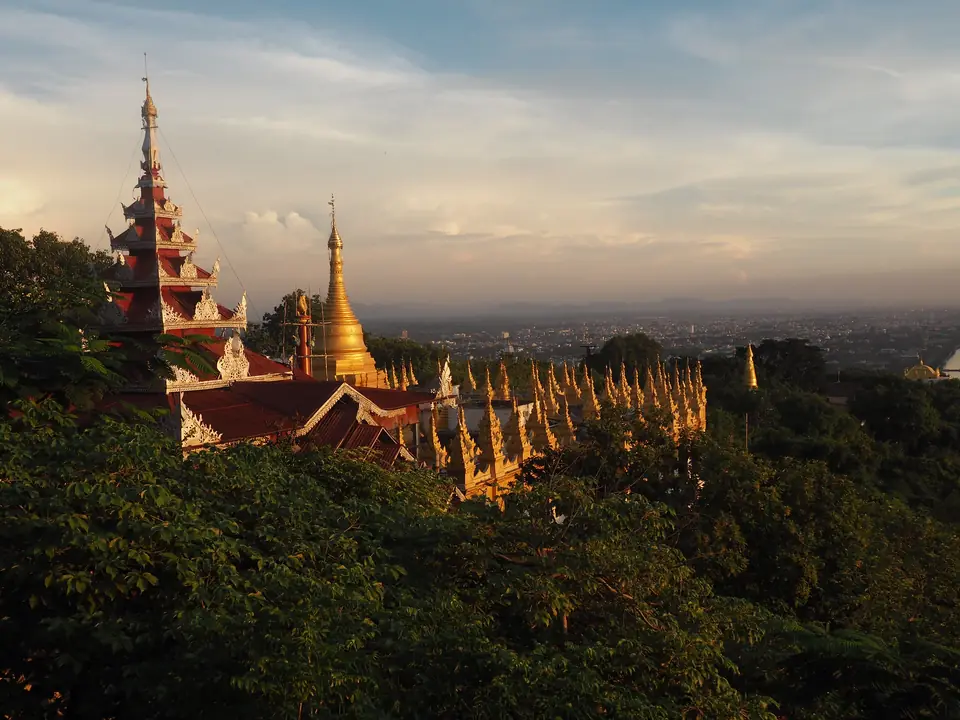
Burmese royal citadel
The citadel of Burma's last king: 2-km walls on each side, a 64-metre moat, the clock and relic towers, the golden spire of the Lion Throne and the Watch Tower.
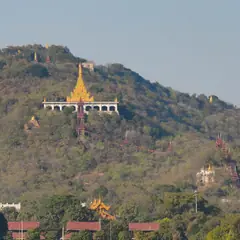
Sacred hill
The sacred hill that gave Mandalay its name: a covered stairway of 1,729 steps, the golden Buddha pointing at the city, the ogress Sanda Muhki and the terrace of the Sutaungpyei Pagoda.
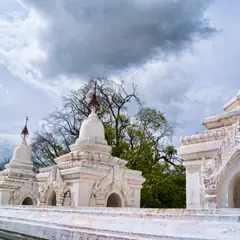
UNESCO Memory of the World
King Mindon's pagoda in Mandalay: a 57-metre golden stupa and 729 white shrines with the Buddhist canon engraved on marble slabs, the so-called largest book in the world.
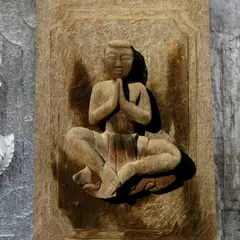
Carved teak monastery
King Mindon's former chamber turned into a monastery: carved teak roofs, 150 posts, a hall that still keeps its gold and the reliefs of the Ten Great Jatakas.
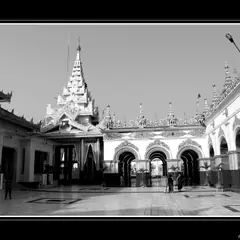
Pilgrimage shrine
Mandalay's most venerated shrine: the bronze Buddha brought from Arakan in 1784 under a crust of gold, the dawn face washing and the Khmer bronzes that came from Angkor.

Historic bazaar
Mandalay's oldest bazaar, founded under King Mindon: Victoria's jubilee clock tower, street stalls, longyi and acheik textiles and Upper Burma's largest gold floor.
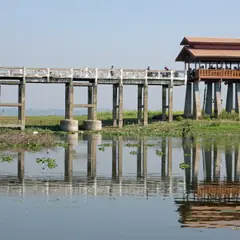
19th-century teak footbridge
The teak footbridge of Amarapura, in Mandalay: 1.2 km over Taungthaman Lake, pillars of a royal palace, numbered posts, pavilions and the Kyauktawgyi Pagoda at the end.
Mandalay Audio Guide
Mandalay was born all at once: in 1857 King Mindon laid out a square citadel 2 km on each side, ringed by a 64-metre moat, and at its centre reassembled the teak palace brought from Amarapura. The Mandalay Palace seen today is the 1989-1991 replica of that court, which fell in 1885 and was razed in 1945. To the northeast, Mandalay Hill, which gave the city its name, is climbed by a covered stairway of 1,729 steps to a golden Buddha pointing across the plain. At its foot, the Kuthodaw Pagoda surrounds its 57-metre stupa with 729 white shrines, each holding a marble slab engraved with the Buddhist canon, and very close by the Shwenandaw Monastery preserves, carved in teak, the chamber where Mindon died in 1878, taken out of the palace piece by piece by his son. To the south, the Mahamuni Pagoda holds the bronze Buddha brought from Arakan in 1784, covered by some 15 centimetres of gold leaf and washed every dawn; in the centre, the Zegyo Market, born with the capital, holds Upper Burma's largest gold trade facing a colonial clock. Then, in Amarapura, the U Bein Bridge crosses Taungthaman Lake with 1,209 metres of teak raised between 1849 and 1851.
With the EarGuide Mandalay audio guide, every landmark reveals its history through narration researched and fact-checked against historical sources. Unlike a free walking tour or a conventional guided visit, you set the pace, the order and the stops. No groups, no timetables, no internet connection.
No internet needed
Download the routes before you head out and explore without using data.
Smart geolocation
The narration starts by itself when you reach the point of interest.
Frequently asked questions
The EarGuide app is free. The Mandalay audio guide includes 7 independent routes with about seven hours of narration spread across 7 landmarks and 33 audio stops, and it is found inside the app itself.
No. EarGuide works entirely offline. Download the routes over WiFi before you set out and you can use the audio guide with no connection and no data use throughout your tour of Mandalay. The map shows your GPS position in real time even without coverage.
The Mandalay audio guide is available in Spanish and English, with researched, fact-checked narration on the history of Mandalay and the last kings of Burma.
The audio guide brings together 7 independent routes with about seven hours of narration in total, from 40 to 90 minutes per route. They are designed to be spread over two or three days: you can do them separately or string together the ones that lie close, such as Mandalay Hill, the Kuthodaw Pagoda and the Shwenandaw Monastery, in a single outing.
They are different experiences. The EarGuide audio guide lets you explore Mandalay without timetables or groups, pause and resume whenever you like, and replay any explanation as often as you need. It suits independent travellers, families and anyone who prefers to understand the city at their own pace, with no prior knowledge of Myanmar.
The Mandalay audio guide covers 7 landmarks: Mandalay Palace, Mandalay Hill, the Kuthodaw Pagoda, the Shwenandaw Monastery, the Mahamuni Pagoda, the Zegyo Market and U Bein Bridge, with stops that range from the citadel and its moat to the marble slabs of the Buddhist canon, King Mindon's teak chamber and the Arakan Buddha covered in gold.
Only in part. Mandalay Hill, the Kuthodaw Pagoda and the Shwenandaw Monastery lie 1.5 km or less from one another in a straight line, northeast of the citadel, and Mandalay Palace is about 2 km from them. The Mahamuni Pagoda and the Zegyo Market lie in the south and centre of the city, and U Bein Bridge, in Amarapura, is more than 10 km from the palace, so for those it is best to go by taxi or motorbike.
Yes. Purchases belong to your EarGuide account, not to one app or one phone. A city unlocked in the EarGuide app is also unlocked in that city’s own app, and the other way round, on both iPhone and Android. Just sign in with the same account on the other device. The store’s “restore purchases” button only covers the app the purchase was made in, so signing in is what carries it across.
The Mandalay audio guide is inside the EarGuide app, free and ready to use offline. Carry it in your pocket and explore Burma's last royal capital at your own pace.
More destinations
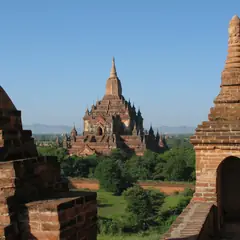
The plain of brick temples beside the Irrawaddy where the kings of Pagan competed in height and in faith: the Ananda Temple, the Shwezigon Pagoda, the Dhammayangyi and the Thatbyinnyu. Explore Bagan with audio guides.
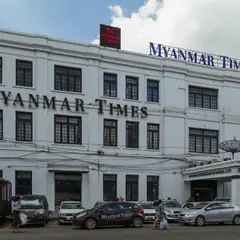
The city that grew at the foot of a 99-metre golden stupa and that the British laid out in a grid around another: Shwedagon Pagoda, Sule Pagoda, the Secretariat and Bogyoke Aung San Market. Explore Yangon with audio guides.

3 cities
7 routes · ~6.5h of audio

7 routes · ~6.5h of audio
14 cities

3 cities
7 routes · ~7h of audio

7 routes · ~7.5h of audio
3 cities
3 cities

7 routes · ~5h of audio
4 cities
5 cities
9 cities
7 routes · ~5.9h of audio
3 cities
5 cities
4 cities

7 routes · 8h of audio
4 cities

6 cities
3 cities
7 routes · ~5.5h of audio
7 routes · ~7.5h of audio

7 routes · ~5h of audio

7 routes · ~8.5h of audio

6 routes · 6h of audio

7 routes · ~6h of audio

7 routes · ~5h of audio
3 cities
7 routes · ~8.5h of audio
7 routes · ~7h of audio
3 cities
10 cities
3 cities
7 routes · ~9h of audio
7 routes · ~5h of audio
7 routes · ~9h of audio

7 routes · ~6.5h of audio
8 cities

7 routes · ~9.5h of audio
4 cities
7 cities

7 routes · ~6h of audio