


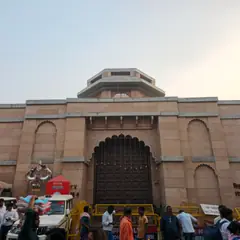
Shiva's jyotirlinga
Kashi Vishwanath Temple
What to see at the Kashi Vishwanath Temple in Varanasi: the Sikh gold dome, the corridor to the Ganges, the wall of the 1585 temple in the Gyanvapi mosque and the Nandi that faces it.
Varanasi, India
Explore Varanasi with 29 audio stops and researched, fact-checked narration. From the steps where the Ganga Aarti is held every night to the open-air cremation ground that never goes out, and from the sandstone fort on the far bank to Sarnath's Deer Park, every place tells how the sacred city of the Ganges was destroyed and rebuilt again and again.
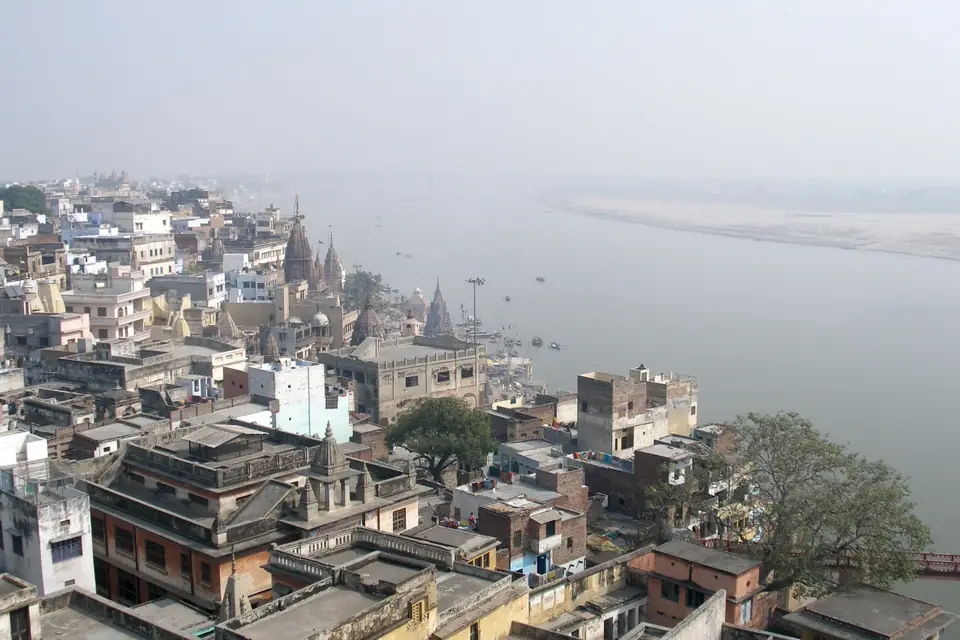
Shiva's jyotirlinga
What to see at the Kashi Vishwanath Temple in Varanasi: the Sikh gold dome, the corridor to the Ganges, the wall of the 1585 temple in the Gyanvapi mosque and the Nandi that faces it.
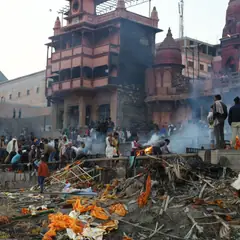
Stage of the Ganga Aarti
What to see at Dashashwamedh Ghat in Varanasi: the Ganga Aarti every dusk, the Shitala temple, the Godowlia ramp and the ghat that lost its stone horse.
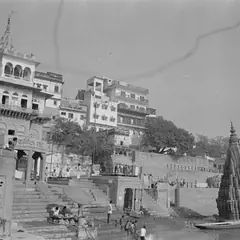
Sacred cremation ghat
What to see at Manikarnika Ghat: the cremation terraces, the Tarakeshwar temple, the sacred Manikarnika Kund tank and the leaning Ratneshwar temple.
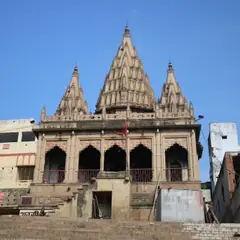
Sunrise ghat on the Ganges
What to see at Assi Ghat: the Subah-e-Banaras at sunrise, the steps of 1988, the old mouth of the Assi river and the Asi Sangameshvara temple.
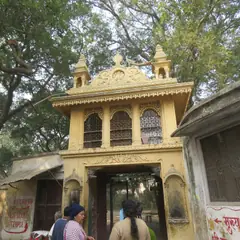
Hanuman temple and music festival
What to see at the Sankat Mochan Temple in Varanasi: the monkey grove, the image of Hanuman facing Rama, the courtyard that survived the 2006 bomb and the stage of the music festival.
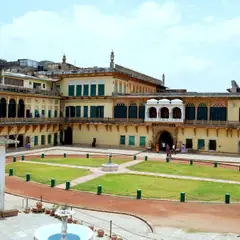
Fortress-palace on the Ganges
What to see at Ramnagar Fort: sandstone walls over the Ganges, the courtyard of the cannons, the Durbar Hall museum with its astronomical clock and the Vyasa temple.
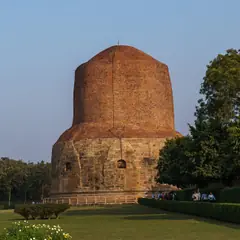
Site of the Buddha's first sermon
What to see at the Dhamek Stupa in Sarnath: the eight-niche drum, the Gupta relief band, the base of the Dharmarajika and the stump of the Ashoka pillar.
Varanasi Audio Guide
Varanasi, also called Kashi and Benares, is understood from the Kashi Vishwanath temple, the shrine of Shiva that the Maratha queen Ahilyabai Holkar built around 1780 beside the wall of the Gyanvapi mosque and whose dome was plated in 1835 with a tonne of gold donated by the Sikh maharaja Ranjit Singh. Since 2021 a corridor has opened it directly onto the Ganges, after the demolitions brought to light more than forty temples buried among the houses. Downstream and upstream the ghats follow one another: Dashashwamedh, the busiest flight of steps, turned to stone around 1735 and the stage of the nightly Ganga Aarti; Manikarnika, the city's first stone ghat, of 1372, where the cremation pyres burn day and night beside Vishnu's sacred tank; and Assi, the southernmost, where the Subah-e-Banaras is sung every sunrise. Inland, the Sankat Mochan temple, attributed according to tradition to the poet Tulsidas, brings together monkeys, devotees of Hanuman and six nights of classical music each April. On the eastern bank, Ramnagar Fort, built around 1750, is still the home of the Kashi Naresh's family, and on the outskirts, at Sarnath, the Dhamek Stupa, the bulkiest structure on the site, marks the spot where Buddhist tradition places the Buddha's first sermon.
With the EarGuide Varanasi audio guide, every place reveals its history through narration researched and fact-checked against historical sources. Unlike a free walking tour or a conventional guided visit, you set the pace, the order and the stops. No groups, no timetables, no internet connection.
No internet needed
Download the routes before you head out and explore without using data.
Smart geolocation
The narration starts by itself when you reach the point of interest.
Frequently asked questions
The EarGuide app is free. The Varanasi audio guide includes 7 independent routes with almost seven hours of narration spread across 7 sites and 29 audio stops, and it is found inside the app itself.
No. EarGuide works entirely offline. Download the routes over WiFi before you set out and you can use the audio guide with no connection and no data use throughout your visit. The map shows your GPS position in real time even without coverage.
The Varanasi audio guide is available in Spanish and English, with narration on the temples, the ghats of the Ganges, their rituals and Buddhist Sarnath, researched and fact-checked against sources.
The audio guide brings together 7 independent routes with almost seven hours of narration in total, from 40 minutes to an hour and a quarter per route. It can be spread over two or three days: one for the Kashi Vishwanath temple and the Dashashwamedh and Manikarnika ghats, another for Assi Ghat, the Sankat Mochan temple and Ramnagar Fort, and half a day for Sarnath.
They are different experiences. The EarGuide audio guide lets you explore Varanasi without timetables or groups, pause and resume whenever you like, and replay any explanation as often as you need. It suits independent travellers, families and anyone who prefers to understand the city at their own pace, with no prior knowledge of Hinduism or the history of India.
The Varanasi audio guide covers 7 main sites: the Kashi Vishwanath temple, Dashashwamedh Ghat, Manikarnika Ghat, Assi Ghat, the Sankat Mochan temple, Ramnagar Fort and the Dhamek Stupa at Sarnath.
The centre, yes. The Kashi Vishwanath temple is about 500 metres from Dashashwamedh Ghat, and from there to Manikarnika it is less than a kilometre along the river. Assi Ghat is about two kilometres to the south and the Sankat Mochan temple is less than a kilometre from Assi. Ramnagar Fort is on the other bank of the Ganges and Sarnath is about eight kilometres north of the centre, so it is best reached by boat, rickshaw or taxi.
Yes. Purchases belong to your EarGuide account, not to one app or one phone. A city unlocked in the EarGuide app is also unlocked in that city's own app, and the other way round, on both iPhone and Android. Just sign in with the same account on the other device. The store's “restore purchases” button only covers the app the purchase was made in, so signing in is what carries it across.
The Varanasi audio guide is inside the EarGuide app, free and ready to use offline. Carry it in your pocket and explore the city at your own pace.
More destinations

From the Taj Mahal that Shah Jahan watched as a prisoner from Agra Fort to the red city of Fatehpur Sikri and the jewel-box tomb of Itimad-ud-Daulah. Agra, with audio guides.
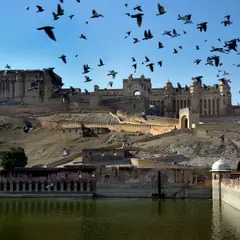
From Amber Fort, with its goddess brought from Bengal, to the 953 lattice windows of the Hawa Mahal and the 27-metre sundial of the Jantar Mantar. Explore Jaipur with audio guides.
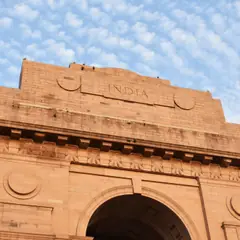
From Shah Jahan's red wall to the Jama Masjid courtyard, the Sikh kitchen that feeds thousands for free every day and the Qutub Minar victory tower. New Delhi, with audio guides.

3 cities
7 routes · ~6.5h of audio

7 routes · ~6.5h of audio

14 cities

3 cities

7 routes · ~7h of audio

7 routes · ~7.5h of audio
3 cities

3 cities

7 routes · ~5h of audio

5 cities

9 cities

7 routes · ~5.9h of audio
3 cities

5 cities

4 cities

7 routes · 8h of audio

3 cities

4 cities

6 cities

3 cities
7 routes · ~5.5h of audio
7 routes · ~7.5h of audio

7 routes · ~5h of audio

7 routes · ~8.5h of audio

6 routes · 6h of audio

7 routes · ~6h of audio

7 routes · ~5h of audio

3 cities

7 routes · ~8.5h of audio

7 routes · ~7h of audio

3 cities

10 cities

3 cities

7 routes · ~9h of audio

7 routes · ~5h of audio

7 routes · ~9h of audio

7 routes · ~6.5h of audio

8 cities

7 routes · ~9.5h of audio
4 cities

7 cities

7 routes · ~6h of audio