


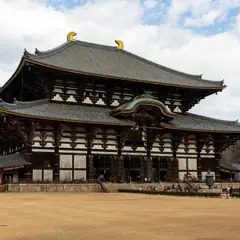
The Great Buddha of Nara
Todai-ji Temple
What to see at Tōdai-ji: the Nandaimon and its two Niō, the 8th-century octagonal lantern, the bronze Great Buddha, the pillar with a hole and the finial of the vanished tower.
Nara, Japan
Explore Nara with 35 audio stops and documented, fact-checked narration. From the guardians of Tōdai-ji's Nandaimon to the stone of a vanished pagoda in Isuien Garden, every place tells how Japan's first great capital burned, was lost beneath the rice fields and rose again.
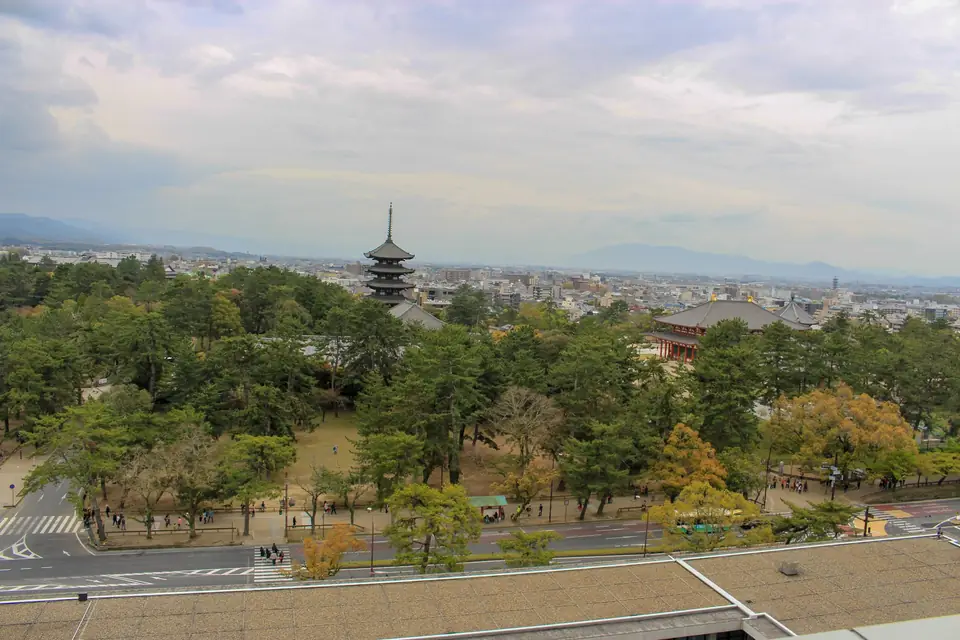
The Great Buddha of Nara
What to see at Tōdai-ji: the Nandaimon and its two Niō, the 8th-century octagonal lantern, the bronze Great Buddha, the pillar with a hole and the finial of the vanished tower.
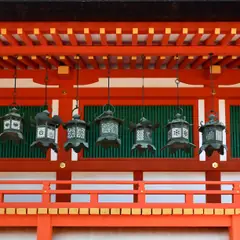
Shrine of the Fujiwara
What to see at Kasuga Taisha: the stone-lantern sandō, the pine of the divine apparition, the Nanmon and the Fujiwara gate, the corridors of hanging lanterns and the path to the Wakamiya.
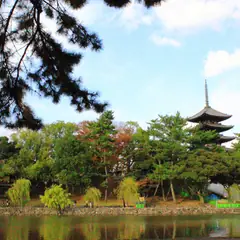
The Fujiwara temple
What to see at Kōfuku-ji: Sarusawa Pond, the octagonal Hokuen-dō, the central golden hall of 2018, the five-storey pagoda and the Ashura in the National Treasure Museum.
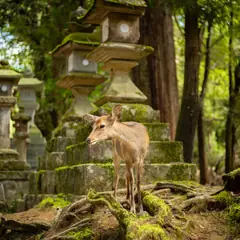
The deer park
What to see in Nara Park: the bowing deer, Tobihino meadow, the Ukimido pavilion, the Rokuen deer enclosure and Mount Wakakusa.
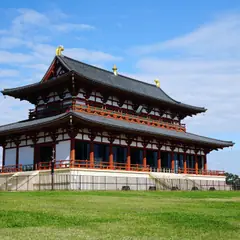
The first great capital
What to see at Heijo Palace: the Suzaku-mon gate, the railway line crossing the compound, the throne hall of the first Daigokuden, the second Daigokuden platform and the Tōin Teien garden.
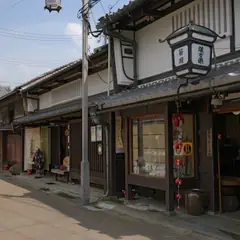
Edo merchant quarter
What to see in Naramachi: the red migawari-zaru monkeys, the Kōshin-dō, the Koshi-no-ie machiya, the Gangō-ji pagoda base and the Imanishi-ke Shoin.
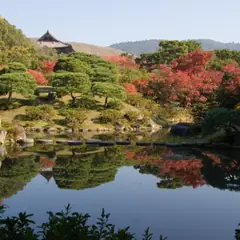
Borrowed-scenery garden
What to see in Isuien Garden: the Sanshutei pavilion, the round window of the Teishuken, the borrowed scenery of the Nandaimon, the stone from Todai-ji's west pagoda and the Yagyūdō.
Nara Audio Guide
Nara was the capital of Japan from 710, and a good part of what is visited was born in that 8th century. West of the city, Heijo Palace, where the imperial seat stood, spent a thousand years beneath the rice fields before recovering its great gate and its throne hall. At Todai-ji Temple, a bronze Buddha of almost 15 metres, cast to ward off an epidemic, waits inside a timber hall rebuilt in 1709 with alms. Beside it, Isuien Garden borrows the Nandaimon and three hills. Nara Park, with no walls or ticket office, gathers more than 1,600 wild deer that bow for a biscuit; at its edge, Kasuga Taisha Shrine lines up some 3,000 lanterns donated over the centuries, and Kofuku-ji Temple, that of the Fujiwara, raises its five-storey pagoda over Sarusawa Pond. To the south, the Naramachi District keeps its timber shop-houses and the red monkeys that hang from their eaves, on the site of a buried temple.
With the EarGuide Nara audio guide, every place reveals its history through documented narration checked against historical sources. Unlike a free walking tour or a conventional guided visit, you set the pace, the order and the stops. No groups, no timetables, no internet connection.
No internet needed
Download the routes before you head out and explore without using data.
Smart geolocation
The narration starts by itself when you reach the point of interest.
Frequently asked questions
The EarGuide app is free. The Nara audio guide includes 7 independent routes with about eight hours of narration spread across 7 sites and 35 audio stops, and it is found inside the app itself.
No. EarGuide works entirely offline. Download the routes over WiFi before you set out and you can use the audio guide with no connection and no data use throughout your visit. The map shows your GPS position in real time even without coverage.
The Nara audio guide is available in Spanish and English, with documented, fact-checked narration on the 8th-century capital, its temples and shrines, its deer and its merchant district.
The audio guide brings together 7 independent routes with about eight hours of narration in total, from 45 minutes to an hour and a half per route. The most comfortable way is to split them over two days: Todai-ji Temple, Isuien Garden, Nara Park and Kasuga Taisha Shrine, less than a kilometre apart, on one, and Kofuku-ji Temple, the Naramachi District and Heijo Palace on another.
They are different experiences. The EarGuide audio guide lets you explore Nara without timetables or groups, pause and resume whenever you like, and replay any explanation as often as you need. It suits independent travellers, families and anyone who prefers to understand the city at their own pace, with no prior knowledge of Japan.
The Nara audio guide covers 7 main sites: Todai-ji Temple, Kasuga Taisha Shrine, Kofuku-ji Temple, Nara Park, Heijo Palace, the Naramachi District and Isuien Garden.
Almost all of it. Six of the seven sites are around Nara Park, less than a kilometre and a half between the extremes: the Naramachi District, to the south, and Kasuga Taisha Shrine, to the east, with Todai-ji Temple and Isuien Garden to the north. Heijo Palace lies apart, about four kilometres west of the park: it can be reached on foot, but the practical choice is transport or a bicycle, and its hour-and-a-half route also means covering a very extensive site.
Yes. Purchases belong to your EarGuide account, not to one app or one phone. A city unlocked in the EarGuide app is also unlocked in that city's own app, and the other way round, on both iPhone and Android. Just sign in with the same account on the other device. The store's “restore purchases” button only covers the app the purchase was made in, so signing in is what carries it across.
The Nara audio guide is inside the EarGuide app, free and ready to use offline. Carry it in your pocket and explore the city at your own pace.
More destinations

The Hakata of the merchants and the castle town of the Kuroda: the Yamakasa race, a shrine that still pleads for the Mongols' surrender and the yatai beside the Naka river. Explore Fukuoka with audio guides.

The ruin the city decided to save, a park over a buried district, a castle that fell without burning and a torii in the sea at Miyajima. Explore Hiroshima with audio guides.
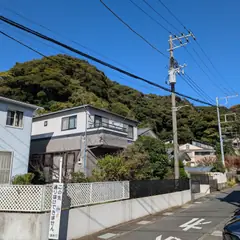
The capital of the Minamoto shoguns and the Hōjō regents: an open-air bronze Great Buddha, Japan's first Zen temple and a cave where money is washed. Explore Kamakura with audio guides.
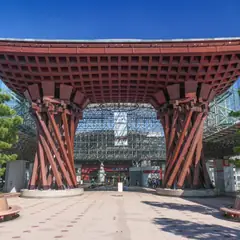
The city of the Maeda: a garden that unites six virtues, a castle with lead roofs, geiko and samurai districts and a temple full of traps. Explore Kanazawa with audio guides.
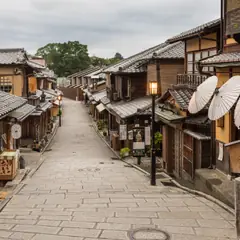
The old imperial capital: a mountain covered in torii, a wooden stage without nails, a golden pavilion reborn from the ashes and the district of the geiko. Explore Kyoto with audio guides.

From the golden shrine where Ieyasu was made a god to the vermilion bridge only shoguns once crossed and a 97-metre waterfall that empties a lake. Explore Nikko with audio guides.

The merchants' city: a castle of three lives, a canal of theatres and neon, cooks' markets, a tower raised by its neighbours and temples that face the sea. Explore Osaka with audio guides.
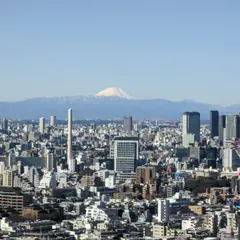
The capital that remade itself again and again: a temple around a Kannon nobody sees, a forest planted by hand, the Tokugawa's towerless castle and a crossing with a single diagonal. Explore Tokyo with audio guides.

3 cities
7 routes · ~6.5h of audio

7 routes · ~6.5h of audio
14 cities

3 cities

7 routes · ~7h of audio

7 routes · ~7.5h of audio
3 cities

3 cities

7 routes · ~5h of audio

4 cities
5 cities

7 routes · ~5.9h of audio
3 cities
5 cities
4 cities

7 routes · 8h of audio

3 cities

4 cities

6 cities
3 cities
7 routes · ~5.5h of audio
7 routes · ~7.5h of audio

7 routes · ~5h of audio

7 routes · ~8.5h of audio

6 routes · 6h of audio

7 routes · ~6h of audio

7 routes · ~5h of audio

3 cities
7 routes · ~8.5h of audio
7 routes · ~7h of audio
3 cities
10 cities
3 cities

7 routes · ~9h of audio
7 routes · ~5h of audio

7 routes · ~9h of audio

7 routes · ~6.5h of audio
8 cities

7 routes · ~9.5h of audio
4 cities

7 cities

7 routes · ~6h of audio