


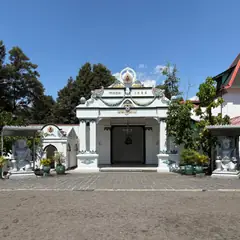
Sultan's palace since 1756
Yogyakarta Kraton
What to see at the Yogyakarta Kraton: the Pagelaran of the gunungan, the Siti Hinggil throne, the Ponconiti court, the Srimanganti courtyard and the golden Bangsal Kencana pavilion.
Yogyakarta, Indonesia
Explore Yogyakarta with 31 audio stops and documented, fact-checked narration. From the throne that faces the Tugu to the Shiva tower of Prambanan, every place explains how a Javanese court lives on along its sacred axis.
Sultan's palace since 1756
What to see at the Yogyakarta Kraton: the Pagelaran of the gunungan, the Siti Hinggil throne, the Ponconiti court, the Srimanganti courtyard and the golden Bangsal Kencana pavilion.
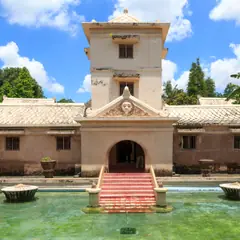
18th-century water palace
What to see at Taman Sari, in Yogyakarta: the Gapura Panggung, the Umbul Pasiraman pools, the Gapura Hageng relief, the Kenongo ruins and the Sumur Gumuling mosque.
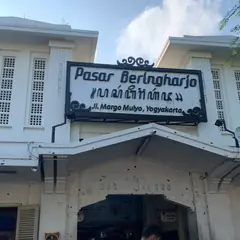
Sultanate market since 1758
What to see at Pasar Beringharjo in Yogyakarta: the bilingual gateway on Malioboro, the batik halls, the jamu and spice floor, the historic kitchens and the offering flower sellers.
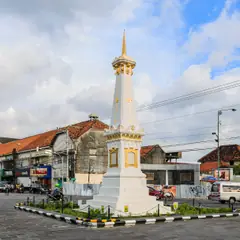
UNESCO heritage
What to see at the Tugu Yogyakarta: the white pillar of 1889, its golden finial, the four Javanese inscriptions and the miniature of the original Tugu Golong-Gilig.
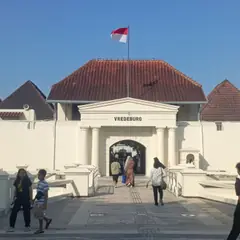
Dutch colonial fort
What to see at Fort Vredeburg in Yogyakarta: the west gate, the moat with a dancing fountain, the cannon bastion, the whitewashed barracks and the diorama halls.
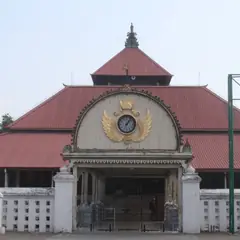
Royal mosque of the sultanate
What to see at the Masjid Gedhe Kauman in Yogyakarta: the Gapuro gate, the Sekaten gamelan pavilions, the great serambi and the prayer hall under the three-tier roof.
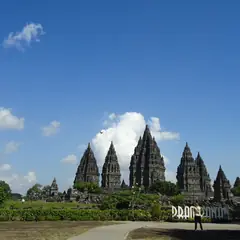
9th-century Hindu temple
What to see at the Prambanan Temple: the 47-metre Shiva tower, the Ramayana gallery, the Durga of the Roro Jonggrang legend, Candi Brahma and the field of the perwara.
Yogyakarta Audio Guide
Yogyakarta is laid out along a single line: the Panggung Krapyak–Kraton–Tugu axis that UNESCO inscribed in 2023. At its centre, the Kraton, court of the sultans since 1756, links seven sand courtyards from north to south, with a throne that faces the Tugu, the white pillar that closes the axis in the north and was rebuilt in 1889. West of the palace, Taman Sari, the sultan's water palace, keeps the bath of the court women and the circular Sumur Gumuling mosque, and beside the great northern esplanade stands the Masjid Gedhe Kauman, the royal mosque, with no dome or minaret. Along Malioboro Street, Pasar Beringharjo spreads batik, jamu and spices among its halls, and opposite, Fort Vredeburg, the Dutch bastion that shelled the Kraton in 1812, tells the history of the republic in dioramas. On the outskirts, to the east, Prambanan Temple raises its 47-metre Shiva tower over the Ramayana reliefs.
With the EarGuide Yogyakarta audio guide, every place reveals its history through documented narration checked against historical sources. Unlike a free walking tour or a conventional guided visit, you set the pace, the order and the stops. No groups, no timetables, no internet connection.
No internet needed
Download the routes before you head out and explore without using data.
Smart geolocation
The narration starts by itself when you reach the point of interest.
Frequently asked questions
The EarGuide app is free. The Yogyakarta audio guide includes 7 independent routes with about seven and a half hours of narration spread across 7 sites and 31 audio stops, and it is found inside the app itself.
No. EarGuide works entirely offline. Download the routes over WiFi before you set out and you can use the audio guide with no connection and no data use throughout your visit. The map shows your GPS position in real time even without coverage.
The Yogyakarta audio guide is available in Spanish and English, with documented, fact-checked narration on the court of the sultans, the city's sacred axis and the temples of Prambanan.
The audio guide brings together 7 independent routes with about seven and a half hours of narration in total, from 20 minutes to 2 hours per route. The most comfortable way is to split them over two days: the historic centre, from the Kraton to the Tugu, on one, and Prambanan, the longest route, on another.
They are different experiences. The EarGuide audio guide lets you explore Yogyakarta without timetables or groups, pause and resume whenever you like, and replay any explanation as often as you need. It suits independent travellers, families and anyone who prefers to understand the city at their own pace, with no prior knowledge of Java.
The Yogyakarta audio guide covers 7 main sites: the Kraton, Taman Sari, the Masjid Gedhe Kauman, Pasar Beringharjo, Fort Vredeburg, the Tugu and Prambanan Temple.
Almost all of it. Six of the seven sites are in the centre, along the axis that runs from the Kraton to the Tugu, about two and a half kilometres from one end to the other. Prambanan lies on the outskirts, some 15 kilometres northeast of the centre, and is reached by car or public transport.
Yes. Purchases belong to your EarGuide account, not to one app or one phone. A city unlocked in the EarGuide app is also unlocked in that city's own app, and the other way round, on both iPhone and Android. Just sign in with the same account on the other device. The store's “restore purchases” button only covers the app the purchase was made in, so signing in is what carries it across.
The Yogyakarta audio guide is inside the EarGuide app, free and ready to use offline. Carry it in your pocket and explore the city at your own pace.
More destinations
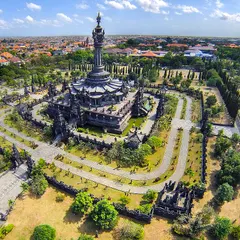
From the square where an entire court walked in white towards the Dutch rifles to the pillar with the oldest dated inscription in Bali. Explore Denpasar and Sanur with audio guides.
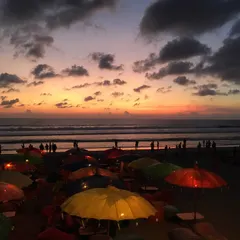
From the temple that guards a haunted chest to the rock of Tanah Lot, reached on foot only at low tide. Explore Seminyak's coast, its sea temples and its sunset beaches, with audio guides.
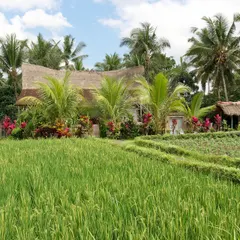
From the sacred forest of over a thousand macaques to the spring where the Pakerisan River is born. Explore Ubud, its temples, its rice terraces and its royal palace with audio guides.
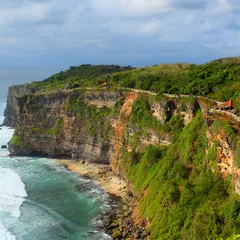
From a temple on a seventy-metre cliff, with monkeys that trade what they steal for food, to the 121-metre statue of Vishnu. Explore the Bukit peninsula with audio guides.

3 cities
7 routes · ~6.5h of audio

7 routes · ~6.5h of audio
14 cities

3 cities
7 routes · ~7h of audio

7 routes · ~7.5h of audio
3 cities
3 cities

7 routes · ~5h of audio
4 cities
9 cities
7 routes · ~5.9h of audio
3 cities
5 cities

4 cities

7 routes · 8h of audio

3 cities
4 cities

6 cities
3 cities
7 routes · ~5.5h of audio
7 routes · ~7.5h of audio

7 routes · ~5h of audio

7 routes · ~8.5h of audio

6 routes · 6h of audio

7 routes · ~6h of audio

7 routes · ~5h of audio
3 cities
7 routes · ~8.5h of audio
7 routes · ~7h of audio
3 cities
10 cities
3 cities

7 routes · ~9h of audio
7 routes · ~5h of audio
7 routes · ~9h of audio

7 routes · ~6.5h of audio
8 cities

7 routes · ~9.5h of audio
4 cities
7 cities

7 routes · ~6h of audio