



Art Deco monument and shrine
Christ the Redeemer
What to see at Christ the Redeemer: the 28-metre arms, the face sculpted in Paris, the soapstone mosaic, the pedestal chapel and Guanabara Bay.
Rio de Janeiro, Brazil
Walk Rio de Janeiro with 32 audio stops and narration that is documented and checked against sources. From the summit of Corcovado, where a statue paid for by donations opens 28 metres of arms, to the port rock where samba was born, each place tells how the city was made between the bay, the hills and the sea.

Art Deco monument and shrine
What to see at Christ the Redeemer: the 28-metre arms, the face sculpted in Paris, the soapstone mosaic, the pedestal chapel and Guanabara Bay.

UNESCO World Heritage
What to see at Sugarloaf Mountain: the 1912 cable car, the historic cabins on Morro da Urca, the gneiss wall and the view of Guanabara Bay.
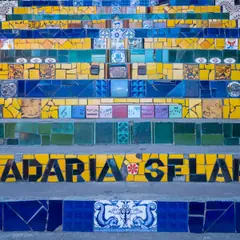
Urban tile art
What to see at the Selarón Steps: the 215 tiled steps, pieces from dozens of countries, the pregnant woman and the artist’s house-studio.

Calatrava architecture
What to see at the Museum of Tomorrow: Calatrava’s solar wings, the cantilever over Praça Mauá, the pier pools, the Cosmos Dome and the Oca.
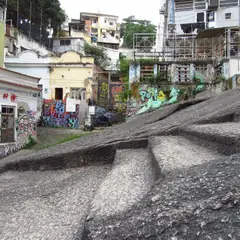
Afro-Brazilian heritage
What to see at Pedra do Sal: the staircase cut into the rock, Largo João da Baiana and its roda de samba, the painted walls and the quilombo of Little Africa.

Urban beach and seafront promenade
What to see at Copacabana Beach: the Copacabana Palace, Burle Marx’s wave promenade, the sand of Posto 4 and the fort at Posto 6.

Temple of football
What to see at Maracanã Stadium: the Estátua do Bellini, the Calçada da Fama footprints, the membrane roof, the Maracanazo goal and the tunnel onto the pitch.
Rio de Janeiro Audio Guide
Rio de Janeiro is read from the heights and at water level. On Corcovado, Christ the Redeemer was inaugurated in 1931 with a skin of thousands of soapstone triangles that hide names and prayers on their backs; at the entrance to Guanabara Bay, Sugarloaf has had one of the oldest cable cars in the world since 1912. Below, Copacabana Beach unfolds its four kilometres of sand in front of the Copacabana Palace and the promenade of stone waves, and between Lapa and Santa Teresa the Selarón Steps climb 215 tile-covered steps laid by a Chilean painter who promised to finish them only on the day he died. In the port zone, the Pedra do Sal keeps the memory of Little Africa and of the first rodas de samba, a few steps from Calatrava’s Museum of Tomorrow, stretched out over Píer Mauá. To the north, Maracanã Stadium, built in 665 days for the 1950 World Cup, recalls the silence of the Maracanazo and Pelé’s thousandth goal.
With the EarGuide Rio de Janeiro audio guide, each place reveals its story through narration that is documented and checked against historical sources. Unlike a free tour or a conventional guided visit, you decide the pace, the order and the stops. No groups, no schedules, no internet connection.
No internet connection
Download the routes before you set out and explore without using data.
Smart geolocation
The narration starts on its own when you reach the point of interest.
Frequently asked questions
The EarGuide app is free. The Rio de Janeiro audio guide includes 7 independent routes with about eight and a half hours of narration spread across 7 places and 32 audio stops, and it sits inside the app itself.
No. EarGuide works fully offline. Download the routes over WiFi before you leave and you can use the audio guide with no connection or data use throughout the walk. The map shows your GPS position in real time even without coverage.
The Rio de Janeiro audio guide is available in Spanish and English, with narration on the founding of the city beside Guanabara Bay, the African heritage of the port, the birth of samba, twentieth-century architecture and the life of its beaches and its stadium, documented and checked against sources.
The audio guide brings together 7 independent routes with about eight and a half hours of narration in total, from 30 to 120 minutes per route. It works best spread over several days: one for the centre and the port, with the Selarón Steps, Pedra do Sal and the Museum of Tomorrow; another for Christ the Redeemer; another for Sugarloaf and Copacabana; and a separate visit to Maracanã.
They are different experiences. The EarGuide audio guide lets you walk Rio de Janeiro with no schedules or groups, pause and resume whenever you like, and replay any explanation as often as you need. It suits independent travellers, families and anyone who prefers to understand the city at their own pace, with no prior knowledge of Brazil.
The Rio de Janeiro audio guide covers 7 main places: Christ the Redeemer, Sugarloaf Mountain, the Selarón Steps, the Museum of Tomorrow, Pedra do Sal, Copacabana Beach and Maracanã Stadium.
Each route, yes, but not all of them together: Rio is a sprawling city, split by hills. Pedra do Sal and the Museum of Tomorrow are close to each other in the port zone, and the Selarón Steps are in Lapa, not far from the centre. Christ the Redeemer is reached by the Corcovado train, Sugarloaf by cable car, and Copacabana and Maracanã are in different districts: the practical way is to arrive by metro, bus or taxi and explore each place on foot.
Yes. Purchases are tied to your EarGuide account, not to a particular app or phone. A city unlocked in the EarGuide app is also unlocked in that city's own app, and the other way round, on both iPhone and Android. Just sign in with the same account on the other device. The store’s “restore purchases” button only covers the app where the purchase was made, so what carries it over is signing in.
The Rio de Janeiro audio guide lives inside the EarGuide app, free and ready to use offline. Carry it in your pocket and walk the city, its hills and its beaches at your own pace.
More destinations

From the gold-lined São Francisco church to the Pelourinho square and the fitinhas of the Bonfim: the upper and lower city of All Saints Bay, with audio guides.

3 cities
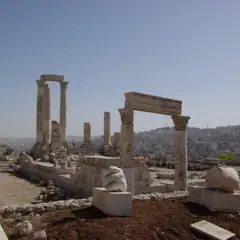
7 routes · ~6.5h of audio
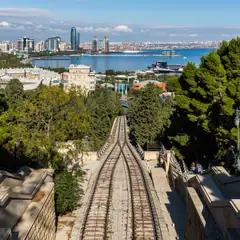
7 routes · ~6.5h of audio

14 cities

3 cities

7 routes · ~7h of audio

7 routes · ~7.5h of audio
3 cities
3 cities

7 routes · ~5h of audio

4 cities
5 cities
9 cities

7 routes · ~5.9h of audio
3 cities

5 cities
4 cities

7 routes · 8h of audio

3 cities

4 cities

6 cities
3 cities
7 routes · ~5.5h of audio
7 routes · ~7.5h of audio

7 routes · ~5h of audio

6 routes · 6h of audio

7 routes · ~6h of audio

3 cities

7 routes · ~8.5h of audio

7 routes · ~7h of audio

3 cities
10 cities

3 cities

7 routes · ~9h of audio

7 routes · ~5h of audio

7 routes · ~9h of audio

7 routes · ~6.5h of audio

8 cities

7 routes · ~9.5h of audio
4 cities
7 cities

7 routes · ~6h of audio