


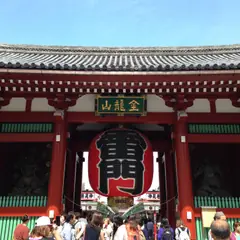
Tokyo's oldest temple
Senso-ji Temple
What to see at Sensō-ji: the Kaminarimon and its red lantern, Nakamise street, the Hōzōmon with its giant sandals, the Hondo of the secret Kannon and the traces of the 1945 fire.
Tokyo, Japan
Explore Tokyo with 33 audio stops and documented, fact-checked narration. From the bronze bowl that saved the secret image of Sensō-ji to the base of a tower that never existed, every place tells how the city rose from fire, earthquakes and war.
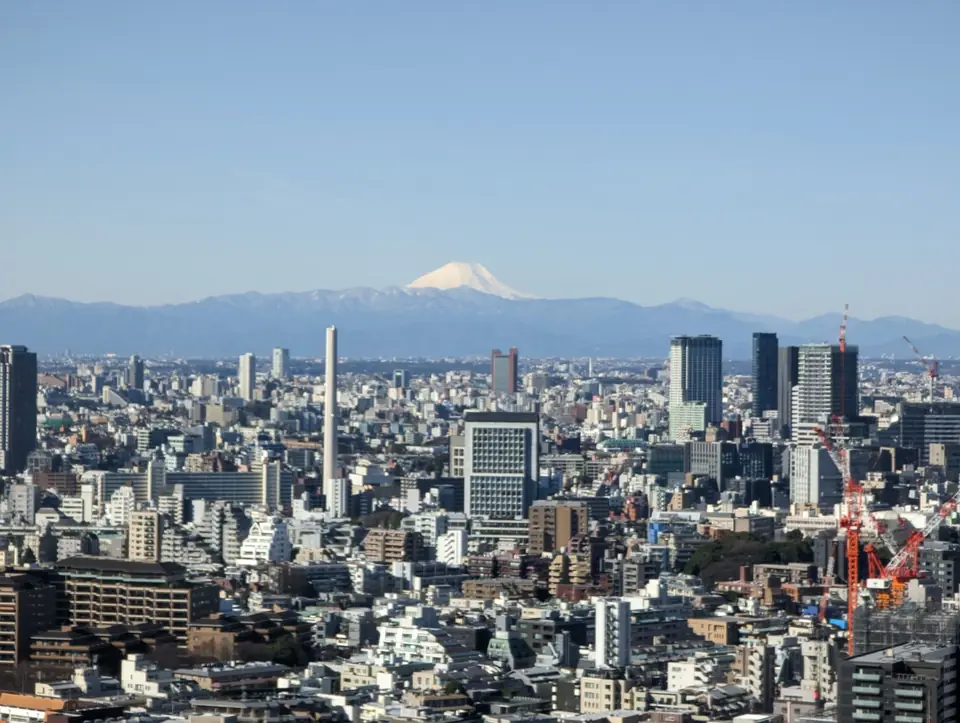
Tokyo's oldest temple
What to see at Sensō-ji: the Kaminarimon and its red lantern, Nakamise street, the Hōzōmon with its giant sandals, the Hondo of the secret Kannon and the traces of the 1945 fire.
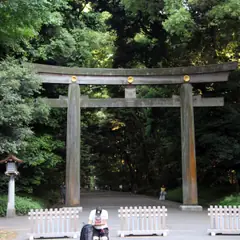
Shinto shrine in Harajuku
What to see at Meiji Shrine: the first cedar torii, the Gyoen garden and Kiyomasa's Well, the sake and wine barrels, the great cypress torii and the south gate of 1920.
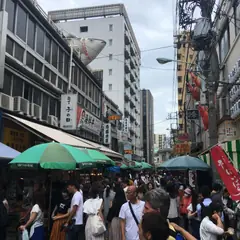
The market that stayed
What to see at Tsukiji Outer Market: Monzeki-dori, the shophouse alleys, the omelette on a skewer in Namiyoke-dori, the view of the old market and the Namiyoke Inari shrine.
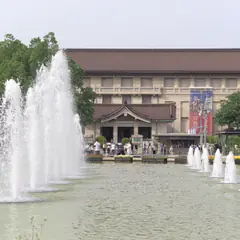
The hill where Edo lost its war
What to see in Ueno Park: the statue of Saigō and the Shōgitai tomb, the Kiyomizu Kannon-dō, the face of the Great Buddha, the gilded Tōshōgū and the great fountain of the old Kan'ei-ji.
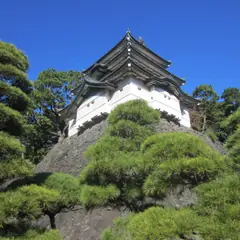
The heart of Edo Castle
What to see in the Imperial Palace East Gardens: the Ōtemon gate, the guardhouses, the Fujimi-yagura, the marker of the Pine Corridor, the keep base and the Shiomi-zaka slope.
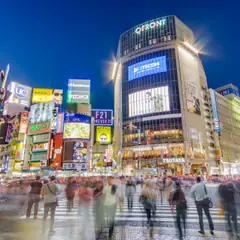
Tokyo's most photographed crossing
What to see at Shibuya Crossing: the Hachikō statue, the crosswalk's only diagonal, QFRONT and the mouth of Center Gai, and the view from the rooftop of MAGNET by SHIBUYA109.
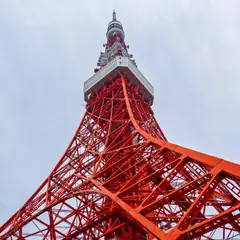
Symbol of postwar reconstruction
What to see at Tokyo Tower: the view from Zōjō-ji, the arch of the four legs and the outside stairs, the Main Deck with its shrine and its mysterious ball, and the Top Deck at 250 m.
Tokyo Audio Guide
Tokyo was Edo, the city of the Tokugawa shoguns, and a good part of what is seen today was rebuilt after the earthquake of 1923 and the bombing of 1945. In Asakusa, Senso-ji Temple, the oldest in the city, revolves around a Kannon hidden since 645 beneath titanium roofs. Very close, Ueno Park occupies the hill where the shoguns' temple burned in 1868, among cherry trees, museums and the statue of Saigō. In the centre, the Imperial Palace East Gardens preserve the moats, guardhouses and empty base of Edo Castle, and Tsukiji Outer Market still sells omelette on a skewer beside the gap of the great fish market that left in 2018. Tokyo Tower, from 1958, rises over the old cemetery of Zōjō-ji. To the west, Meiji Shrine hides in a forest planted by hand on wasteland, and a walk away Shibuya Crossing empties five streets on every green under Hachikō's gaze.
With the EarGuide Tokyo audio guide, every place reveals its history through documented narration checked against historical sources. Unlike a free walking tour or a conventional guided visit, you set the pace, the order and the stops. No groups, no timetables, no internet connection.
No internet needed
Download the routes before you head out and explore without using data.
Smart geolocation
The narration starts by itself when you reach the point of interest.
Frequently asked questions
The EarGuide app is free. The Tokyo audio guide includes 7 independent routes with just over seven hours of narration spread across 7 sites and 33 audio stops, and it is found inside the app itself.
No. EarGuide works entirely offline. Download the routes over WiFi before you set out and you can use the audio guide with no connection and no data use throughout your visit. The map shows your GPS position in real time even without coverage.
The Tokyo audio guide is available in Spanish and English, with narration on the Edo of the Tokugawa, its temples and shrines, the reconstruction after the 1923 earthquake and the war, and the city seen today, documented and checked against sources.
The audio guide brings together 7 independent routes with just over seven hours of narration in total, from 40 minutes to an hour and a quarter per route. Tokyo is huge and the sites are spread across the city, so the most comfortable way is to give it three days: Sensō-ji and Ueno Park, about two kilometres apart, on one; the Imperial Palace East Gardens, Tsukiji Outer Market and Tokyo Tower on another; and Meiji Shrine and Shibuya Crossing, less than two kilometres apart, on the third.
They are different experiences. The EarGuide audio guide lets you explore Tokyo without timetables or groups, pause and resume whenever you like, and replay any explanation as often as you need. It suits independent travellers, families and anyone who prefers to understand the city at their own pace, with no prior knowledge of Japan.
The Tokyo audio guide covers 7 main sites: Senso-ji Temple, Meiji Shrine, Tsukiji Outer Market, Ueno Park, the Imperial Palace East Gardens, Shibuya Crossing and Tokyo Tower.
Each route is walked on foot, and some sites can be chained together on foot: Sensō-ji and Ueno Park, Meiji Shrine and Shibuya Crossing, or the Imperial Palace East Gardens, Tsukiji Outer Market and Tokyo Tower, between two and three kilometres from one another. Between those groups, however, the distances are those of a big city: from Asakusa to Shibuya it is about twelve kilometres, so the sensible thing is to combine the walks with the metro or the Yamanote line.
Yes. Purchases belong to your EarGuide account, not to one app or one phone. A city unlocked in the EarGuide app is also unlocked in that city's own app, and the other way round, on both iPhone and Android. Just sign in with the same account on the other device. The store's “restore purchases” button only covers the app the purchase was made in, so signing in is what carries it across.
The Tokyo audio guide is inside the EarGuide app, free and ready to use offline. Carry it in your pocket and explore the city at your own pace.
More destinations
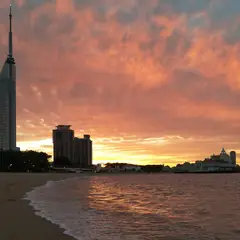
The Hakata of the merchants and the castle town of the Kuroda: the Yamakasa race, a shrine that still pleads for the Mongols' surrender and the yatai beside the Naka river. Explore Fukuoka with audio guides.
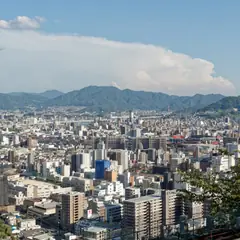
The ruin the city decided to save, a park over a buried district, a castle that fell without burning and a torii in the sea at Miyajima. Explore Hiroshima with audio guides.
The capital of the Minamoto shoguns and the Hōjō regents: an open-air bronze Great Buddha, Japan's first Zen temple and a cave where money is washed. Explore Kamakura with audio guides.
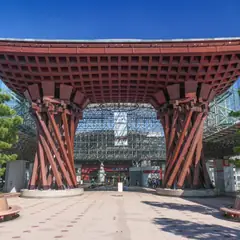
The city of the Maeda: a garden that unites six virtues, a castle with lead roofs, geiko and samurai districts and a temple full of traps. Explore Kanazawa with audio guides.
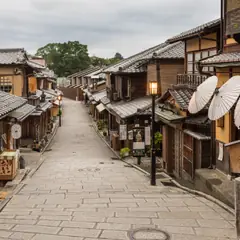
The old imperial capital: a mountain covered in torii, a wooden stage without nails, a golden pavilion reborn from the ashes and the district of the geiko. Explore Kyoto with audio guides.
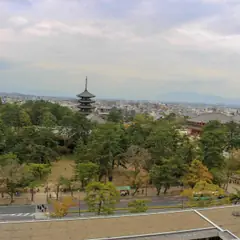
Japan's first great capital: a bronze Buddha of almost 15 metres, thousands of stone lanterns, bowing deer and a palace rescued from the rice fields. Explore Nara with audio guides.
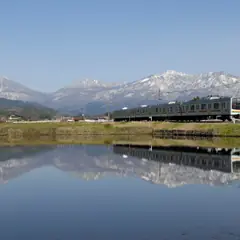
From the golden shrine where Ieyasu was made a god to the vermilion bridge only shoguns once crossed and a 97-metre waterfall that empties a lake. Explore Nikko with audio guides.
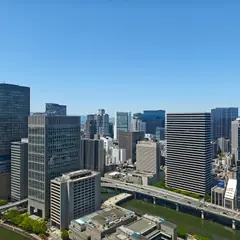
The merchants' city: a castle of three lives, a canal of theatres and neon, cooks' markets, a tower raised by its neighbours and temples that face the sea. Explore Osaka with audio guides.

3 cities
7 routes · ~6.5h of audio
7 routes · ~6.5h of audio
14 cities
3 cities
7 routes · ~7h of audio

7 routes · ~7.5h of audio
3 cities
3 cities

7 routes · ~5h of audio
4 cities
5 cities
7 routes · ~5.9h of audio
3 cities
5 cities
4 cities
7 routes · 8h of audio

3 cities
4 cities

6 cities
3 cities
7 routes · ~5.5h of audio
7 routes · ~7.5h of audio

7 routes · ~5h of audio
7 routes · ~8.5h of audio

6 routes · 6h of audio
7 routes · ~6h of audio
7 routes · ~5h of audio

3 cities
7 routes · ~8.5h of audio
7 routes · ~7h of audio
3 cities
10 cities
3 cities
7 routes · ~9h of audio
7 routes · ~5h of audio
7 routes · ~9h of audio
7 routes · ~6.5h of audio
8 cities
7 routes · ~9.5h of audio
4 cities
7 cities

7 routes · ~6h of audio