


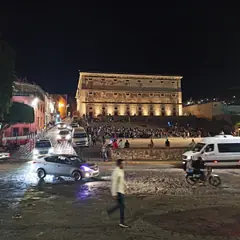
Cradle of Independence
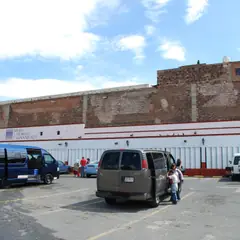
Alhóndiga de Granaditas
What to see at the Alhóndiga de Granaditas: the granary of 1809 stormed in 1810, the corners that held the insurgent heads, the Pípila door and the Chávez Morado murals.
Guanajuato, Mexico
Walk Guanajuato with 28 audio stops and narration that is documented and checked against sources. From the granary stormed in 1810 that opened the War of Independence to the Churrigueresque church paid for with the silver of La Valenciana, each place tells how a mining town wedged into a ravine became one of the richest cities of New Spain.
Cradle of Independence
What to see at the Alhóndiga de Granaditas: the granary of 1809 stormed in 1810, the corners that held the insurgent heads, the Pípila door and the Chávez Morado murals.
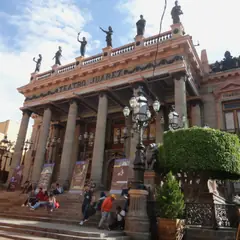
Porfirian opera house
What to see at the Teatro Juárez in Guanajuato: bronze muses, lions, a Moorish horseshoe auditorium and the story of a theatre that was a cinema, circus and boxing ring.
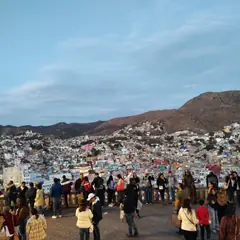
Viewpoint and monument
What to see at the Pípila Monument in Guanajuato: the pink quarry stone statue, its inscription, the interior viewpoint and the best view of the ravine.
Funerary history
What to see at the Guanajuato Mummy Museum: the Santa Paula niches, the ossuary, Remigio Leroy and the Angelitos room.
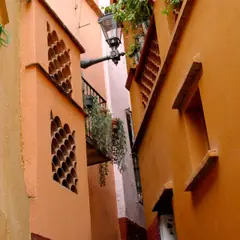
Legend of Guanajuato
Guanajuato's narrowest alley: two balconies almost joined, the third red step and the tragic legend that gives the kiss its name.
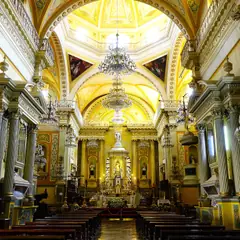
Minor basilica
What to see at the Guanajuato Basilica: the yellow façade paid for with silver, the cedar Virgin on solid silver and the 1,098-pipe organ.
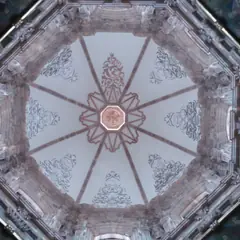
Churrigueresque baroque
Churrigueresque church of 1788 beside the La Valenciana mine: pink quarry stone portal, three gold altarpieces, an ivory pulpit and a missing tower.
Guanajuato Audio Guide
Guanajuato was born of silver and squeezed into the bottom of a ravine, and almost everything you visit today was paid for by its mines. On the Plaza de la Paz, the yellow Basílica Colegiata, raised between 1671 and 1696, keeps a Virgin that arrived from Europe at the mining town around the 1550s. Higher up, the Alhóndiga de Granaditas, a granary with the look of a fortress finished in 1809, was stormed ten months later in the first great battle of Independence, and for a decade its corners displayed the heads of Hidalgo, Allende, Aldama and Jiménez. Facing the Jardín de la Unión, the Teatro Juárez that Porfirio Díaz inaugurated in 1903 with Aida keeps eight bronze muses on its crown: the ninth never arrived. Above it, on San Miguel hill, the Pípila Monument honours a miner whose existence is still debated. Near the Plazuela de los Ángeles, the Kissing Alley, barely 68 centimetres wide, joins two balconies that almost touch; beside the Santa Paula Cemetery, the Mummy Museum displays neighbours evicted from their niches for not paying the fee, and beside the La Valenciana mine, La Valenciana Church, dedicated to St Cajetan, gathers three gold altarpieces under a single tower.
With the EarGuide Guanajuato audio guide, each place reveals its story through narration that is documented and checked against historical sources. Unlike a free tour or a conventional guided visit, you decide the pace, the order and the stops. No groups, no schedules, no internet connection.
No internet connection
Download the routes before you set out and explore without using data.
Smart geolocation
The narration starts on its own when you reach the point of interest.
Frequently asked questions
The EarGuide app is free. The Guanajuato audio guide includes 7 independent routes with about five hours of narration spread across 7 places and 28 audio stops, and it sits inside the app itself.
No. EarGuide works fully offline. Download the routes over WiFi before you leave and you can use the audio guide with no connection or data use throughout the walk. The map shows your GPS position in real time even without coverage.
The Guanajuato audio guide is available in Spanish and English, with narration on silver, the War of Independence, the Porfiriato and the legends of the city, documented and checked against sources.
The audio guide brings together 7 independent routes with about five hours of narration in total, from 20 to 60 minutes per route. They fit into one long day, though it is more comfortable to split them in two: one for the centre, with the Basílica Colegiata, the Teatro Juárez, the Kissing Alley, the Alhóndiga de Granaditas and the climb to the Pípila; another for the Mummy Museum and La Valenciana Church.
They are different experiences. The EarGuide audio guide lets you walk Guanajuato with no schedules or groups, pause and resume whenever you like, and replay any explanation as often as you need. It suits independent travellers, families and anyone who prefers to understand the city at their own pace, with no prior knowledge of Mexico.
The Guanajuato audio guide covers 7 main places: the Alhóndiga de Granaditas, the Teatro Juárez, the Pípila Monument, the Mummy Museum, the Kissing Alley, the Basílica Colegiata de Nuestra Señora de Guanajuato and La Valenciana Church, dedicated to St Cajetan.
Almost everything. The Basílica Colegiata, the Teatro Juárez, the Kissing Alley and the Alhóndiga de Granaditas are a few minutes' walk apart through the centre, and the Pípila is reached by stairways or by the funicular that leaves from behind the Teatro Juárez. The Mummy Museum, beside the Santa Paula Cemetery, and La Valenciana Church stand on the heights around the city: the most practical way is to get there by taxi or bus.
Yes. Purchases are tied to your EarGuide account, not to a particular app or phone. A city unlocked in the EarGuide app is also unlocked in that city's own app, and the other way round, on both iPhone and Android. Just sign in with the same account on the other device. The store’s “restore purchases” button only covers the app where the purchase was made, so what carries it over is signing in.
The Guanajuato audio guide lives inside the EarGuide app, free and ready to use offline. Carry it in your pocket and walk the silver city at your own pace.
More destinations
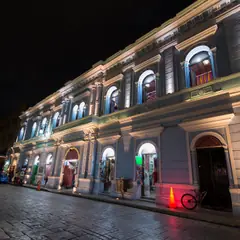
From the cathedral raised with stone from Maya T'Hó to the doorway of the Casa de Montejo and the palaces of the Paseo de Montejo: the Yucatecan capital, with audio guides.
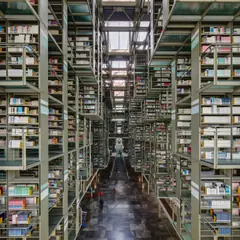
From the double pyramid of the Templo Mayor to the glass curtain of Bellas Artes and Frida Kahlo's Casa Azul in Coyoacán: the Mexican capital, with audio guides.
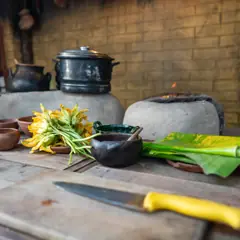
From the gilded interior of Santo Domingo to the Zapotec summit of Monte Albán and the stone fretwork of Mitla: Oaxaca and its central valleys, with audio guides.

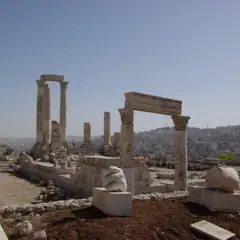
From the yellow cathedral where peace was negotiated with the Zapatistas to the Jaguar House of the Lacandon people and the amber of Simojovel: San Cristóbal de las Casas, with audio guides.

3 cities
7 routes · ~6.5h of audio

7 routes · ~6.5h of audio

14 cities

3 cities

7 routes · ~7h of audio

7 routes · ~7.5h of audio
3 cities
3 cities

7 routes · ~5h of audio

4 cities
5 cities
9 cities
7 routes · ~5.9h of audio
3 cities

4 cities
7 routes · 8h of audio

3 cities

4 cities

6 cities
3 cities
7 routes · ~5.5h of audio
7 routes · ~7.5h of audio

7 routes · ~5h of audio

7 routes · ~8.5h of audio

6 routes · 6h of audio

7 routes · ~6h of audio

7 routes · ~5h of audio

3 cities

7 routes · ~8.5h of audio

7 routes · ~7h of audio

3 cities
10 cities

3 cities

7 routes · ~9h of audio

7 routes · ~5h of audio

7 routes · ~9h of audio
7 routes · ~6.5h of audio

8 cities

7 routes · ~9.5h of audio
4 cities
7 cities

7 routes · ~6h of audio