


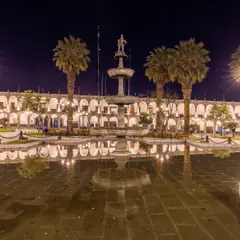
Founding square
Plaza de Armas
The founding square of Arequipa: three double-arcaded portals, the ashlar cathedral, Salaverry's letter and the Tuturutu fountain.
Arequipa, Peru
Walk Arequipa with 31 audio stops and narration that is documented and checked against sources. From the square laid out by cord in 1540 to the cloistered citadel that stayed closed to the world until 1970, each place tells how a city of volcanic ashlar rose again and again amid earthquakes, in the shadow of Misti.
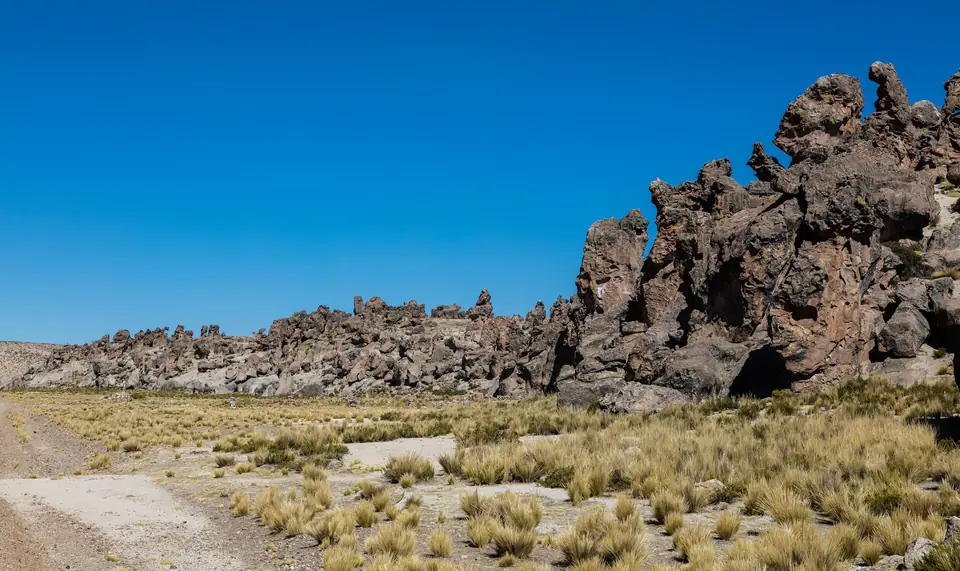
Founding square
The founding square of Arequipa: three double-arcaded portals, the ashlar cathedral, Salaverry's letter and the Tuturutu fountain.
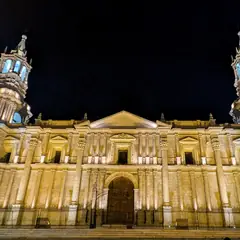
Cathedral basilica
What to see at Arequipa Cathedral: the seventy-column ashlar façade, the clock with a 1950 bullet, the pulpit with the devil, the Loret organ and the marble altar.
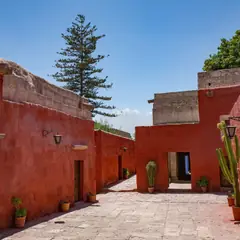
Cloistered citadel
What to see at the Santa Catalina Monastery in Arequipa: the gateway, the parlour, the cell of Sister Ana de los Ángeles, Córdoba Street and the laundry of clay jars.
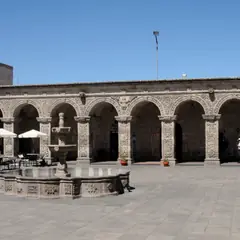
Mestizo Baroque
What to see at the Church of the Company in Arequipa: the 1698 mestizo ashlar portal, Santiago Matamoros, the gilded altarpiece, the chapel of San Ignacio and the cloisters.
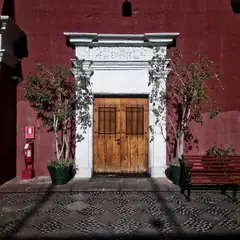
Inca archaeology
What to see at the Andean Sanctuaries Museum in Arequipa: Juanita, the Inca offering from Ampato preserved frozen, her trousseau of feathers and textiles, ceramics and metals from the high sanctuaries.
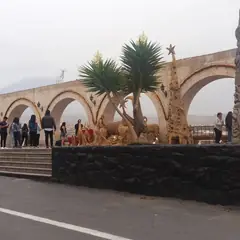
Viewpoint and traditional district
Yanahuara Viewpoint in Arequipa: an ashlar arcade with verses by Arequipa writers, a view of Misti and the mestizo portal of San Juan Bautista.
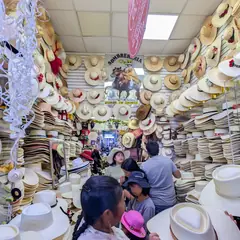
Historic market
Arequipa's oldest market: a hall of iron and pink ashlar over a church felled in 1868, with fruit, juices, queso helado and Los Agachaditos.
Arequipa Audio Guide
Arequipa is white because it is volcanic: almost its whole centre is carved from sillar, the pale stone left by eruptions. The Plaza de Armas, laid out in 1540, gathers three double-arcaded portals and, on its north side, the Basilica Cathedral, ruined by a volcano, a fire and several earthquakes and rebuilt in the nineteenth century, with a devil at the foot of the pulpit. On the corner, the Church of the Company of Jesus displays the 1698 portal that opened the mestizo Baroque of the southern Andes. A few blocks away, the Santa Catalina Monastery is a cloistered citadel of more than 20,000 m², with streets and little houses painted indigo and ochre, closed to the world until 1970. The Andean Sanctuaries Museum keeps Juanita, the Inca adolescent found frozen on the summit of Ampato in 1995. Across the Chili River, the Yanahuara Viewpoint frames Misti behind an arcade of carved verses, and the San Camilo Market, of iron and ashlar, is still the city's pantry and dining room.
With the EarGuide Arequipa audio guide, each place reveals its story through narration that is documented and checked against historical sources. Unlike a free tour or a conventional guided visit, you decide the pace, the order and the stops. No groups, no schedules, no internet connection.
No internet connection
Download the routes before you set out and explore without using data.
Smart geolocation
The narration starts on its own when you reach the point of interest.
Frequently asked questions
The EarGuide app is free. The Arequipa audio guide includes 7 independent routes with about six hours of narration spread across 7 places and 31 audio stops, and it sits inside the app itself.
No. EarGuide works fully offline. Download the routes over WiFi before you leave and you can use the audio guide with no connection or data use throughout the walk. The map shows your GPS position in real time even without coverage.
The Arequipa audio guide is available in Spanish and English, with narration on the ashlar city, its volcanoes, its earthquakes, the mestizo Baroque, the cloistered life of Santa Catalina and the Inca high-mountain offerings, documented and checked against sources.
The audio guide brings together 7 independent routes with about six hours of narration in total, from 30 to 120 minutes per route. It works best spread over two days: one for the Plaza de Armas, the Cathedral, the Company and the Andean Sanctuaries Museum, and another for the Santa Catalina Monastery, which needs two hours on its own, the San Camilo Market and the Yanahuara Viewpoint.
They are different experiences. The EarGuide audio guide lets you walk Arequipa with no schedules or groups, pause and resume whenever you like, and replay any explanation as often as you need. It suits independent travellers, families and anyone who prefers to understand the city at their own pace, with no prior knowledge of Peru.
The Arequipa audio guide covers 7 main places: the Plaza de Armas, the Basilica Cathedral, the Santa Catalina Monastery, the Church of the Company of Jesus, the Andean Sanctuaries Museum, the Yanahuara Viewpoint and the San Camilo Market.
Yes. The Plaza de Armas, the Cathedral, the Company and the Andean Sanctuaries Museum are one or two blocks from each other; the Santa Catalina Monastery is three blocks to the north and the San Camilo Market a few blocks to the southeast. The Yanahuara Viewpoint is across the Chili River, a little over a kilometre from the square: it can be reached on foot over the bridge or by a short taxi ride.
Yes. Purchases are tied to your EarGuide account, not to a particular app or phone. A city unlocked in the EarGuide app is also unlocked in that city's own app, and the other way round, on both iPhone and Android. Just sign in with the same account on the other device. The store’s “restore purchases” button only covers the app where the purchase was made, so what carries it over is signing in.
The Arequipa audio guide lives inside the EarGuide app, free and ready to use offline. Carry it in your pocket and walk the White City at your own pace.
More destinations
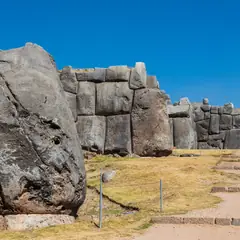
From the gold-lined Temple of the Sun beneath a Dominican convent to the triple wall of Sacsayhuamán and the Machu Picchu terraces: the Inca and colonial capital, with audio guides.
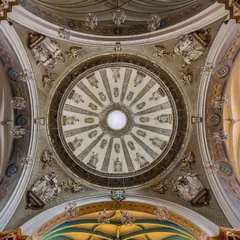
From the bronze fountain of 1651 in the Plaza Mayor to the catacombs of San Francisco and the adobe pyramid of Huaca Pucllana in Miraflores: viceregal and pre-Hispanic Lima, with audio guides.
3 cities
7 routes · ~6.5h of audio
7 routes · ~6.5h of audio

14 cities
3 cities

7 routes · ~7h of audio

7 routes · ~7.5h of audio
3 cities
3 cities

7 routes · ~5h of audio

4 cities
5 cities
9 cities
7 routes · ~5.9h of audio
3 cities
5 cities

4 cities

7 routes · 8h of audio

3 cities

4 cities

6 cities
7 routes · ~5.5h of audio
7 routes · ~7.5h of audio

7 routes · ~5h of audio

7 routes · ~8.5h of audio

6 routes · 6h of audio

7 routes · ~6h of audio

7 routes · ~5h of audio
3 cities

7 routes · ~8.5h of audio

7 routes · ~7h of audio

3 cities
10 cities

3 cities
7 routes · ~9h of audio
7 routes · ~5h of audio
7 routes · ~9h of audio
7 routes · ~6.5h of audio

8 cities

7 routes · ~9.5h of audio
4 cities
7 cities

7 routes · ~6h of audio