


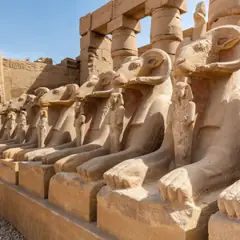
Ancient Egypt
Karnak Temple
The great sanctuary of Amun-Ra in Luxor: a 134-column hypostyle hall, Hatshepsut’s obelisk, cartouches overwritten by the pharaohs and the Sacred Lake.
Luxor
Walk Luxor with 33 audio stops and researched, fact-checked narration. From the great sanctuary of Amun-Ra that some thirty pharaohs extended over almost two millennia to the valley where the royal tombs were hidden, every route explains how ancient Thebes built, erased and reused its monuments on both banks of the Nile.
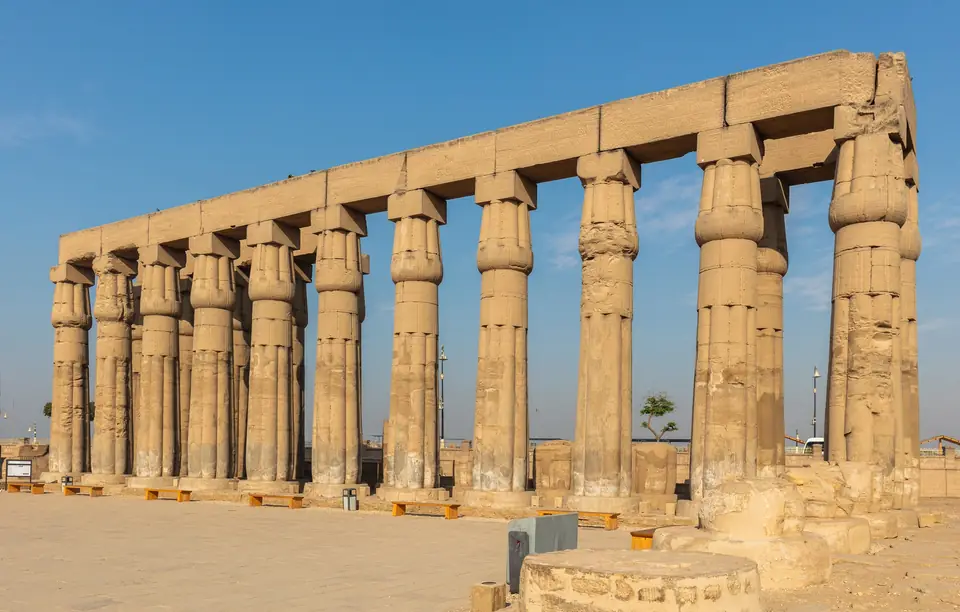
Ancient Egypt
The great sanctuary of Amun-Ra in Luxor: a 134-column hypostyle hall, Hatshepsut’s obelisk, cartouches overwritten by the pharaohs and the Sacred Lake.
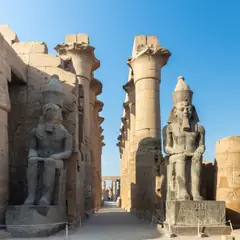
Pharaonic temple
The southern sanctuary of Thebes: an obelisk with baboons, Ramesses II’s pylon, a mosque above the columns, the Great Colonnade and Roman frescoes.
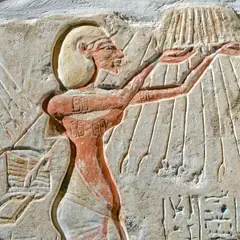
Ancient Egyptian art
What to see in the Luxor Museum: the 1989 statue cache, Akhenaten’s talatat wall, the mummies of Ahmose I and Ramesses I and the Sobek group.
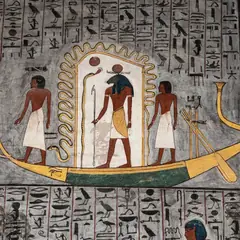
New Kingdom necropolis
The necropolis of the New Kingdom pharaohs in Luxor: the peak of el-Qurn, Tutankhamun’s tomb, the Roman graffiti of KV9 and the giant tomb of Ramesses II’s sons.
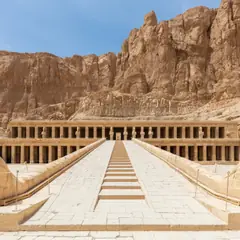
Mortuary temple
Pharaoh Hatshepsut’s terraced temple at Deir el-Bahari: reliefs of Punt, divine birth, Osiride colossi and scraped silhouettes.
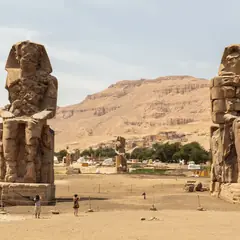
West bank of Thebes
The two colossi of Amenhotep III on Luxor’s west bank: the statue that sang at dawn, 107 Roman graffiti and the vanished temple of Kom el-Hettan.
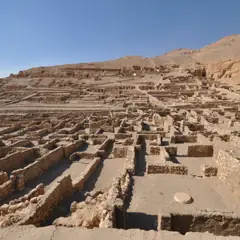
Artisans’ village
The village of the Valley of the Kings’ artisans in Luxor: houses, the Ptolemaic temple of Hathor, tombs with pyramids and Sennedjem’s painted tomb.
Luxor Audio Guide
On the east bank, where ancient Thebes stood, Karnak Temple is the work of some thirty pharaohs who, from Senusret I to the Ptolemaic period, added pylons, obelisks and a Great Hypostyle Hall of 134 columns, and who often erased or covered the names of their predecessors. A few kilometres away, Luxor Temple faces Karnak to receive the gods in procession and carries its entire history on top of it: a Roman fort with frescoes of Diocletian, a church and a mosque, that of Abu el-Haggag, which still prays hung above its columns. Between the two, the Luxor Museum brings out of the half-light the statues found in 1989 beneath the temple, an Akhenaten wall rescued from the fill of a pylon and the mummy attributed to Ramesses I, which spent some 140 years in a curiosity museum at Niagara Falls. On the west bank, the Valley of the Kings gathers almost five hundred years of royal tombs, plundered by those who dug them and signed by Roman tourists, with that of Tutankhamun, saved because the rubble of another tomb covered its staircase. Against the cliffs of Deir el-Bahari, the Temple of Hatshepsut climbs in terraces and keeps on its walls the voyage to Punt and the chiselled silhouettes of the queen who reigned as pharaoh; beside the fields, the Colossi of Memnon outlived the temple they guarded, and one of them sang at dawn for two centuries before Roman emperors. And at Deir el-Medina, the village of the royal tomb artisans, more than 5,000 ostraca tell of their daily life, from the strike over grain to excuses for missing work.
With the EarGuide Luxor audio guide, every landmark reveals its history through narration researched and fact-checked against historical sources. Unlike a free walking tour or a conventional guided visit, you set the pace, the order and the stops. No groups, no timetables, no internet connection.
No internet needed
Download the routes before you head out and explore without using data.
Smart geolocation
The narration starts by itself when you reach the point of interest.
Frequently asked questions
The EarGuide app is free. The Luxor audio guide includes 7 independent routes with about nine hours of narration spread across 7 landmarks and 33 audio stops, and it is found inside the app itself.
No. EarGuide works entirely offline. Download the routes over WiFi before you set out and you can use the audio guide with no connection and no data use throughout your tour of Luxor. The map shows your GPS position in real time even without coverage, which is very useful on the west bank and inside the Valley of the Kings.
The Luxor audio guide is available in Spanish and English, with narration on the history of ancient Thebes, from the temples of Amun and the tombs of the New Kingdom to the Roman travellers and modern excavations, researched and fact-checked against sources.
The audio guide brings together 7 independent routes with about nine hours of narration in total, from twenty minutes to two hours per route. They are designed to be spread over two or three days: one day for the east bank, with Karnak Temple, the Luxor Museum and Luxor Temple, and one or two for the west bank.
They are different experiences. The EarGuide audio guide lets you explore Luxor without timetables or groups, pause and resume whenever you like, and replay any explanation as often as you need. It suits independent travellers, families and anyone who prefers to understand ancient Egypt at their own pace, with no prior knowledge of its history.
The Luxor audio guide covers 7 landmarks: Karnak Temple, Luxor Temple, the Luxor Museum, the Valley of the Kings, the Temple of Hatshepsut, the Colossi of Memnon and Deir el-Medina, with stops that range from the Great Hypostyle Hall and Hatshepsut’s obelisk to Tutankhamun’s tomb, the reliefs of Punt and the painted tomb of Sennedjem.
In part. Karnak Temple, the Luxor Museum and Luxor Temple are on the east bank, in the city itself, a few kilometres from one another. The Valley of the Kings, the Temple of Hatshepsut, the Colossi of Memnon and Deir el-Medina are across the Nile, on the west bank, several kilometres apart: a taxi or a car is advisable to get between them.
Yes. Purchases belong to your EarGuide account, not to one app or one phone. A city unlocked in the EarGuide app is also unlocked in that city’s own app, and the other way round, on both iPhone and Android. Just sign in with the same account on the other device. The store’s “restore purchases” button only covers the app the purchase was made in, so signing in is what carries it across.
The Luxor audio guide is inside the EarGuide app, free and ready to use offline. Carry it in your pocket and explore both banks of ancient Thebes at your own pace, from Karnak Temple to the Valley of the Kings and the Temple of Hatshepsut.
More destinations
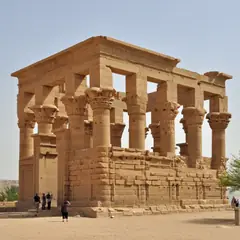
From the sanctuary of Isis with the last known hieroglyph to the obelisk that cracked in its quarry and the dam that drowned Nubia. Egypt's southern frontier, with audio guides.
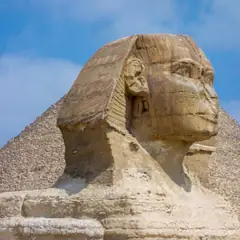
From the Giza pyramids and Tutankhamun’s complete treasure to the Mamluk souk of Khan el-Khalili and the alabaster mosque of the Citadel. Five millennia of Cairo, with audio guides.

3 cities
7 routes · ~6.5h of audio

7 routes · ~6.5h of audio

14 cities

3 cities

7 routes · ~7h of audio

7 routes · ~7.5h of audio
3 cities

7 routes · ~5h of audio

4 cities

5 cities

9 cities

7 routes · ~5.9h of audio

3 cities

5 cities

4 cities

7 routes · 8h of audio

3 cities

4 cities

6 cities
3 cities
7 routes · ~5.5h of audio

7 routes · ~7.5h of audio

7 routes · ~5h of audio

7 routes · ~8.5h of audio

6 routes · 6h of audio

7 routes · ~6h of audio

7 routes · ~5h of audio

3 cities

7 routes · ~8.5h of audio

7 routes · ~7h of audio

3 cities
10 cities

3 cities

7 routes · ~9h of audio

7 routes · ~5h of audio

7 routes · ~9h of audio

7 routes · ~6.5h of audio

8 cities

7 routes · ~9.5h of audio
4 cities

7 cities

7 routes · ~6h of audio