


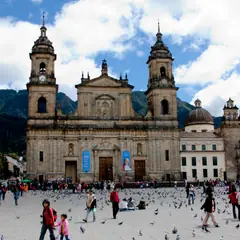
Founding square
Plaza de Bolívar
What to see at Plaza de Bolívar in Bogotá: Tenerani's statue, the Capitol without a dome, the Santander plaque of the Palace of Justice and the Casa del Florero.
Bogotá, Colombia
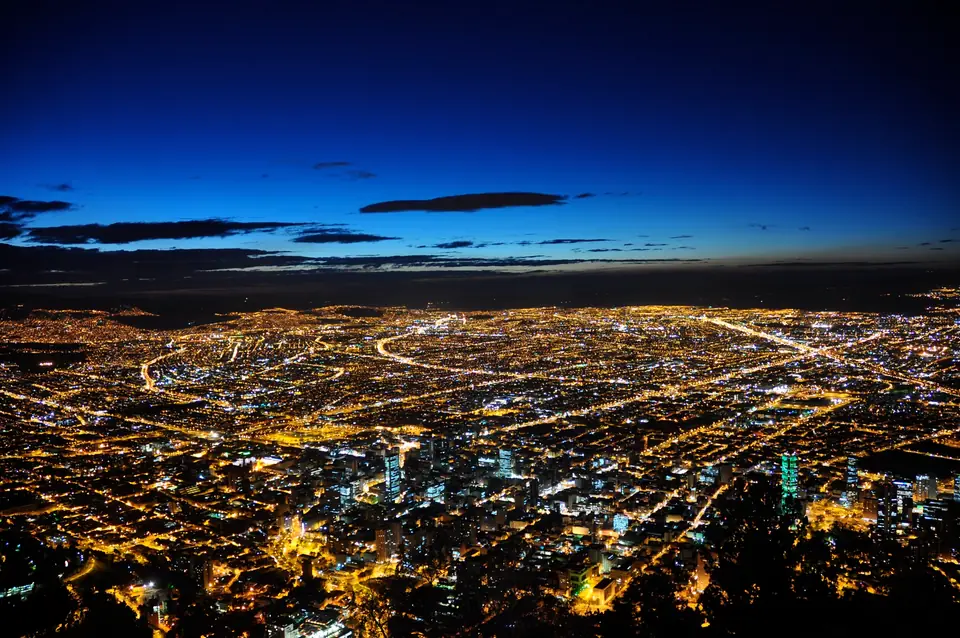
Explore Bogotá with 33 audio stops and a documented, source-checked narration. From the square where the city was laid out in 1539 to the sanctuary watching over it from the eastern hills, each place tells how an Andean capital kept its memory in gold, in stone and in an old prison.
Founding square
What to see at Plaza de Bolívar in Bogotá: Tenerani's statue, the Capitol without a dome, the Santander plaque of the Palace of Justice and the Casa del Florero.

Pre-Hispanic goldwork
What to see at the Gold Museum in Bogotá: the Quimbaya poporo, the Muisca raft of El Dorado, the La Ofrenda room and Germán Samper's marble chest.
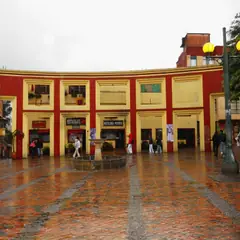
Founding myth
What to see at the Chorro de Quevedo: Friar Quevedo's basin, the hermitage of San Miguel del Príncipe and the chicha taverns of Calle del Embudo, in La Candelaria.
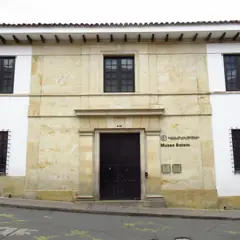
Art and Botero's donation
What to see at the Botero Museum: the bronze hand, the fountain courtyard, Picasso, Monet and Dalí, and Botero's Mona Lisa in a palace reborn after the Bogotazo.
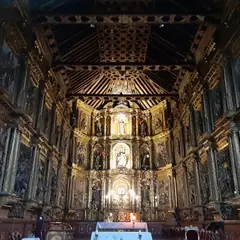
Colonial church
What to see at San Francisco Church in Bogotá: the city's greatest gilded altarpiece, its Mudéjar ceiling and the stone facade that came close to falling.
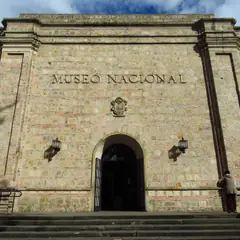
The country's oldest museum
What to see at the National Museum of Colombia: the cross-shaped Panopticon, the meteorite that was an anvil, the punishment cells and Bolívar's gold garland.
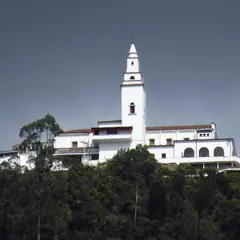
Pilgrimage sanctuary
What to see at Monserrate: the 1656 Fallen Lord, the Catalan Moreneta, the funicular and cable car, the Santa Clara house and the great lookout over Bogotá.
Bogotá Audio Guide
Bogotá was born around a Plaza Mayor confirmed on 27 April 1539, and the old Plaza de Bolívar is still where the country's powers are shared out: the Cathedral, the Capitol that waited 78 years and never had a dome, the Palace of Justice and the Mayor's Office. A few streets away, La Candelaria holds the little square of the Chorro de Quevedo, which tradition names as the cradle of the city, and the San Francisco Church, which gave its name to a river and keeps the capital's greatest gilded altarpiece. In a former archbishop's palace that burned in the Bogotazo, the Botero Museum hangs for free the paintings the artist donated alongside Picasso, Monet and Dalí, and facing Parque Santander the Gold Museum safeguards some 34,000 pieces of Pre-Hispanic goldwork, among them the Muisca raft that evokes the myth of El Dorado. Further north, the National Museum of Colombia occupies the cross-shaped galleries of the former Panopticon, the city's great prison, and above it all rises Monserrate, the sanctuary at 3,152 metres where a Christ from 1656 draws tens of thousands of pilgrims every Holy Week.
With the EarGuide Bogotá audio guide, each place reveals its history through a narration documented and checked against historical sources. Unlike a free tour or a conventional guided visit, you decide the pace, the order and the stops. No groups, no schedules, no internet connection.
No internet connection
Download the routes before you set out and explore without using data.
Smart geolocation
The narration starts on its own when you reach the point of interest.
Frequently asked questions
The EarGuide app is free. The Bogotá audio guide includes 7 independent routes with about seven and a half hours of narration spread across 7 places and 33 audio stops, and is found inside the app itself.
No. EarGuide works completely in offline mode. Download the routes over WiFi before you set out and you can use the audio guide with no connection or data use throughout the route. The map shows your GPS position in real time even without coverage.
The Bogotá audio guide is available in Spanish and English, with a narration about the founding of the city, Pre-Hispanic gold, Botero's art, the Bogotazo and the sanctuary of Monserrate, documented and checked against sources.
The audio guide brings together 7 independent routes with about seven and a half hours of narration in total, from 30 minutes to two hours per route. The easiest way is to spread it over two days: Plaza de Bolívar, the San Francisco Church, the Gold Museum, the Botero Museum and the Chorro de Quevedo on one, and the National Museum and Monserrate on another.
They are different experiences. The EarGuide audio guide lets you tour Bogotá without schedules or groups, pause and resume whenever you like, and listen again to any explanation as many times as you need. It is ideal for independent travellers, families and those who prefer to understand the city at their own pace, with no prior knowledge of Colombia.
The Bogotá audio guide covers 7 main places: Plaza de Bolívar, the Gold Museum, the Chorro de Quevedo, the Botero Museum, the San Francisco Church, the National Museum of Colombia and Monserrate.
Almost all of it. Plaza de Bolívar, the Botero Museum, the San Francisco Church, the Gold Museum and the Chorro de Quevedo are less than a kilometre from one another, in the historic centre and La Candelaria. The National Museum is about 2 km north of the square, and the top of Monserrate is reached by cable car, by funicular or along the pilgrims' path.
Yes. Purchases are tied to your EarGuide account, not to a specific app or phone. A city unlocked in the EarGuide app is also unlocked in that city's own app, and vice versa, on both iPhone and Android. You only need to sign in with the same account on the other device. The store's “restore purchases” button only covers the app where the purchase was made, so what carries it over is signing in.
The Bogotá audio guide is inside the EarGuide app, free and ready to use offline. Carry it in your pocket and tour the city at your own pace.
More destinations
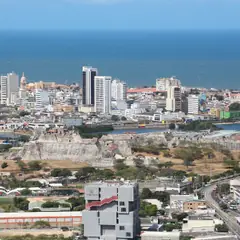
From San Felipe castle, which stopped Vernon in 1741, to the window for denunciations at the Palace of the Inquisition and the Getsemaní quarter: Cartagena de Indias, with audio guides.
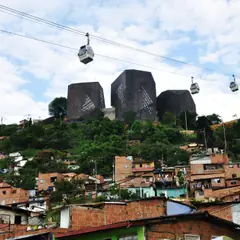
From the 23 bronzes Botero wanted within arm's reach to the outdoor escalators of Comuna 13 and the forest of 300 light poles at Plaza Cisneros: Medellín, with audio guides.
3 cities
7 routes · ~6.5h of audio
7 routes · ~6.5h of audio

14 cities
7 routes · ~7h of audio

7 routes · ~7.5h of audio
3 cities
3 cities

7 routes · ~5h of audio

4 cities
5 cities
9 cities
7 routes · ~5.9h of audio
3 cities
5 cities

4 cities

7 routes · 8h of audio

3 cities

4 cities

6 cities
3 cities

7 routes · ~5.5h of audio
7 routes · ~7.5h of audio

7 routes · ~5h of audio
7 routes · ~8.5h of audio

6 routes · 6h of audio

7 routes · ~6h of audio
7 routes · ~5h of audio
3 cities

7 routes · ~8.5h of audio
7 routes · ~7h of audio

3 cities
10 cities

3 cities
7 routes · ~9h of audio

7 routes · ~5h of audio
7 routes · ~9h of audio
7 routes · ~6.5h of audio
8 cities
7 routes · ~9.5h of audio
4 cities
7 cities

7 routes · ~6h of audio