


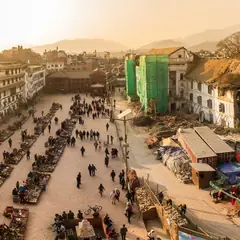
Royal square
Kathmandu Durbar Square
What to see at Kathmandu Durbar Square: the Kasthamandap, the Kumari's house, Kal Bhairav, the Taleju temple, the Hanuman gate and Nasal Chowk.
Kathmandu, Nepal
Explore Kathmandu with 37 audio stops and documented, fact-checked narration. From the Kasthamandap, the wooden pavilion from which the city takes its name, to the Swayambhunath stupa on its hill and the pyres of the Bagmati at Pashupatinath, every place tells how Malla kings, the Shah dynasty, Newar merchants and Tibetan lamas gradually shaped the valley.
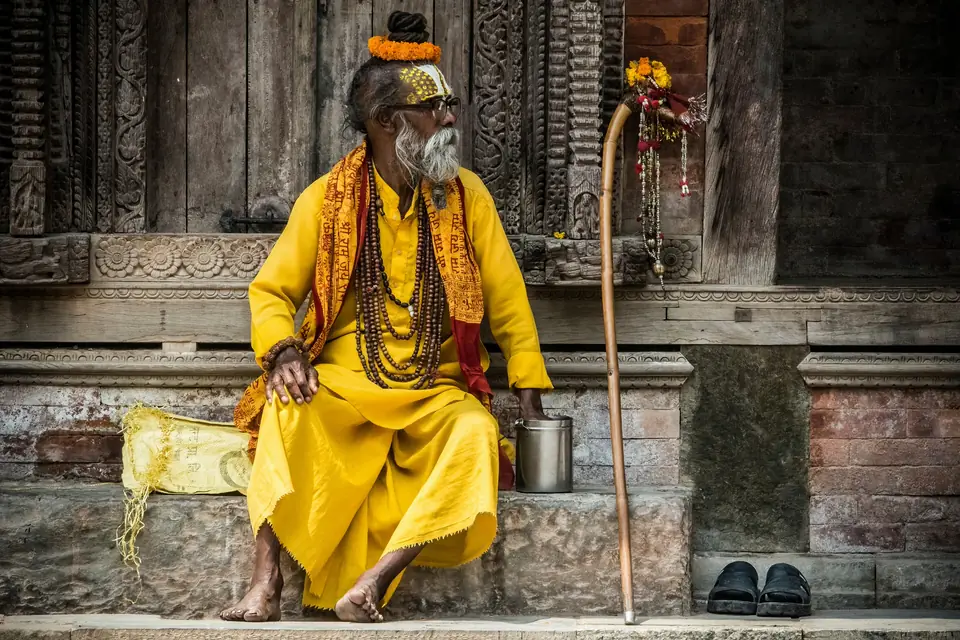
Royal square
What to see at Kathmandu Durbar Square: the Kasthamandap, the Kumari's house, Kal Bhairav, the Taleju temple, the Hanuman gate and Nasal Chowk.
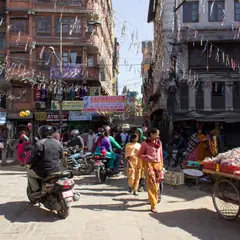
Newar market square
What to see at Asan: the golden Annapurna temple, the six market streets, the Nyālon fish stone and the Yita Chapā hymn pavilion.
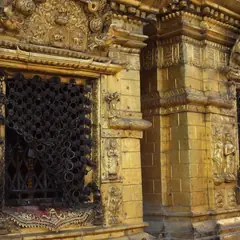
Buddhist stupa
What to see at Swayambhunath: the great golden vajra, the dome with the eyes, Pratap Malla's shikharas and the Shantipur and Hariti temples.
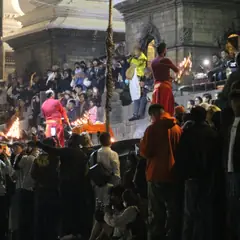
Shiva shrine
What to see at Pashupatinath Temple: the west gate and its golden Nandi, the Bagmati ghats, the royal Aryaghat, the Shivalaya terraces and the Mrigasthali forest.
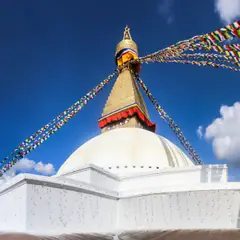
Buddhist stupa
What to see at the Boudhanath Stupa: the white dome and the Buddha's eyes, the wall of prayer wheels, the Ajima shrine and the golden pinnacle.
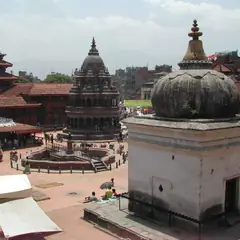
Newar royal square
What to see at Patan Durbar Square: the Krishna Mandir, the Yoganarendra Malla pillar, the Hari Shankar temple, the Manga Hiti and the Tusha Hiti of the Patan Museum.
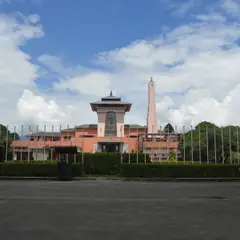
Royal palace and museum
What to see at the Narayanhiti Palace: the spout that gives it its name, the throne hall under the pagoda, the Shah crown and the site of the Tribhuvan Sadan.
Kathmandu Audio Guide
Kathmandu is understood from its main square. At Kathmandu Durbar Square, the old Hanuman Dhoka palace gathers the Taleju temple, the Kumari's house and the Kasthamandap, the wooden pavilion that gave the city its name and that a committee of local residents raised again after the 2015 earthquake. A few steps away, Asan is still the crossing of six streets on the old caravan route between India and Tibet, with a golden temple whose goddess is not a statue but a silver pot. To the west, on its hill, Swayambhunath raises the mother stupa of Newar Buddhism among monkeys and prayer wheels; to the east, the Pashupatinath Temple looks onto the ghats of the Bagmati, where the valley cremates its dead, and the Boudhanath Stupa opens its painted eyes over the heart of the Tibetan exile. North of the centre, the Narayanhiti Palace keeps the Shah crown and the site of the 2001 royal massacre, and to the south, Patan Durbar Square shows the temples that Newar craftsmen rebuilt piece by piece.
With the EarGuide Kathmandu audio guide, every place reveals its history through documented narration checked against historical sources. Unlike a free walking tour or a conventional guided visit, you set the pace, the order and the stops. No groups, no timetables, no internet connection.
No internet needed
Download the routes before you head out and explore without using data.
Smart geolocation
The narration starts by itself when you reach the point of interest.
Frequently asked questions
The EarGuide app is free. The Kathmandu audio guide includes 7 independent routes with about nine hours of narration spread across 7 sites and 37 audio stops, and it is found inside the app itself.
No. EarGuide works entirely offline. Download the routes over WiFi before you set out and you can use the audio guide with no connection and no data use throughout your visit. The map shows your GPS position in real time even without coverage.
The Kathmandu audio guide is available in Spanish and English, with documented, fact-checked narration on its royal squares, its Buddhist stupas, its Hindu temples and Nepal's last monarchy.
The audio guide brings together 7 independent routes with about nine hours of narration in total, from 45 minutes to an hour and a half per route. The most comfortable way is to split them over three days: Durbar Square, Asan and the Narayanhiti Palace in the centre; the Pashupatinath Temple and the Boudhanath Stupa, in the east, on another day; and Swayambhunath and Patan Durbar Square on a third.
They are different experiences. The EarGuide audio guide lets you explore Kathmandu without timetables or groups, pause and resume whenever you like, and replay any explanation as often as you need. It suits independent travellers, families and anyone who prefers to understand the city at their own pace, with no prior knowledge of its history.
The Kathmandu audio guide covers 7 main sites: Kathmandu Durbar Square, Asan, Swayambhunath, the Pashupatinath Temple, the Boudhanath Stupa, Patan Durbar Square and the Narayanhiti Palace.
Partly. In the centre, Asan is about 600 metres from Durbar Square and the Narayanhiti Palace is under two kilometres away. Swayambhunath is about two kilometres west, at the top of its hill; the Pashupatinath Temple, about four kilometres east, with the Boudhanath Stupa less than two kilometres from it, and Patan Durbar Square, about four kilometres south. For those stretches a taxi is advisable.
Yes. Purchases belong to your EarGuide account, not to one app or one phone. A city unlocked in the EarGuide app is also unlocked in that city's own app, and the other way round, on both iPhone and Android. Just sign in with the same account on the other device. The store's “restore purchases” button only covers the app the purchase was made in, so signing in is what carries it across.
The Kathmandu audio guide is inside the EarGuide app, free and ready to use offline. Carry it in your pocket and explore the valley at your own pace.
More destinations
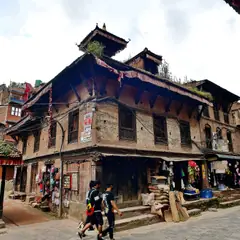
From the tallest pagoda in Nepal, raised in six months in 1702, to the Peacock Window and the oldest dated inscription in the country at Changu Narayan. Explore Bhaktapur with audio guides.
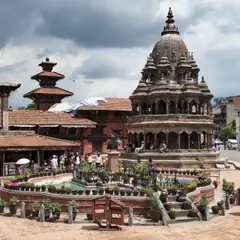
From Krishna's stone temple with its 21 pinnacles to a courtyard where a child priest serves the Buddha and a terracotta tower with a Buddha on every brick. Explore Patan with audio guides.
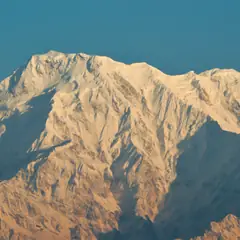
From the forest drowned beneath Phewa Lake to the waterfall that sinks into the Himalaya's largest cave and the pagoda the state tore down in 1974, with audio guides.

3 cities
7 routes · ~6.5h of audio

7 routes · ~6.5h of audio
14 cities
3 cities
7 routes · ~7h of audio
7 routes · ~7.5h of audio
3 cities
3 cities

7 routes · ~5h of audio
4 cities
5 cities
9 cities
7 routes · ~5.9h of audio
3 cities
5 cities
4 cities

7 routes · 8h of audio

3 cities

6 cities
3 cities
7 routes · ~5.5h of audio
7 routes · ~7.5h of audio

7 routes · ~5h of audio

7 routes · ~8.5h of audio

6 routes · 6h of audio

7 routes · ~6h of audio

7 routes · ~5h of audio

3 cities
7 routes · ~8.5h of audio
7 routes · ~7h of audio
3 cities
10 cities
3 cities
7 routes · ~9h of audio
7 routes · ~5h of audio
7 routes · ~9h of audio

7 routes · ~6.5h of audio
8 cities
7 routes · ~9.5h of audio
4 cities
7 cities

7 routes · ~6h of audio