


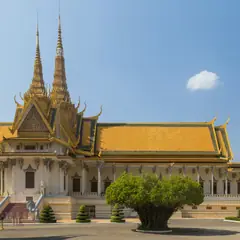
Royal residence
Royal Palace
What to see at the Royal Palace of Phnom Penh: the Throne Hall and its 59-metre spire, the Chan Chhaya Pavilion and Norodom’s iron house.
Phnom Penh, Cambodia
Explore Phnom Penh with 33 audio stops and researched, fact-checked narration. From the Royal Palace by the Four Arms to the Art Deco market, the hill of Grandmother Penh and the memory of the Khmer Rouge, every place explains how Cambodia’s capital passed from Khmer court to French protectorate, from independence to genocide and to reconstruction.
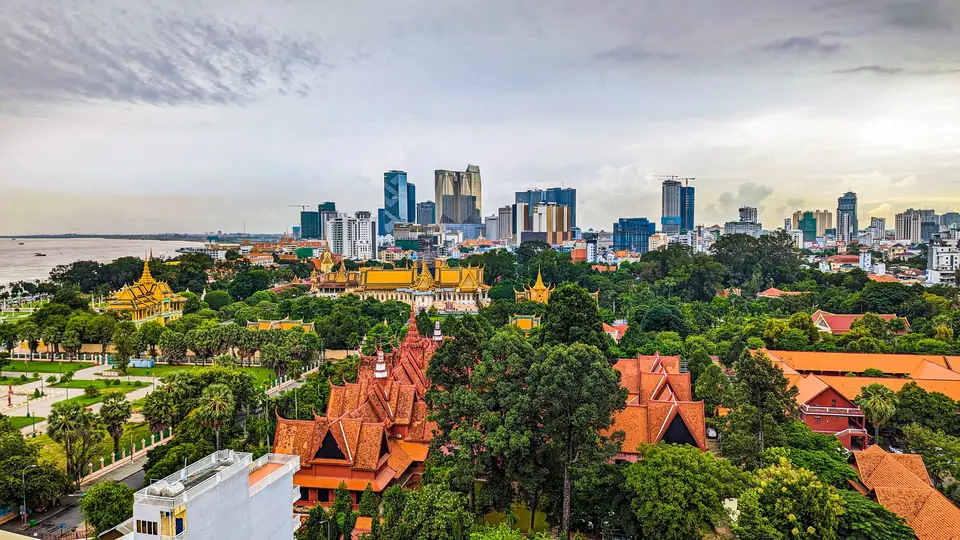
Royal residence
What to see at the Royal Palace of Phnom Penh: the Throne Hall and its 59-metre spire, the Chan Chhaya Pavilion and Norodom’s iron house.
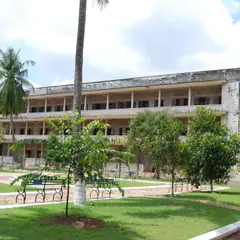
Genocide memorial
Former school compound turned into the Khmer Rouge prison S-21: cells in the classrooms, thousands of prisoner portraits, the 14 graves in the yard and the paintings of Vann Nath.
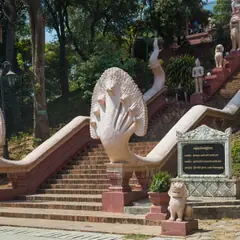
Origin of the city
What to see at Wat Phnom, the pagoda on the artificial hill that gave Phnom Penh its name: the Ponhea Yat stupa, the 1926 vihara and Grandmother Penh’s altar.
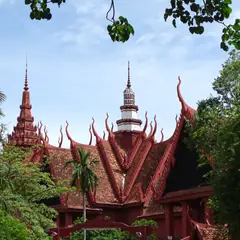
Khmer art
What to see at the National Museum of Cambodia: Groslier’s red façade, the Leper King courtyard, Jayavarman VII and the repatriated Koh Ker statues.
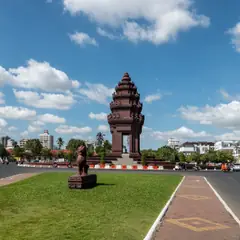
National symbol
What to see at the Independence Monument of Phnom Penh: Vann Molyvann’s lotus tower, its nagas, the flame of victory and the Sihanouk memorial.
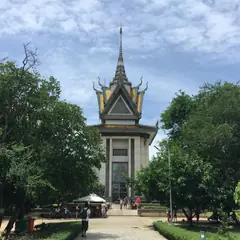
UNESCO World Heritage
Former Khmer Rouge execution field on the outskirts of Phnom Penh, with mass graves, the chankiri tree and a stupa holding thousands of skulls.
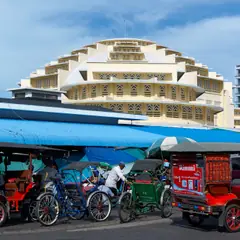
Art Deco market
1937 Art Deco market in Phnom Penh: a 26-metre dome that ventilates itself, gold under the clock and a vanished lake beneath the square.
Phnom Penh Audio Guide
Phnom Penh takes its name from a hand-made hill: according to tradition, in 1372 an old woman named Penh pulled a log with sacred statues out of the river and had the mound of Wat Phnom raised to house them. On the banks of Chaktomuk, where the Tonlé Sap joins the Mekong, the Royal Palace that Sisowath rebuilt between 1912 and 1919 brings together the Throne Hall, with its 59-metre spire, the nine-tiered coronation throne and the Napoleon Pavilion, an iron house made in Paris. Beside it, the National Museum of Cambodia, inaugurated in 1920 in a terracotta pavilion designed by George Groslier, keeps the original Leper King and one of the largest collections of Khmer art in the world. The Independence Monument, Vann Molyvann’s lotus-bud tower inaugurated on 9 November 1962, celebrates the end of French rule, and the Central Market, the Phsar Thmei of 1937, raises a 26-metre Art Deco dome over a former marsh. Two places tell the darkest chapter: Tuol Sleng, the school compound of 1962 that the Khmer Rouge turned into the S-21 prison, and the Choeung Ek Killing Fields, where in 1980 the remains of almost nine thousand people were exhumed. Both have been part of UNESCO World Heritage since 2025.
With the EarGuide Phnom Penh audio guide, every place reveals its history through narration researched and fact-checked against historical sources. Unlike a free walking tour or a conventional guided visit, you set the pace, the order and the stops. No groups, no timetables, no internet connection.
No internet needed
Download the routes before you head out and explore without using data.
Smart geolocation
The narration starts by itself when you reach the point of interest.
Frequently asked questions
The EarGuide app is free. The Phnom Penh audio guide includes 7 independent routes with about seven and a half hours of narration spread across 7 sites and 33 audio stops, and it is found inside the app itself.
No. EarGuide works entirely offline. Download the routes over WiFi before you set out and you can use the audio guide with no connection and no data use throughout your visit. The map shows your GPS position in real time even without coverage.
The Phnom Penh audio guide is available in Spanish and English, with researched, fact-checked narration on the Khmer court, the French protectorate, independence and the legacy of the Khmer Rouge.
The audio guide brings together 7 independent routes with about seven and a half hours of narration in total, from 20 to 90 minutes per route. They can be spread over two or three days: one for the Royal Palace, the National Museum and the Independence Monument, another for Wat Phnom and the Central Market, and another for Tuol Sleng and Choeung Ek.
They are different experiences. The EarGuide audio guide lets you explore Phnom Penh without timetables or groups, pause and resume whenever you like, and replay any explanation as often as you need. It suits independent travellers and anyone who prefers to understand the city at their own pace, with no prior knowledge of Cambodia.
The Phnom Penh audio guide covers 7 main sites: the Royal Palace, the Tuol Sleng Genocide Museum (S-21), Wat Phnom, the National Museum of Cambodia, the Independence Monument, the Choeung Ek Killing Fields and the Central Market (Phsar Thmei).
Almost all of it. The Royal Palace and the National Museum are less than 300 metres apart, and the Independence Monument, the Central Market and Wat Phnom lie between 1 and 2 km away in a straight line. Tuol Sleng is about 2 km from the palace, and Choeung Ek, about 9 km south of the centre, is visited by tuk-tuk or taxi.
Yes. Purchases belong to your EarGuide account, not to one app or one phone. A city unlocked in the EarGuide app is also unlocked in that city’s own app, and the other way round, on both iPhone and Android. Just sign in with the same account on the other device. The store’s “restore purchases” button only covers the app the purchase was made in, so signing in is what carries it across.
The Phnom Penh audio guide is inside the EarGuide app, free and ready to use offline. Carry it in your pocket and explore the city at your own pace.
More destinations
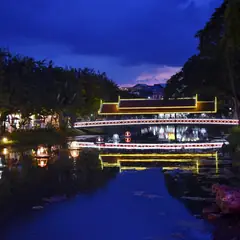
From a temple-mountain that faces west to an entire village on stilts on the Tonlé Sap, by way of towers of smiling faces and roots that embrace stone. Explore Siem Reap, Angkor and their surroundings, with audio guides.
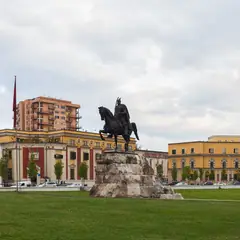
3 cities
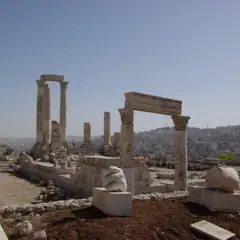
7 routes · ~6.5h of audio
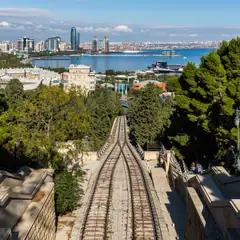
7 routes · ~6.5h of audio
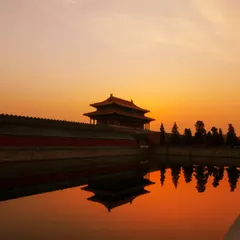
14 cities
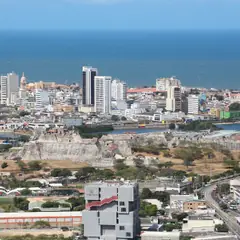
3 cities
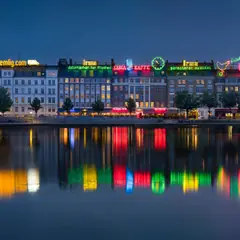
7 routes · ~7h of audio
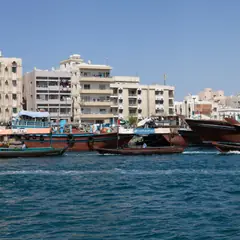
7 routes · ~7.5h of audio
3 cities
3 cities

7 routes · ~5h of audio
4 cities
5 cities
9 cities
7 routes · ~5.9h of audio
3 cities
5 cities
4 cities
7 routes · 8h of audio
3 cities

4 cities

6 cities
3 cities
7 routes · ~5.5h of audio

7 routes · ~5h of audio
7 routes · ~8.5h of audio

6 routes · 6h of audio
7 routes · ~6h of audio
7 routes · ~5h of audio
3 cities
7 routes · ~7h of audio
3 cities
10 cities
3 cities
7 routes · ~9h of audio
7 routes · ~5h of audio
7 routes · ~9h of audio
7 routes · ~6.5h of audio
8 cities
7 routes · ~9.5h of audio
4 cities
7 cities
7 routes · ~6h of audio