


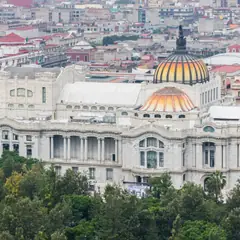
National theatre and museum
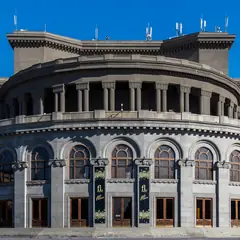
Palace of Fine Arts
What to see at the Palace of Fine Arts: the Tiffany glass curtain, the murals of Rivera, Orozco and Siqueiros, the Art Deco lobby and the mark of its sinking.
Mexico City, Mexico
Walk Mexico City with 37 audio stops and narration that is documented and checked against sources. From the Mexica pyramid that a cable trench brought back to light in 1978 to the tilma that moves millions of pilgrims at Tepeyac, each place tells how a city raised on a lake became the capital of Mexico.
National theatre and museum
What to see at the Palace of Fine Arts: the Tiffany glass curtain, the murals of Rivera, Orozco and Siqueiros, the Art Deco lobby and the mark of its sinking.
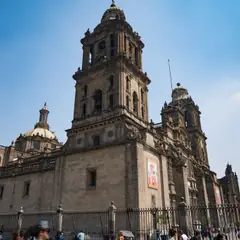
Viceregal cathedral
What to see at the Metropolitan Cathedral of Mexico City: the Altar of the Kings, the sinking pendulum, its bells and the story of the 1967 fire.
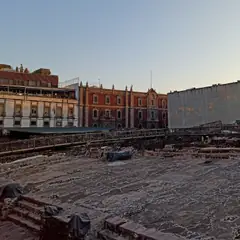
Heart of Tenochtitlan
What to see at the Templo Mayor: the seven stages of the Mexica double pyramid, the House of the Eagles and the Coyolxauhqui and Tlaltecuhtli monoliths in its museum.
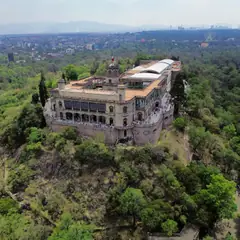
National Museum of History
What to see at Chapultepec Castle: the Niños Héroes mural, Maximilian and Carlota's terrace, Porfirio Díaz's stained glass and the Caballero Alto, in the National Museum of History.
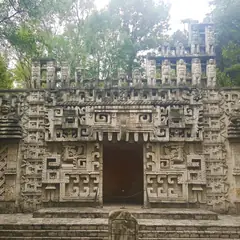
Archaeology and architecture
What to see at the National Museum of Anthropology: the Tlaloc monolith, the courtyard umbrella, the Sun Stone, the Coatlicue and Pakal's tomb.

House museum
What to see at the Frida Kahlo Museum: the Casa Azul in Coyoacán, Trotsky's refuge, the studio where she painted, the urn with her ashes and her Tehuana wardrobe.
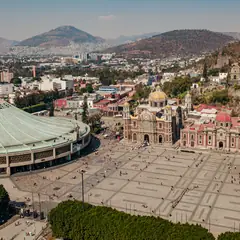
Marian shrine
What to see at the Basilica of Guadalupe: the tilma, the tilting Old Basilica, the Pocito Chapel and the Cerrito on Tepeyac hill.
Mexico City Audio Guide
Mexico City is read in layers, and all of them rest on the mud of the old lake. On the Zócalo, the Templo Mayor shows seven superimposed temples that grew like an onion from 1325, dismantled after the conquest and rediscovered in 1978 with the Coyolxauhqui disc. Beside it, the Metropolitan Cathedral took from 1571 to 1813 to finish and a pendulum hangs from its dome to keep watch on how it sinks. West of the Historic Centre, the Palace of Fine Arts that Porfirio Díaz commissioned for the 1910 centenary opened in 1934, with a marble façade, an Art Deco interior, the mural Diego Rivera redid after the Rockefeller Center censorship and a curtain of almost a million glass pieces. In Chapultepec park, the castle of viceroys, cadets, emperors and presidents looks over Paseo de la Reforma, and at its foot the National Museum of Anthropology keeps the Sun Stone under a roof hung from a single column. To the south, in Coyoacán, the Casa Azul preserves Frida Kahlo's studio and ashes; to the north, the Basilica of Guadalupe gathers at Tepeyac two churches and some 20 million pilgrims a year.
With the EarGuide Mexico City audio guide, each place reveals its story through narration that is documented and checked against historical sources. Unlike a free tour or a conventional guided visit, you decide the pace, the order and the stops. No groups, no schedules, no internet connection.
No internet connection
Download the routes before you set out and explore without using data.
Smart geolocation
The narration starts on its own when you reach the point of interest.
Frequently asked questions
The EarGuide app is free. The Mexico City audio guide includes 7 independent routes with about nine hours of narration spread across 7 places and 37 audio stops, and it sits inside the app itself.
No. EarGuide works fully offline. Download the routes over WiFi before you leave and you can use the audio guide with no connection or data use throughout the walk. The map shows your GPS position in real time even without coverage.
The Mexico City audio guide is available in Spanish and English, with narration on the Mexica world, the viceregal city, the Porfiriato, the muralists and the history of the capital, documented and checked against sources.
The audio guide brings together 7 independent routes with about nine hours of narration in total, from 45 to 120 minutes per route. It works best spread over three days: one for the Historic Centre, with the Templo Mayor, the Metropolitan Cathedral and Bellas Artes; another for Chapultepec park, with the castle and the National Museum of Anthropology; and a third for the Casa Azul in Coyoacán and the Basilica of Guadalupe.
They are different experiences. The EarGuide audio guide lets you walk Mexico City with no schedules or groups, pause and resume whenever you like, and replay any explanation as often as you need. It suits independent travellers, families and anyone who prefers to understand the city at their own pace, with no prior knowledge of Mexico.
The Mexico City audio guide covers 7 main places: the Palace of Fine Arts, the Metropolitan Cathedral, the Templo Mayor, Chapultepec Castle, the National Museum of Anthropology, the Frida Kahlo Museum (the Casa Azul) and the Basilica of Guadalupe.
By area. The Templo Mayor and the Cathedral sit together on the Zócalo, and the Palace of Fine Arts is a stroll through the Historic Centre; Chapultepec Castle and the National Museum of Anthropology share Chapultepec park. The Casa Azul, in Coyoacán to the south, and the Basilica of Guadalupe, to the north, are far from the centre: the most practical way is to get there by metro or taxi and explore them on foot.
Yes. Purchases are tied to your EarGuide account, not to a particular app or phone. A city unlocked in the EarGuide app is also unlocked in that city's own app, and the other way round, on both iPhone and Android. Just sign in with the same account on the other device. The store’s “restore purchases” button only covers the app where the purchase was made, so what carries it over is signing in.
The Mexico City audio guide lives inside the EarGuide app, free and ready to use offline. Carry it in your pocket and walk the Mexican capital at your own pace.
More destinations
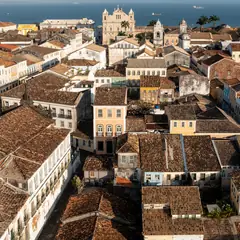
From the Alhóndiga where Independence caught fire to the Kissing Alley and the mummies of Santa Paula: the city that silver built, with audio guides.
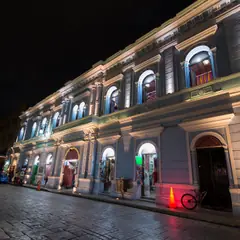
From the cathedral raised with stone from Maya T'Hó to the doorway of the Casa de Montejo and the palaces of the Paseo de Montejo: the Yucatecan capital, with audio guides.
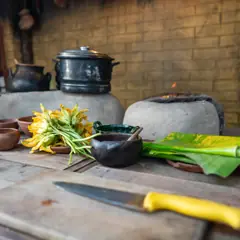
From the gilded interior of Santo Domingo to the Zapotec summit of Monte Albán and the stone fretwork of Mitla: Oaxaca and its central valleys, with audio guides.

From the yellow cathedral where peace was negotiated with the Zapatistas to the Jaguar House of the Lacandon people and the amber of Simojovel: San Cristóbal de las Casas, with audio guides.
3 cities
7 routes · ~6.5h of audio
7 routes · ~6.5h of audio

14 cities
3 cities
7 routes · ~7h of audio

7 routes · ~7.5h of audio
3 cities
3 cities

7 routes · ~5h of audio

4 cities
5 cities
9 cities

7 routes · ~5.9h of audio
3 cities
4 cities

7 routes · 8h of audio

3 cities

4 cities

6 cities
3 cities
7 routes · ~5.5h of audio
7 routes · ~7.5h of audio

7 routes · ~5h of audio

7 routes · ~8.5h of audio

6 routes · 6h of audio

7 routes · ~6h of audio
7 routes · ~5h of audio
3 cities

7 routes · ~8.5h of audio

7 routes · ~7h of audio
3 cities
10 cities

3 cities
7 routes · ~9h of audio

7 routes · ~5h of audio

7 routes · ~9h of audio
7 routes · ~6.5h of audio

8 cities

7 routes · ~9.5h of audio
4 cities
7 cities
7 routes · ~6h of audio