Market and food
20 de Noviembre Market Audio Guide (Mercado 20 de Noviembre)
Oaxaca's great popular dining hall occupies the site of a convent-hospital beside the city's first cathedral. Inside, mole and chocolate stalls and an aisle where meat is bought raw and grilled in plain sight over charcoal.
- 45 min of audio
- Traditional Oaxacan cooking
Work on the market began in early 1862 and dragged on for more than twenty years, slowed by foreign invasions and the country's internal struggles. The building went up over part of the old convent and hospital of the Juaninos, next to the site of Oaxaca's first cathedral. It was born as the Mercado de La Industria, to sell metalwork, crockery and textiles, and today it holds some 207 stalls in four sections: bread and chocolate, broths, regional cooking and the Pasillo de Humo, the Smoke Aisle.
In the Smoke Aisle a single meal is put together by several vendors who do not even share a till: one stall sells the chiles de agua and the spring onions, another the meat, ordered by weight or by showing the size with your hands, and others the tortillas and drinks. The raw meat is grilled on the brazier next door, in charcoal smoke, a metre from whoever chose it.
Highlights
- Smoke Aisle — tasajo, cecina and chorizo grilled on braziers beside each stall
- Oaxacan food stalls — mole negro, empanadas de amarillo, tlayudas and memelas
- Bread and chocolate section — chocolate in a bowl for dipping egg-yolk bread
- Date of 1888 over the north entrance, on a building begun in 1862
- About 207 stalls and some 15,000 diners a day
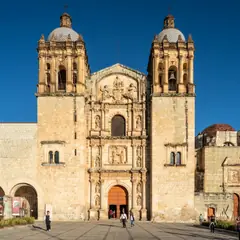
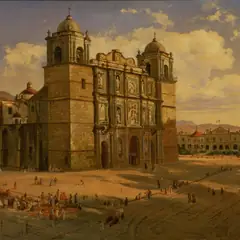
Few places in Oaxaca concentrate so many layers in so few metres. Next to the 20 de Noviembre Market the city’s first cathedral rose between 1535 and 1544; later, the Juaninos of the Order of Saint John of God received the site in 1698 and in 1700 began their convent-hospital, with infirmaries and a leisure garden. On part of that plot, work began in 1862 on a market that took more than twenty years to finish. The history of the 20 de Noviembre Market is that of a single site that passed from faith and nursing to trade and, in the end, to cooking.
Today it is the city’s popular dining hall: some 207 stalls and about 15,000 diners a day, food stalls where many cooks have spent more than 60 years on mole negro, and an aisle of grilled meats that made it onto American public television. What to see at the 20 de Noviembre Market goes well beyond the food, and the audio guide, documented and checked against historical sources, arranges those layers stop by stop, among the smoke and the stalls.
A few blocks to the north lie the Oaxaca Zócalo and, beside it, the Oaxaca Cathedral.
An 1888 date above a cathedral’s ground
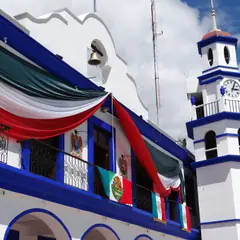
North entrance with the 1888 date
Summary of this stop
The north entrance, on Aldama street, presents a tall, sober façade that gives no hint of what lies inside. High on the entrance the date 1888 is inscribed, although work had begun in early 1862: more than twenty years of works delayed by foreign invasions and the country’s internal struggles. Sources do not agree on when the building was considered finished, and between 1882, 1888 and 1893 there are versions for every taste.
At the corner of 20 de Noviembre and Aldama stands the Church of San Juan de Dios, on the site of the city’s first Christian chapel, dedicated to Saint Catherine Martyr. That chapel was Oaxaca’s first cathedral between 1535 and 1544, and an earthquake destroyed it in 1662. Later came the Juaninos, who built their convent and hospital on the plot that the market now partly occupies.
The architecture of the 20 de Noviembre Market is thus the last layer of a piece of ground with almost five centuries of different uses. What links the austere façade to the vanished cathedral is told in the narration, in front of that 1888 date.
From the Mercado de La Industria to mole negro
Food stall hall and bread and chocolate section
Summary of this stop
The building was not born to feed people. Its first name was Mercado de La Industria, associated with the sale of metal goods, crockery and textiles. Over time, cooking gained ground until it turned the market into the city’s great dining hall, with some 207 stalls spread across four sections: bread and chocolate, broths, regional cooking and the Smoke Aisle.
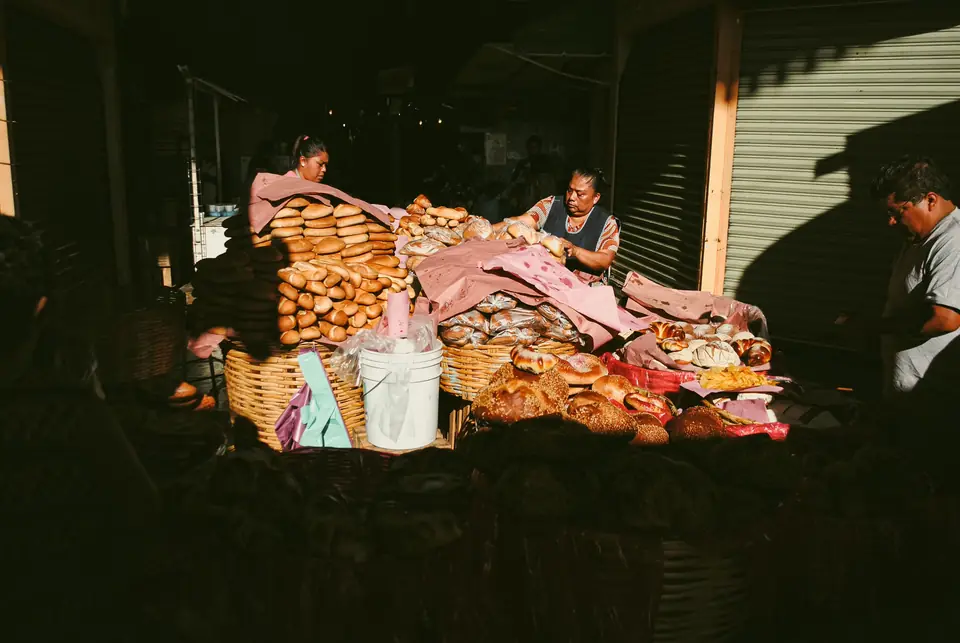
In the food-stall hall, a wide aisle of eateries, the cooks call out to customers with their «pásele, pásele». Many have spent more than 60 years preparing traditional Oaxacan cooking: mole negro, empanadas de amarillo, tlayudas and memelas. In the bread and chocolate section, chocolate is served in a bowl for dipping egg-yolk bread.
About 15,000 diners pass through this market every day. How a building conceived for crockery and textiles ended up in the hands of the cooks is part of what is heard at this stop.
Raw meat, embers next door: the Smoke Aisle
Smoke Aisle
Summary of this stop
At the east entrance, on Miguel Cabrera street, the beef and pork stalls of the Smoke Aisle line up: tasajo, chorizo, Ejutla sausage and chili-rubbed or plain cecina, with the charcoal grill at the side of each stall. The customer buys the meat raw and watches it grill on the braziers; the traditional custom is to eat it walking or sitting on the floor, with spring onions and chiles de agua.
The meal is put together, according to a documented tradition, among several stalls at once. First the chiles and spring onions are bought at a vegetable stall; then the meat is chosen, by weight or by showing with the hands «this big». The woman at the grill throws the chiles and onions on the embers, next to the meat, while the customer takes a place at the long tables with benches, shared with strangers, where drinks and salsas are sold and vendors pass offering soft or toasted tortillas.
The smoke has antecedents: in the 1940s the market was the Plaza Vieja, where loads of grain arrived, along with tortilla makers, basket sellers and the tizateras, vendors of copal and charcoal. What links those tizateras with today’s embers is left for the narration, in the middle of the aisle.
A revolutionary name and grasshoppers to come back
Brazier entrance
Summary of this stop
The market is older than its own name. The current one comes from 20 de Noviembre street, which recalls the start of the Mexican Revolution in 1910, when the building had already stood for several decades; sources explain that origin in different ways. Its neighbour, the Benito Juárez Market, is separated from it practically by a wall: General Gregorio Chávez opened it on 2 April 1894 as the Porfirio Díaz Market and it was renamed after the death of Benito Juárez Maza in April 1912. That neighbour has no restrooms or offices of its own: both services are in the 20 de Noviembre.
The building has also known recent shocks. The magnitude 5.9 earthquake of 2 August 2025, with its epicentre near Tlacolula, opened cracks in the market, which was evacuated as a precaution.
Around the building, on the pavements, Indigenous women sell chapulines by the spoonful, scooped from large baskets and toasted on a comal with garlic, chile, lime juice and worm salt. A local saying goes with them, and popular belief holds that whoever tastes them stays tied to Oaxaca. The close of the tour explains why that saying fits this corner so well.