Historic market
Han Market Audio Guide (Chợ Hàn)
A late-20th-century building with four centuries inside: Da Nang's Han Market was already feeding 17th-century travellers, the French brought the railway to its door, and today its tailors sew an ao dai in under an hour.
- 45 min of audio
- Covered market by the river
Han Market, Chợ Hàn to the locals, is the big covered market on the bank of the Hàn River, in the heart of Hải Châu district. Its two-storey building completely replaced the old market in a reconstruction begun around 1989, but the site is much older: a 17th-century itinerary lists it as a stop for a meal on the road to Hội An, and a stele of 1657 claims that the commune of Hải Châu was born at the same time as the market.
Before 1975 it was reckoned the "market of the rich", for its riverfront, its imported goods and its jewellers. Long before that reputation, however, a European traveller wrote that in Đà Nẵng people played at being poor and buried their money so as not to awaken the greed of the mandarins.
Highlights
- Trần Phú gate — the fruit entrance to a market already cited in the 17th century
- Aisles of dried squid and mắm — the smell of the port described by travellers in 1695 and 1845
- Fabric floor and tailors — ao dai sewn in 45-50 minutes
- Bạch Đằng gate — where the train from Ga Chợ Hàn station stopped
- View of the Hàn River — the bank of the boatwomen's song and the swing bridge of 2000
The building that looks onto Trần Phú Street is recent, but Han Market is not. In the 17th century, the itinerary Thiên Nam tứ chí lộ đồ thư described the road down from the Hải Vân Pass towards Quảng Nam as a chain of stops for eating and sleeping, and one of them was the “Hàn Quảng” market, between Chân Đằng and Tú Cú and before the warehouses of Hội An. A stele from Long Thủ Pagoda, carved in 1657 by Lê Gia Phước, states that the commune of Hải Châu was born at the same time as the market, and in the early 19th century the official geography Hoàng Việt nhất thống dư địa chí records it on the bank of the Hàn River, which runs to its east.
That antiquity is not entirely settled. Vietnamese Wikipedia, a 2016 entry on the municipal tourism portal and the Ministry of Industry’s magazine place its origin in the 1940s, under French rule; the portal’s 2024 entry and the historical press trace it back to the 17th-century itinerary and the 1657 stele. The sources also disagree on the present building: the trade authorities date the reconstruction to 1989, the municipal portal to 1990, and a commercial guide gives the start of works as May 1990 and the opening as March 1991. Even the name is unclear: the market may have taken it from the Hàn River and the old estuary of Cửa Hàn, or it may have been the anchorage that gave its name to that stretch of water.
What to see at Han Market fits into a tour of four stops, from the fruit gate to the river facade: the aisles of dried and salted goods, the tailors’ floor and the street where the colonial train stopped. Around it, the shophouses of Trần Phú and Hùng Vương, with jewellers, pharmacies and grocers, inherit the “market street” that formed when Đà Nẵng, then Tourane, became a French concession in the late 19th century: single-storey brick houses with the shop in front and the warehouse behind. And on the old Quai Courbet, local memory places the Việt Quảng bookshop between 1936 and 1940, which sold realist novels while serving as a clandestine liaison office; its bookseller, Lê Văn Hiến, would become a finance minister. The audio guide weaves that history together with narration researched and fact-checked against historical sources that keeps for each aisle what the bustle hides.
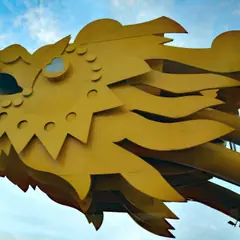
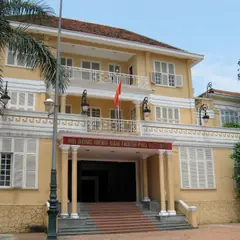
Less than a kilometre to the south, along the bank, the river is crossed by the Dragon Bridge, and along the Bạch Đằng promenade to the north waits the Da Nang Museum, in the former seat of the French administration of Tourane.
A place to eat since the 17th century
Chợ Hàn
Summary of this stop
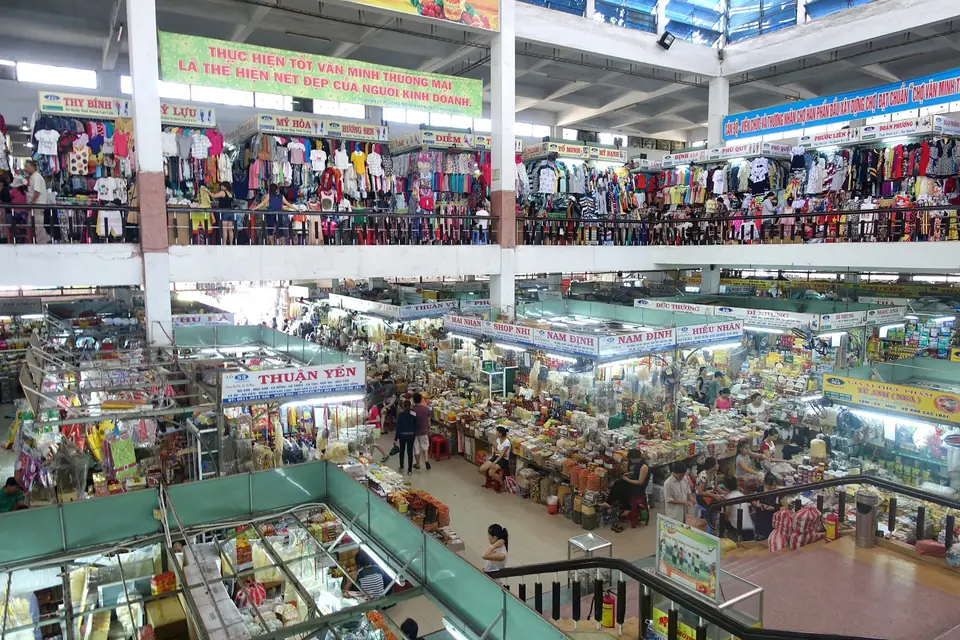
The main entrance, on Trần Phú Street, greets visitors among mountains of seasonal fruit: mango, rambutan, jackfruit and, when in season, durian. Behind it opens a two-storey building that does not look its history, because it completely replaced the old market in a reconstruction begun, according to the trade authorities, in 1989.
The first impression deceives. This spot already appeared in the 17th century as one of the stops on the road between the Hải Vân Pass and Hội An, a halt for a meal on the route that the Thiên Nam tứ chí lộ đồ thư followed stage by stage. The 1657 stele of Long Thủ Pagoda goes further and ties the birth of the commune of Hải Châu to that of the market itself.
Why a market that has changed its skin so many times is still in the same place, and what bound it to this bank, is the idea the narration opens with at the fruit gate.
Dried squid and buried money
Aisles of dried squid and mắm
Summary of this stop
In the low hall, rows of dried squid hang graded by size, cured meats are stacked vacuum-packed and jars of mắm nêm, mắm ruốc and mắm tôm chua line the shelves. Further on, in the fish area, live seafood in oxygenated tubs, meat and herbs sit on the wet floor: the part of the building that still serves mainly the neighbours.
These are port products, and the port has a written memory. At dawn on 8 June 1695, the Chinese monk Thích Đại Sán entered the bay of Đà Nẵng by boat and saw both banks full of houses, with people carrying shoulder poles on their way to the morning market. In 1845, the European Hausmann sailed up the Hàn River at six in the morning and noted that the most remarkable thing in the city was the grocers’ quarter, where sailors traded without pause. Before 1975, it is said, Han Market had a reputation as the “market of the rich”, as against the more popular Cồn market, a kilometre to the west.
That reputation has a dark reverse. The European Vaillant wrote that merchant ships could only sell to the king and the mandarins, because people were too poor to buy and also pretended to be poor for fear of their greed. What they did with the money, and what the sailors who arrived in Turan in the early 20th century found, is told among the jars of mắm.
An ao dai in fifty minutes
Fabric stalls and tailors
Summary of this stop
Upstairs, in view of the stairs, rolls of fabric, ao dai, áo bà ba and tailors taking measurements from customers at the stall itself follow one another. In 2019 the market had 50 fabric stalls and 37 ao dai tailors who sewed the outfit in an hour for passing tourists, mostly Koreans. The tailor Lưu Thị Thuận, with more than 20 years in the market, finished orders in 45-50 minutes and turned out 10 to 15 outfits a day.
Before the pandemic, 80% of those who came in were tourists, mostly Koreans and Chinese, with peaks of 4,000 to 5,000 a day. Covid cut turnover by 90%, and when visitors returned the vendors learned basic phrases of Korean, Thai and English. In a market whose name has nothing to do with Korea, Korean has become the language of haggling.
Haggling also had its unwritten rules, and at the clothes stalls a superstition documented around 2009 ended with a wad of paper burning in front of a woman customer. What she had done to deserve it and how many offers a buyer had to make before being allowed to leave is what the audio guide reveals among the tailors.
The station that reached the gate
Bạch Đằng gate
Summary of this stop
The river facade opens onto Bạch Đằng Street with a new gate, the result of the renovation begun on 6 September 2022, at more than 8.1 billion dong: the old vegetable hall became a food area, an OCOP product outlet was added and the market became a “market-tourist site”, with 3 halls and 735 businesses. To one side the Hàn River swing bridge can be seen and, further off, the Dragon Bridge.
The most interesting thing about this gate is an absence. French merchants rejected Tourane’s central station of 1905 for being far from the port and the warehouses, and an auxiliary station, the Gare de Tourane-Marché, was built next to the market, which people called “Ga Chợ Hàn”. At first it moved only freight; from June 1913 it carried passengers too. In the 1990s it was demolished to open Bạch Đằng Street, the former Quai Courbet, where cars now pass.
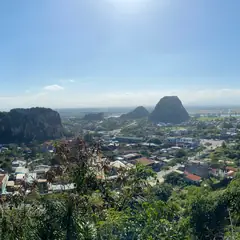
Across the water, the east bank fills with tall buildings and hotels. For a long time it was the other way round: the river split the city in two, it was crossed by boat or ferry, and a boatwomen’s song and a rather cruel saying portrayed which of the two banks was the conceited one. How that gap was closed on 29 March 2000 is the scene with which the narration takes leave of the tour, facing the river.