Zaha Hadid architecture
Heydar Aliyev Center Audio Guide (Heydər Əliyev Mərkəzi)
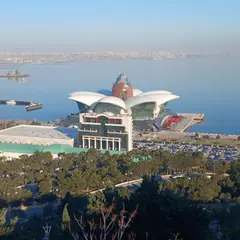
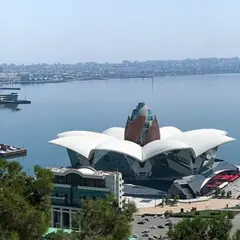
A white plaza that folds up until it becomes a building, without a single edge: Zaha Hadid's cultural centre is both the showcase of oil-era Baku and the shrine to the memory of Heydar Aliyev.
- 60 min of audio
- Contemporary architecture
Created by presidential decree in late 2006 and awarded to Zaha Hadid Architects by competition in 2007, the Heydar Aliyev Center was built on the 16-hectare site of the Səttarxan factory. It opened on 10 May 2012, the 89th anniversary of Heydar Aliyev's birth, and in 2014 it became the first architecture project to win the Design Museum's Design of the Year award in London.
Beneath that white skin that seems to weigh nothing hides a double-curved steel structure painted blue, which during construction was a landmark of the Baku skyline. And inside the futuristic wave wait a 1979 Soviet ZIL limousine and KGB uniforms: the city's boldest building also holds the memory of a Soviet leader.
Highlights
- West wing: the plaza rises like a wave and lifts off the ground
- White skin: 16,150 panels, each with its own microchip
- Auditorium: 1,000 seats lined with curved, backlit oak slats
- Museum: a 1979 ZIL limousine and Heydar Aliyev's KGB uniforms
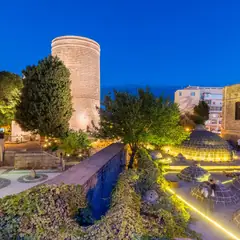
- Mini Azerbaijan: 45 models, from the Maiden Tower to the Flame Towers
The history of the Heydar Aliyev Center starts with a decree: no. 1886, signed on 29 December 2006. Zaha Hadid Architects won the design competition in 2007, the foundation stone was laid on 10 September that year and the solemn opening came on 10 May 2012, with President Ilham Aliyev and Mehriban Aliyeva, on the 89th anniversary of Heydar Aliyev’s birth. In between came a site split by a drop in level, a steel structure that nobody would ever see again and thousands of white panels that fit together without leaving a single edge. Zaha Hadid herself went as far as describing the complex as “an almost impossible task”.
The architecture of the Heydar Aliyev Center cannot be taken in at a glance: it asks to be walked around, to have its terraces climbed and to be entered. That is why the audio guide covers it in four stops, from the park to the museum, with documented narration that separates what is verified from what is only told.
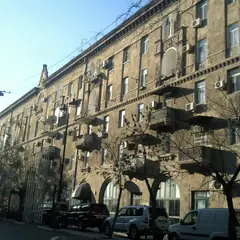
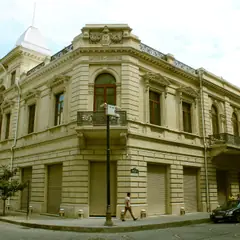
To see the modern city from above, the viewpoint at Highland Park overlooks the whole bay, and to compare this Baku with that of the first oil boom, nothing beats the facades of Nizami Street.
A ravine turned into a plaza
Plaza terraces and pools
Summary of this stop
What from the avenue looks like a sculpture fallen from the sky is in fact the answer to a problem of terrain. The 16-hectare Səttarxan factory stood here and was moved elsewhere; work began on the cleared site, which an abrupt drop in level split in two. The project turned it into a terraced landscape linking plaza, building and underground car park without extra excavation or fill: flights of steps, sloping lawns and stepped pools that descend towards the avenue, while the plaza itself rises until it becomes the building’s skin.
Bakuvians have made this park their own. The walk usually starts at the big “I Love Baku” letters, the obligatory photo for social media, and continues on the grassy slopes, where families and young people spread a blanket for a picnic with no signs forbidding it. On those same slopes music videos are shot and concerts held, among open-air sculptures that keep changing. Since 2018 the centre’s silhouette has also appeared on the 200 manat note, and on the plaza the narration reveals what really lies under that perfect curve.
The white skin and the blue skeleton
West wing lifted over the plaza
Summary of this stop
Beneath the west wing, the surface lifts off the ground like a wave. Up close, thin joints draw a distorted grid over the skin: they are the edges of 16,150 panels, each with a microchip to track it and speed up assembly. The glass-fibre-reinforced concrete ones, with no steel reinforcement, are only 8 to 13 millimetres thick.
Underneath is hidden what during construction was a Baku landmark: a double-curved steel space frame, fabricated by the Bavarian MERO-TSK and assembled by the Turkish Bilim Makina in nine months, painted blue until the white cladding covered it completely.
The shape of that wave has fed a legend. Among Bakuvians the building is also known as “İmza Sarayı”, the “Signature Palace”, because its silhouette is said to reproduce Heydar Aliyev’s signature. It is a disputed story: on opening day Ilham Aliyev spoke of those who see in it a wave or the wind, and the project architect, Saffet Kaya Bekiroglu, denied any hidden figure and linked its fluidity to the calligraphy and carpets of the region. Each version has its argument, and the audio guide sets them against the real curve.
A perfect ceiling that burned
Great white lobby
Summary of this stop
The great white lobby is perceived as a continuous space, with even light and no corners for the eye to rest on. That perfection was nearly lost very early: on 20 July 2012, barely two months after the opening, the roof caught fire during welding work. The emergency services received the call at 11:34, some 25 extra crews and two helicopters were deployed and, according to official figures, about 1,000 m² of roof over the museum burned, although later reports on the extent of the damage do not always agree.
Three Turkish contractors were charged with negligence in the use of welding equipment, and the centre formally reopened on 5 November 2013, after sixteen months of repairs. The following year came the Design of the Year award from London’s Design Museum: Zaha Hadid was the first woman to win it in seven editions and the building the first architecture project to be awarded. The prize also drew protests from those who criticise how the site was cleared, a matter on which accounts differ. The full story of the fire and the reopening is heard under that same ceiling.
The Soviet limousine under the wave
Heydar Aliyev's official cars
Summary of this stop
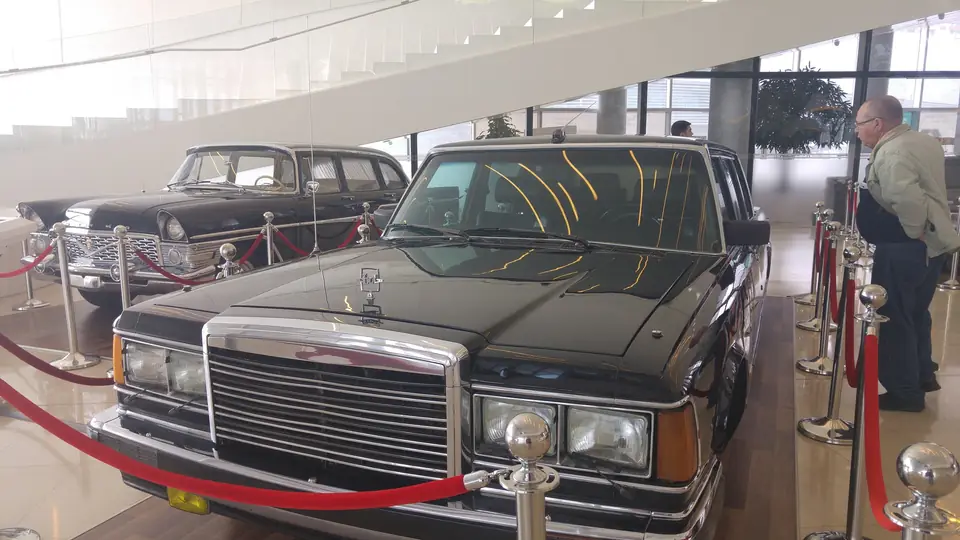
On the museum’s ground floor, Baku’s most futuristic building shows its other face: that of a shrine to the memory of Heydar Aliyev. His official cars are on display here, among them a 1979 ZIL limousine, made by the Likhachev factory for senior officials of the USSR, and a 1998 Mercedes-Benz 600 SEL Pullman, next to display cases with KGB uniforms and his work desk.
These halls have also hosted unexpected episodes. In 2013 they received “Life, Death, and Beauty”, the first Andy Warhol show in Azerbaijan, with more than a hundred works, among them “The Last Supper” and the “Electric Chair”; on 6 August, the artist’s birthday, admission was free. Higher up, on the second floor, the Mini Azerbaijan exhibition brings together 45 models of buildings from the country, from the Maiden Tower and the Möminə Xatun mausoleum to the Flame Towers. The audio guide ends the tour here, between a limousine designed for the Soviet elite and the whole country in miniature.