Batumi cultural heritage
Batumi Cathedral Audio Guide (Holy Mother Virgin Nativity Cathedral)
Born as a Catholic church in memory of a mother, it was an archive and a high-voltage laboratory under the Soviets, lent its naves to a banned film and is now Batumi’s Orthodox cathedral: a single building that has changed owner, rite and function along with the city.
- 30 min of audio
- Neo-Gothic architecture
The Cathedral of the Nativity of the Mother of God is a neo-Gothic basilica of pale stone with three naves, built between 1898 and 1903 on commission from the Zubalashvili brothers, Georgian businessmen of the Catholic faith, with a design attributed to the Polish architect Aleksander Rogojski and artists brought from Italy. It cost 250,000 roubles and, for a port that had been under Ottoman rule until 1878, carried symbolic value: Batumi once again had a great Christian church. Since 1989 it has been the city’s Orthodox cathedral and, since 2011, a cultural heritage property of Batumi.
The contrast is inside: beneath vaults designed for the Latin mass stands an Orthodox iconostasis of carved wood today, and the Catholic statues that once hung on the walls are kept in another church in the city. In between came high-voltage cables, threats of demolition, a Soviet film shoot and thousands of baptisms in a single day. And the question of who owns the church remains open: the Vatican still claims it, by letter to the Government of Georgia.
Highlights
- Two neo-Gothic bell towers — twin pointed spires over a high plinth
- A church for a mother — Stepan Zubalashvili built it on Elizaveta’s last wish
- Laboratory and film set — a Soviet archive and high-voltage lab, setting of “Repentance”
- 16 May 1989 — consecration by Ilia II and up to 5,000 baptisms in a day
- Iconostasis in a Latin church — an ownership dispute still open with the Vatican
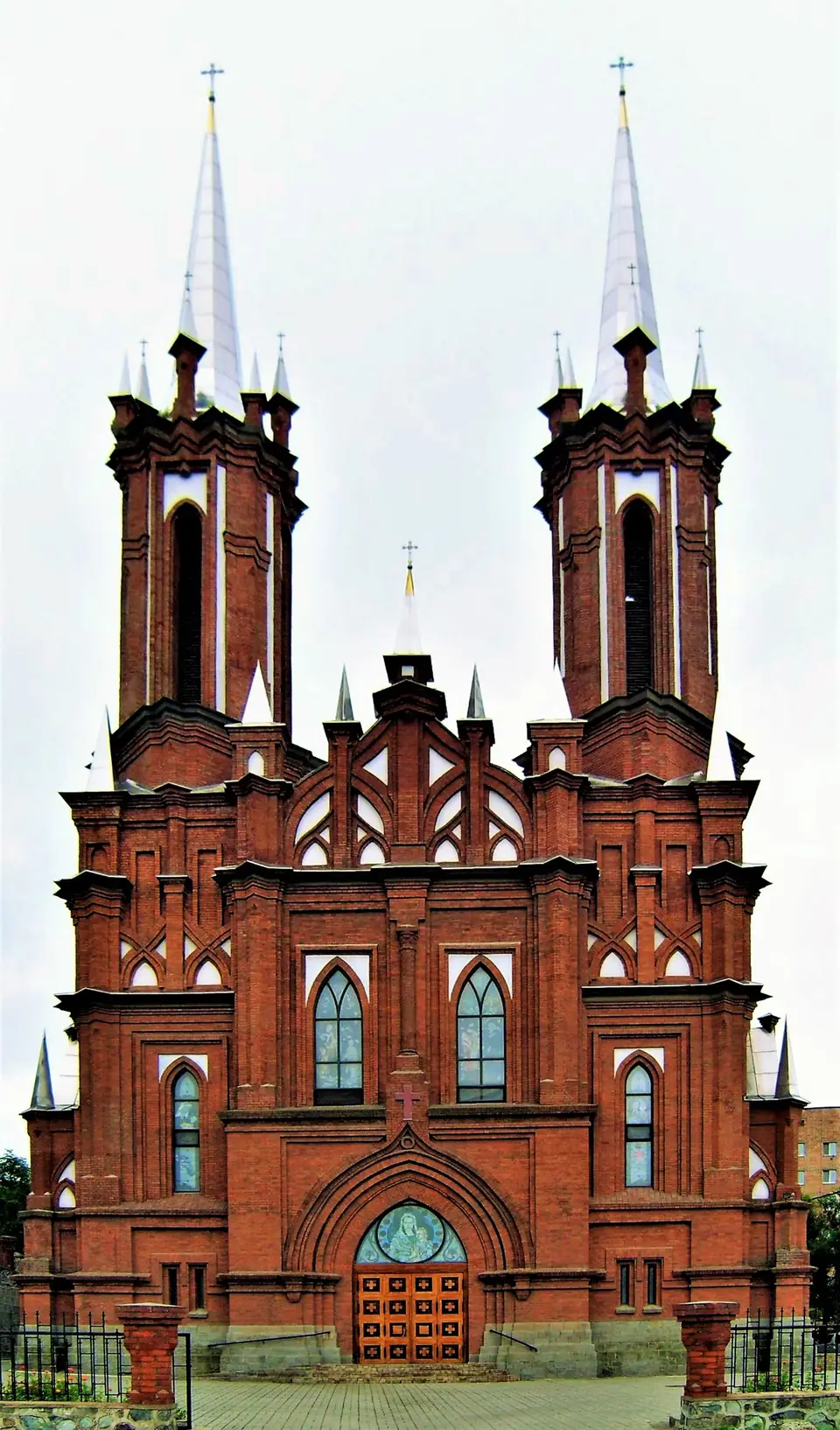
The two pale stone spires that rise above Batumi’s rooftops tell more history than they appear to. The story of Batumi Cathedral begins with a last wish: before dying, Elizaveta Zubalashvili asked that a Catholic church be built in the city, and her son Stepan carried out the commission. Between 1898 and 1903 (some sources move the dates back to 1897-1902) a neo-Gothic basilica with three naves was raised, with artists and architects who came from Italy and a design that most studies attribute to the Pole Aleksander Rogojski, although other sources speak only of Italian masters.
What came next is Georgia’s 20th century condensed into one building. The Soviet regime closed the church to worship and turned it into an archive and then a high-voltage laboratory; it came close to being demolished; it inspired and hosted the shooting of “Monanieba” (“Repentance”) by Tengiz Abuladze; and in 1989 Catholicos-Patriarch Ilia II consecrated it as an Orthodox cathedral under the title of the Nativity of the Mother of God. What to see at Batumi Cathedral goes far beyond its architecture: every stone bears the mark of a different owner. The 30-minute audio guide tour follows that thread from the façade to the iconostasis, with narration that is documented and checked against historical sources.
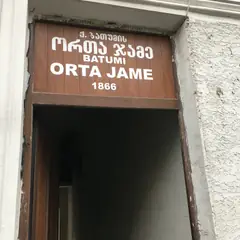
In the same old town, about 500 metres away, the Orta Jame Mosque completes the portrait of the cosmopolitan port, and Europe Square, with its golden Medea, is a few minutes’ walk away.
Two Gothic spires for a mother
Holy Mother Virgin Nativity Cathedral
Summary of this stop
Facing the west façade, the two twin bell towers topped with pointed spires flank the main entrance and dominate the city panorama. They are the signature of an intimate commission, Stepan Zubalashvili’s tribute to his mother, but also a public message: in 1903 the writer Zakaria Chichinadze stressed the symbolic meaning of a city under Ottoman rule until 1878 having a Christian church of this size once again.
Batumi Cathedral’s architecture also has a component that does not appear in the plans. It is said in the city that the pale stone of the walls changes colour with the weather, and that this gives the building its mysterious air. In sun, in the sea’s humidity or under rain, the same façade offers a chance to check. What those towers said to the residents of 1903 is explained in full detail in the narration, in front of them.
Nameless saints at a closed door
Statues in the entrance niches
Summary of this stop
The basilica rises on a high plinth, with pentagonal projections on the east and west axes and a flight of steps leading to the main door. On either side, two statues in their niches greet visitors. Today they are identified as Saint Nino and the Apostle Andrew, but their original identity is disputed: some see in them Saint Andrew and Simon the Zealot, or even the Virgin Mary and Saint Joseph.
That door was closed to worship for much of the Soviet period. The church housed first an archive and then a high-voltage laboratory, while Batumi’s Catholics held mass in a private house. It was even threatened with demolition, and among those who defended it was the writer Konstantine Gamsakhurdia. How the building survived those years is one of the keys the audio guide unpacks on these steps.
The laboratory that became a film
Central nave and pointed windows
Summary of this stop
On entering the central nave, the coloured light of the large pointed windows falls on the red stone and the blue and gold neo-Gothic ornamentation. Where that play of light is seen today there were cables and electrical equipment for decades. In the 1980s the installation was removed, artists from Tbilisi restored the interior and the authorities wanted to turn it into a concert hall; Catholics gathered signatures to recover it as a church, but the Council of Ministers of Adjara ended up handing it to the Georgian Orthodox Church.
In the middle of that story, cinema crosses paths. “Monanieba”, finished in 1984 and held back for three years by the censors, tells how a regime fills a village’s old church with scientific apparatus until it blows it up, and its dream sequence was shot, according to local documentation, in this very church turned laboratory (other sources speak only of inspiration from its history). The film made the building a symbol of rupture with the system and encouraged residents to demand its restoration. The shoot also carried dramatic episodes that, heard beneath these vaults, take on another weight.
An iconostasis in a Latin church
Carved wooden iconostasis
Summary of this stop
At the far end, a multi-tiered iconostasis of carved wood closes the chancel. It was created after the Soviet period for the Orthodox rite, in a space conceived for the Latin one, and the fit shows. What is missing shows too: the polychrome plaster statues that Father Anselmo Mgebrishvili bought in the early 20th century passed in Soviet times to the local museum, which returned them to the Catholic community in 2005. Today ten are kept in Batumi’s Catholic Church of the Holy Spirit; another four were lost.
On 16 May 1989 Ilia II consecrated the church, and that same day up to 5,000 residents received Orthodox baptism, many of them of Muslim background. Since then it has been the cathedral of the Eparchy of Batumi and Lazeti. Ownership, however, remains in dispute: in 1996 the apostolic administrator Giuseppe Pasotto asked for its return, the refusal led to the building of a new Catholic church between 1999 and 2000, and according to various sources the Vatican claimed it again by letter to the Georgian Government in 2022. Each side’s arguments are set out in the narration in front of the iconostasis.