Historic quarter
Al Fahidi Historic District Audio Guide (Al Fahidi Historical Neighbourhood)
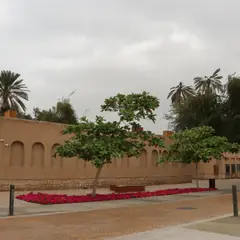
The old Bastakiya is a maze of coral and gypsum houses crowned by wind towers, built by merchants who came from Bastak: condemned to demolition in 1989 and saved at the last minute, it is today one of the last historic residential quarters Dubai preserves.
- 60 min of audio
- Traditional Gulf architecture
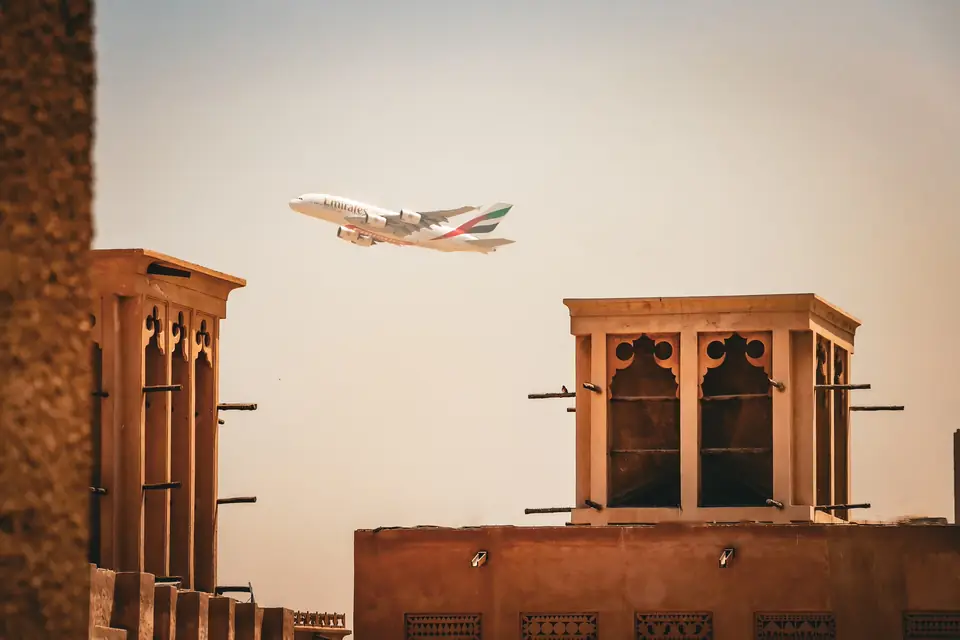
The quarter grew from the 1890s beside the Al Fahidi Fort, from 1787, the oldest building in Dubai. It came to have some 60 dwellings separated by narrow, winding alleys, built with coral from the pearl banks by merchants from Bastak, in southern Iran, drawn by the free port that Sheikh Maktoum bin Hasher Al Maktoum declared in 1901. On the rooftops, the wind towers or barajeel cooled the houses without electricity.
What looks today like an intact postcard is a survivor. Half the quarter fell to make way for modern buildings and in 1989 the Municipality ordered the rest demolished. A letter from the architect Rayner Otter to Prince Charles of Wales and the prince’s visit stopped the bulldozers. In 2012 the quarter changed its name: it stopped being called after the merchants who founded it and took that of the neighbouring fort.
Highlights
- Al Fahidi Fort — A coral-and-mortar enclosure from 1787, the oldest building Dubai preserves and the former Dubai Museum
- Wind towers (barajeel) — Windcatchers of Persian origin that cooled houses with breeze and wet cloths; the tallest reach around 13 m
- The sikkas — Narrow, winding alleys between almost blind facades, with houses oriented towards Mecca
- Coral walls — Blocks taken from the pearl banks, in walls up to about 75 cm thick
- Old Majlis Gallery — The wind-tower house where the first fine-art gallery in the Emirates opened in 1989
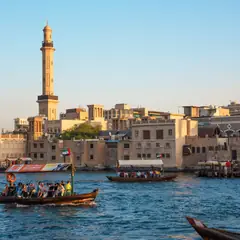
A few steps from the Dubai creek, the traffic fades as soon as the alleys begin. Between sand-coloured walls rise square towers open at the top, with wooden beams sticking out from the sides. This is the Al Fahidi Historic District, the old Al Bastakiya, one of the last historic residential quarters preserved by a city better known for its skyscrapers.
The history of Al Fahidi begins with a commercial decision. In 1901 Sheikh Maktoum bin Hasher Al Maktoum declared Dubai a free port, with no taxes on imports or exports, and offered plots and protection to merchants unhappy with the new Persian taxes at Lingeh, on the Iranian coast. Many of those who crossed the Gulf came from Bastak, in southern Iran, and the quarter took its name from that town. The date of its founding varies by source: the most cited is the 1890s, others speak of the early twentieth century or of families who arrived earlier, and some place the great wave of Bastaki merchants as late as the 1930s.
The architecture of Al Fahidi is that of those merchants: some 60 coral and gypsum houses built around courtyards, with almost blind facades towards the street, and crowned by barajeel, wind towers that cooled the rooms without electricity. Beside the quarter stands the Al Fahidi Fort, from 1787, the oldest building preserved in Dubai.
To learn what to see in Al Fahidi, the audio guide covers it on foot in five stops and 60 minutes, from the fort to the sikkas, under the wind towers, beside the coral walls and on to the house where the first art gallery in the Emirates was born. The thread that links them: this cool, silent maze is not an intact postcard, but the city of the merchants who made Dubai possible, condemned to demolition and rescued at the last minute.
A little over a kilometre away, at the mouth of the Creek, the Al Shindagha Museum reconstructs the home quarter of the Al Maktoums; across Dubai Creek, in Deira, the Dubai Gold Souk follows the trail of other merchants who came from Iran and India.
The 1787 fort that gave the quarter its name
Al Fahidi Fort
Summary of this stop
The tour starts in front of the Al Fahidi Fort: a square enclosure of coral rock and mortar, with towers on three corners and cannons beside the east gate. Built in 1787, according to most sources, it is the oldest building preserved in Dubai; a 2010 report in The National, with statements from the city’s heritage chief, gave 1799 instead. Its walls held almost all the functions of power: it was the ruler’s residence, seat of government, prison and arsenal.
In 1971 it opened as the Dubai Museum, and since the rehabilitation begun in 2021 it has remained closed, so today it is seen from outside. Even so, its silhouette marks the edge of the quarter and explains its present name.
Because that name is recent. In 2012 Sheikh Mohammed bin Rashid Al Maktoum renamed Al Bastakiya as the Al Fahidi Historical Neighbourhood, taking the name of the neighbouring fort and not that of the merchants who built the houses. In front of its walls, the audio guide tells how the old fort came to be turned into a museum and whom Dubai had to ask for help to do it.
Alleys of merchants who came from Bastak
Neighbourhood sikka
Summary of this stop
At the mouth of a sikka, the local word for an alley, the city changes pace. The passages, narrow and winding, run between almost blind facades and low doors of carved wood; shade and silence replace the noise of the avenues. This is the original layout of the merchants’ quarter, built from the 1890s and which came to total some 60 dwellings.
Those who built it came from the other shore of the Gulf, drawn by the free port of 1901 and fleeing the Persian taxes at Lingeh. They are usually described as Persian merchants, although some sources present them as families of Arab origin settled in Bastak, a nuance about their identity that remains delicate.
The maze, besides, is less chaotic than it seems. According to a documented custom, most of the houses face south-west, towards the qibla, the direction of Mecca, and open few windows onto the street, narrow and high, because the family’s privacy took precedence over the view. Among the alleys, the audio guide reveals that coral compass that almost nobody notices and what happens in the sikkas at sunset.
The barjeel, cool air without electricity
Merchant house wind tower
Summary of this stop
Beneath a wind tower, the quarter’s profile makes sense. The tallest reach around 13 metres and can be seen from any alley. Its name, barjeel (plural barajeel), is the Arabic form of the Persian bâdgir, “windcatcher”, the same device the merchants knew on the coast at Bandar Lengeh.
The mechanism was as simple as it was effective: each tower caught the sea breeze on one of its faces and brought it down inside through wet cloths hung from the beams; evaporation cooled the air and the warm air left through the leeward face, with no electricity or refrigerant. Much later, for the 2007 edition of the book Windtower, Ian Jones, of the Australian consultancy Vipac, who was then working on Burj Khalifa, measured temperatures in three of the quarter’s towers over a year and tested a transparent model of the Bukhash house in a wind tunnel. The conclusion: the towers gave real comfort on summer afternoons.
Even so, the tower was not enough on its own. When the heat arrived, many Al Bastakiya families moved: some to the mountains and others within their own house, from the ground floor to the first floor or the roof terrace. Beneath the tower, the audio guide tells what that double life of winter and summer was like and who came to the quarter in 1969 to study it.
Coral walls where half a quarter ended
Exposed coral wall
Summary of this stop
On the exposed corners, the plaster shows what lies beneath: coral blocks of varying texture, taken from the pearl banks and the beaches. With them walls up to about 75 centimetres thick were raised. Coral extraction was banned in 1971.
Soon afterwards came the demolition. Half of Al Bastakiya disappeared to make room for modern buildings; the date of that great demolition is disputed between the 1970s and the 1980s, and some sources speak of successive waves up to the 1990s. The houses left standing ended up as warehouses or lodging for foreign workers, and in 1989 Dubai Municipality ordered everything that remained to be demolished.
What is missing can also be seen: where the maze meets avenues and modern blocks, the lost houses once ended. Beside the wall, the audio guide measures that absence and explains how close the whole quarter came to suffering the same fate.
The gallery that returned after the eviction
Old Majlis Gallery house
Summary of this stop
The last stop is a wind-tower house with a courtyard: that of the old Majlis Gallery. The British interior designer Alison Collins rented this Villa No. 19 in 1978 and set up informal exhibitions in her majlis. In 1988 the demolition order evicted her, but months later she returned, and on 2 November 1989 she opened here the first fine-art gallery in the Emirates, which operated until 2020.
The turn came by letter. The British architect Rayner Otter, who lived in the quarter and had restored his house, wrote to Prince Charles of Wales before his 1989 tour of Dubai with Diana to invite him to walk through Bastakiya; after the visit, the demolition was cancelled. Exactly how the prince intervened remains a matter of debate, and versions differ between a letter and a meeting in person. In 1999 the Government of Dubai undertook the restoration and this house was the first to be recovered; in 2005 the general programme began, whose authenticity has been questioned because of the use of modern materials and methods.
The alleys also keep a living ritual: since 2011, the Sikka art festival, named after the Arabic word for alley, filled the houses with installations and murals every year, until it moved in 2024 to neighbouring Al Shindagha. For its 15th edition, in January 2027, it has announced its return to Al Fahidi under the motto “The Return”. In front of the gallery house, the audio guide closes the tour with the full story of the rescue.