Historic port
Dubai Creek Audio Guide
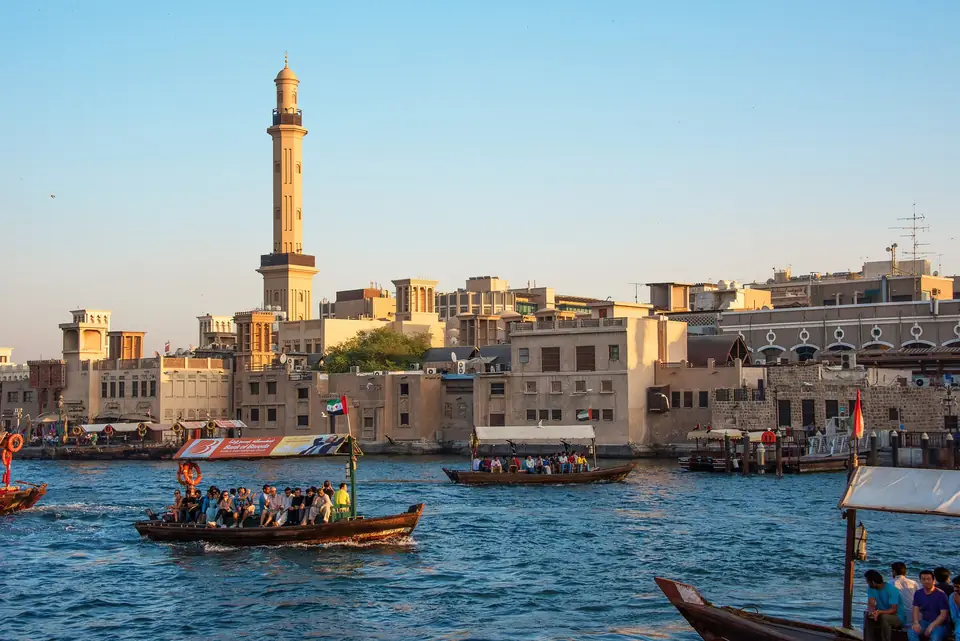
The tongue of salt water that splits Dubai between Bur Dubai and Deira is the port where the city was born, and it is still crossed in wooden abras for a handful of dirhams, among wind towers, souks and loaded dhows bound for Iran.
- 30 min of audio
- Traditional abra crossing
Dubai Creek is an inlet of the Gulf that runs 14 kilometres inland and divides the city into two banks: Bur Dubai and Deira. In 1822 a British naval survey drew it for the first time as “Back-water of Debai”, and in 1833 some 800 members of the Al Bu Falasah, who had come from Abu Dhabi, settled beside its waters. From that natural port of dhows, pearls and re-export came everything else.
The straight, paved banks seen today were, until 1959, beaches that rose and fell with the tide, and a sandbar closed the mouth to large ships. To dredge it, before Dubai had oil, Sheikh Rashid bin Saeed borrowed 400,000 pounds from the emir of Kuwait. The stone quay is, literally, a bet on credit.
Highlights
- Wooden abras — About 150 numbered diesel boats with some 20 seats that cross between four stations from 6 in the morning
- Stone quays — Banks built from 1959 with dredged sand, paid for with a 400,000-pound loan from Kuwait
- Dhows at the Deira quay — Wooden ships of up to 300 tonnes loaded with appliances bound for Kish, Bandar Abbas and Bushehr
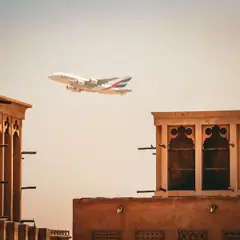
- Bur Dubai wind towers — The barjeel that recall the rows of merchants’ houses that lined the Creek
- Mouth of the Creek — Between Shindagha and Al Ras, where a sandbar blocked large ships
Before the skyscrapers, before oil and before the bridges, Dubai was a line of water. Dubai Creek is a saltwater inlet of the Gulf that creeps inland and splits the city in two: Bur Dubai on one side and Deira on the other. Not even the origin of the city’s name is clear, and one of the theories in circulation derives it precisely from this tongue of water crawling towards the desert; others speak of “two brothers”, for the two banks, or of the baby locusts that were abundant here. No version has won out.
The history of Dubai Creek has concrete dates. In 1822 a British naval survey led by Lieutenant R. Cogan drew the first known plan of the inlet, labelled “Back-water of Debai”. In 1833 some 800 members of the Al Bu Falasah, a branch of the Bani Yas, arrived from Abu Dhabi and settled beside the Creek, in a hamlet of about 250 houses at Shindagha. That arrival is usually presented as the founding of Dubai, although the settlement already existed as a fishing village and in 1822 had some 700-800 inhabitants. In 1896 a fire devoured half of Bur Dubai, still made of barasti, palm fronds, and Deira was said to have been razed completely.
What turned this inlet into a first-rate port was a feat of engineering: the dredging that opened the mouth of the Creek in the late 1950s, paid for on credit before there was any oil. Since then, dhows loaded with re-exported goods have made its quays the commercial engine of the city. The first fixed crossing, the Al Maktoum Bridge, did not come until 1963, and on the old stretch there is still no bridge in sight.
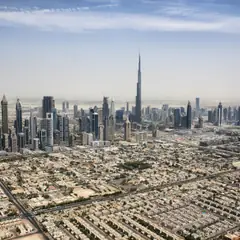
To learn what to see at Dubai Creek, the audio guide proposes crossing it aboard a wooden abra, in five stops and 30 minutes: from the Bur Dubai station to the dhow quay of Deira. In just a few minutes of crossing you pass the old border between two armed camps, the port that made the city rich and the financial gamble from which the vertical Dubai that appears in the background emerged.
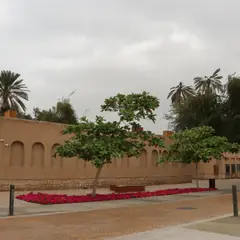
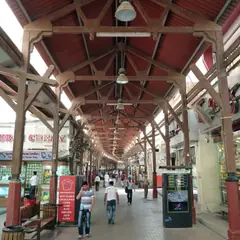
On the Bur Dubai bank, the Al Shindagha Museum and the Al Fahidi Historic District preserve the coral houses of that port city; on the Deira side, the Dubai Gold Souk is the shop window of the trade the dhows carried.
Bur Dubai, a backwater that became a city
Bur Dubai Abra Station
Summary of this stop
The tour starts at the Bur Dubai abra station, among queues of passengers, boats that dock in turns and, behind, the wind towers or barjeel that recall the rows of merchants’ houses that lined the water, mostly demolished. This is the side of the Creek where, in 1833, the Al Bu Falasah found a fishing hamlet at Shindagha, with the Al Fahidi fort across the Ghubaiba inlet. Eleven years earlier, the British plan of 1822 had simply called it a “backwater”.
At the foot of the landing another story begins, smaller and more human. In 1948 the Gujarati Laxmichand Mohanlal Shaholia arrived by dhow and opened the first jewellery shop in the abra market, which was called Chapra Market for its thatched roof. Because of his dhoti, in the market they nicknamed him Gandhi. His son Suresh, who arrived aged nine in 1961, remembers that back then there were only two rowing abras to cross the Creek.
Where that shop stood, a very different building rises today. At the station, the audio guide tells which one it is and how a gold trade under a thatched roof became the first chapter of jeweller Dubai.
A quay of sand dredged on credit
Stone wall of the landing
Summary of this stop
At the edge of the boarding quay, the stone underfoot is the key to everything. The straight, paved banks of the Creek are relatively recent: until the late 1950s they were beaches that rose and fell with the tide, with no quays or promenades, with houses that reached the high-water line. Around 1955, moreover, a sandbar at the mouth stopped large ships from entering: captains anchored offshore and barges carried the cargo to the quay. The Halcrow report of 1955 proposed opening a channel 60 metres wide and 914 long to the sea.
The solution was a gamble. In 1958, with no oil yet, Sheikh Rashid bin Saeed obtained from the emir of Kuwait, Sheikh Abdullah, a loan of 400,000 pounds to dredge the Creek, repaid in ten annual instalments; Dubai’s merchants contributed another loan to be repaid from customs revenue. In 1959 the firm Overseas AST began work with imported dredgers, and the extracted sand was used to fill in behind the new retaining walls that form today’s quays. Sources do not fully agree on the exact dates of the great dredging, which they place between late 1958 and 1961.
From this stone edge, looking north towards the mouth between Shindagha and Al Ras, the audio guide explains how that loan was repaid and what it opened for the city.
Armed weddings and cannon fire over the water
Abra in mid-Creek
Summary of this stop
In mid-Creek, aboard the abra, the water stops being a stroll and reveals itself as a border. In October 1938 the inlet split Dubai into two armed camps: Deira fell to discontented members of the Al Bu Falasah and Bur Dubai to Sheikh Saeed bin Maktoum. On 20 October an agreement was signed that created a consultative council of fifteen notables, but the calm did not last.
In March 1939 the wedding celebrations of Rashid bin Saeed and Latifa moved to Deira, and armed Bedouin guests crossed the Creek in abras, like today’s. On 29 March the clash broke out: Rashid’s men took the towers of Deira and the Majlis ended with some twenty-six dead.
These shores had already known something worse. At dawn on 24 December 1910, the British cruiser HMS Hyacinth landed a hundred men to search for smuggled weapons, and Christmas Eve ended with cannon fire over the city centre. Among the conditions the victor imposed was something surprisingly prosaic; over the water, the audio guide tells what it was and what that search actually found.
Deira: touching land at the bur
Deira Old Souq Abra Station
Summary of this stop
Landing at the Deira Old Souq station repeats an ancient gesture. The two banks are still called Bur Dubai and Bur Deira, and in local speech bur, or barr, is dry land opposite the sea: sailors and fishermen, on touching land, said “we have arrived at the bur”. Saying which bur you were at was enough to place yourself in the city.
The boat itself has a telling name: abra comes from the Arabic verb abara, “to cross”. Some 150 wooden abras with diesel engines, flat awning and a continuous central bench link the four stations of Deira and Bur Dubai from 6 in the morning, with about 20 seats each and a fare that recent articles put at 1 dirham per trip, although the figure varies by source and year. You board and disembark from the edge of the quay, with no gangway.
At the helm of one of them is still Ahmed Abdi, nicknamed Bozorg, “big brother” in Persian, who came from Bandar Abbas in 1970 aged 13. When he started there were about 30 abras, and the station by the Gold Souk had another name. At the quay, the audio guide tells what it was and how the Creek has changed seen from the helm.
Blue dhows bound for Iran
Moored dhows at the Deira quay
Summary of this stop
The crossing ends in front of the dhows moored at the Deira quay: large wooden ships, many painted blue, berthed side by side along the shore with cargo piled alongside. Appliances, tyres, sacks of rice. In 2019 dhows of up to 300 tonnes, now diesel-powered, were still covering the route to Kish, Bandar Abbas and Bushehr in 13 or 14 hours, loaded with televisions, fridges and even ketchup re-exported to Iran.
It is the direct consequence of the dredging. That of 1961 allowed the permanent passage of ships with a draught of 2.1 metres, and those of the 1960s and 1970s opened anchorage to vessels of up to about 500 tonnes. The continuous traffic boosted re-export and gave Dubai an advantage over Sharjah, its commercial rival. The route, moreover, is old: at the start of the twentieth century merchants from Lingah, on the Persian coast, moved to the Bur Dubai bank, founded the Bastakiya quarter and kept up trade with their port of origin.
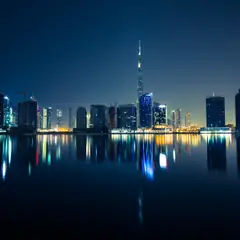
Behind the dhows rise the National Bank of Dubai building and the Chamber of Commerce, and beyond, the glass towers. In front of the boats, the audio guide closes the tour by tying the wooden quay to the vertical city that rose thanks to it.