Fortress of 1734 above Jaipur
Nahargarh Fort Audio Guide
It never suffered an assault, but it fought its own battles: according to tradition, with a ghost who tore down its walls every night and ended up giving it its name. From its ridge, Nahargarh set Jaipur's clocks by cannon fire.
- 90 min of audio
- Rajput fortress and palace
Sawai Jai Singh II, the king who founded Jaipur, built this fort mainly in 1734 as a retreat on the ridge that dominates the city. It was first called Sudarshangarh and later Nahargarh, “abode of tigers”. Its walls continue over the hills to Jaigarh and, with Amber, formed a defensive ring joined by parapets and patrol walkways. Between 1883 and 1892 palaces were added, among them the Madhavendra Bhawan, with its twin suites for the queens.
The fortress that watched over Jaipur never had to fire on anyone: in the 18th century it was the scene of treaties with the Maratha armies, in 1857 it sheltered the Europeans of the region and, in 1818, it served as a prison for Ras Kapur, the dancer who came to have a say in the affairs of state. Until April 1944 its cannon fired the city's time signal every day.
Highlights
- Tadigate — the main gate, with a temple to the rulers of Jaipur beside the entrance
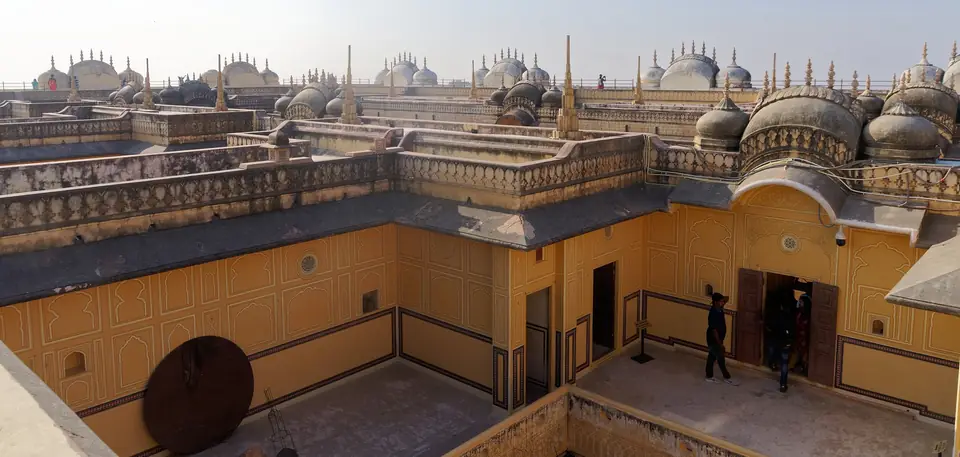
- Madhavendra Bhawan — a palace of 1883–1892 with twin suites for the queens around a courtyard
- Corridors with frescoes and coloured glass — the labyrinth that joined the suites to the king's
- Sculpture Park — India's first public contemporary sculpture park, opened in 2017
- Upper terrace — Jaipur at one's feet and the walls winding towards Jaigarh
The history of Nahargarh Fort begins in 1734, when Sawai Jai Singh II, the same king who laid out Jaipur on a grid, crowned the Aravalli ridge with a retreat from which to look at his city. He called it Sudarshangarh, but the name did not last: it came to be known as Nahargarh, “abode of tigers”. Why it changed is a question with several answers. Some explain it by the tigers that populated the hills or by the courage of the Rajput kings; others by the Rathore prince Nahar Singh Bhomia, who has a temple inside the compound, and with him comes the legend.
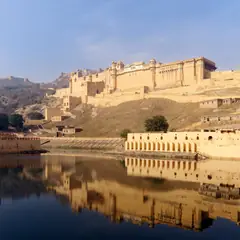
The fort was never attacked. Its walls extend over the hills as far as Jaigarh, above the old capital of Amber, and the three forts formed a defensive ring for Jaipur. In the 18th century it hosted treaties with the Marathas; in 1868, under Sawai Ram Singh II, it was extended; and between 1883 and 1892 Dirgh Patel built a series of palaces for almost three and a half lakh rupees, among them the Madhavendra Bhawan. Since December 2017 that palace has housed the Sculpture Park, India’s first public contemporary sculpture park. Even its most photographed corner has a history: the baori in the courtyard, known as the Rang De Basanti one for the scene shot there, is the hollow of the quarry from which the fort’s stone came, turned into a cistern.
What to see at Nahargarh, and in what order, follows the thread of those battles without a siege: from the main gate to the queens’ courtyard, from the corridors with frescoes to the roof terrace that looks over Jaipur. The audio guide unfolds them one by one on the ground.
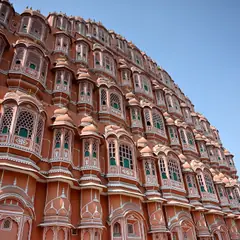
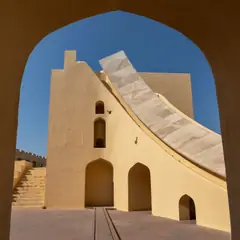
Its walls continue over the hills towards Jaigarh and Amber Fort, the old capital of the Kachwahas, and the time its cannon marked has its counterpoint in the stone sundials of the Jantar Mantar, the work of the same king.
The gate of a borrowed name
Tadigate, main gate
Summary of this stop
The visit starts at the Tadigate, the main entrance, beside which stands a temple dedicated to the rulers of Jaipur. Further in waits another, smaller shrine, consecrated to Nahar Singh Bhomia. That a royal fort should be dedicated, in part, to a dead prince who did not build it is Nahargarh’s first oddity.
According to tradition, when Sawai Jai Singh II began work on Sudarshangarh, what was raised by day fell down every evening. The king posted soldiers on guard, and they said they saw the wall fall but not who knocked it down. The royal priest Ratnakar Pundarik attributed the collapse to the spirit of Nahar Singh Bhomia, who dwelt beside the wall, and on the day of Raksha Bandhan managed to appease him in exchange for two conditions. One of them was that the fort should bear his name.
The devotion is still alive: every year, on the new moon of the month of Sawan, his temple at the foot of the Amagarh hill celebrates the birth of the spirit with flowers, milk and pilgrims who arrive on foot. What the other condition was, and where within the compound the trace of that pact remains, is revealed by the narration at the gate.
Twin suites around a king
Madhavendra Bhawan
Summary of this stop
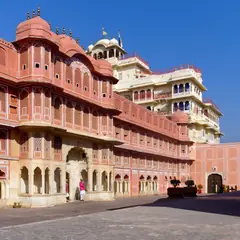
The Madhavendra Bhawan, commissioned by Sawai Madho Singh II among the palaces of 1883–1892, is a two-storey building divided into self-contained apartments, each with its own vestibule, bedrooms, bathrooms, kitchen and pantry. The queens’ suites surround the courtyard and the king’s occupies the head: here the architecture of Nahargarh turns the domestic life of the court into a plan.
The figures are not unanimous. The official tourism website speaks of nine apartments, nine queens; another chronicle describes duplex suites for six maharanis, three on each side of the maharaja’s. And some sources place the palace in the time of Ram Singh II, for his wives. Popular belief says that the doors bear names of light, such as Chand Prakash, “moonlight”, and that a secret corridor led to the king’s chamber so that he could choose whom to visit without the others finding out.
Since 2017, where there were once kitchens and pantries, contemporary works now appear: the first edition of the Sculpture Park, curated by Peter Nagy, brought together 62 installations, among them an Ambassador car cast in aluminium by Subodh Gupta, and raised visits to the fort by 25 %. What that courtyard says about power at the court of Jaipur is revealed in the audio guide.
A cage of frescoes and coloured glass
Corridors with frescoes and stained glass
Summary of this stop
The suites are connected by corridors that preserve frescoes, in a labyrinth of passages, stairs, courtyards and unfurnished rooms where some windows filter the light through coloured glass. It is a beautiful interior and at the same time one closed in on itself, designed so that one room led to another without ever going outside.
That atmosphere of confinement leads into an episode older than the palace. Ras Kapur, “essence of camphor”, was a Muslim dancer whom Maharaja Jagat Singh raised to the rank of his wives; she came to have a say in the affairs of state and, so it is told, rode with him on his elephant. After the king’s death, on 21 November 1818, she was stripped of her power and imprisoned in Nahargarh, where she died in circumstances that have never been clarified.
Her end circulates in contradictory versions, each pointing to someone different. What they are and what they say about those who feared her is told in the corridors themselves.
The cannon that set Jaipur’s clocks
Palace upper terrace
Summary of this stop
The visit ends on the palace’s upper terrace, behind a stone balustrade, with Jaipur spread out below and, over the hills, the walls that wind towards Jaigarh with their bastions, loopholes and arrow slits. From here one can see the defensive ring that Nahargarh, Jaigarh and Amber formed, and why such a fort could live without sieges: in the 18th century it was a place of treaties and negotiations with the Maratha armies that were fighting against the kingdom.
During the rebellion of 1857, Maharaja Sawai Ram Singh II moved the Europeans of the region here, among them the wife of the British Resident, to protect them. And for generations the hill performed another, more everyday function: until April 1944 the state of Jaipur used as its official time the solar time read at the Samrat Yantra of the Jantar Mantar, and the signal for the city was a cannon shot fired from Nahargarh.
A fort that never had to defend itself against an assault but marked the clock of a whole city every day: how the pieces of that story fit together is closed by the last stop of the audio guide, with Jaipur at one’s feet.