The perfumers' street
Souq Al-Alawi Audio Guide
A long, shaded souq street that stitches old Jeddah together from west to east, between coral tower houses and counters of incense, oud and spices. Pilgrims climbed along it from the port to the Mecca Gate, and it bears the name of a Yemeni pilgrim who stayed for ever in one of its alleys.
- 45 min of audio
- The pilgrims' road
Souq Al-Alawi, Souq al-Alawi, is the street of the attarin, Jeddah's perfumers and herbalists, and the axis that links the old port with Bab Makkah. It forms the border between two districts of the walled enclosure, Harat al-Mazloum to the north and Harat al-Yaman to the south, and takes its name from sayyid Abu Bakr bin Ahmad al-Alawi, buried around 1716 in his family's cemetery, in one of the alleys leading off the souq itself. Since it was connected to Qabil Street in 1916 it was the largest and most famous market of historic Jeddah.
Under the feet of those buying incense there lay for over a century a fountain that nobody knew the whereabouts of. The souq's merchants paid for it, it dried up, vanished underground and had to be searched for blindly until its round arches showed. On Ramadan nights the street fills up until the hour of suhur, and before Eid the vendors greet visitors with traditional welcome songs.
Highlights
- Bayt Noorwali — the five-floor tower house with green rawashin that dominates the souq
- Barhat Nasseef — the square that serves as the souq's entrance, among restored rawashin houses
- Attarin shops — incense, perfumes, spices, dates and dried fruit from old families
- Ayn al-Qawsiyah — Jeddah's best-preserved historic fountain, with coins and Chinese porcelain
- Pilgrims' road — from the port to Bab Makkah, with welcome songs in Ramadan
In the age of the camel caravans, pilgrims who disembarked at Jeddah had a fixed road to Mecca: they climbed along this street to Bab Makkah, the gate of the holy city, and on the way back entered by that same gate and came down along it to the port. Souq Al-Alawi is that corridor, and local memory makes it even older: according to tradition, the caliph Uthman ibn Affan walked down it to the sea when, in the year 647, he made Jeddah the port of Mecca, and at the end of the souq he stopped to pray two rakas. What is documented is the choice of the port, not the layout of the street in that era.
The history of Souq Al-Alawi is also written in its name. It was given by sayyid Abu Bakr bin Ahmad al-Alawi, born in al-Shihr, in Yemen, who reached Mecca as a pilgrim at 15 or 16, gained fame as a man of wonders, prayed daily in a mosque next to the market and died in Jeddah. The tourism office gives 1716 as the souq’s age, but that is the date of the saint’s death, which another source places in 1707: the market is in any case older than its name. It stretches between Qabil Street, to the west, and Souq al-Badu Street, to the east, and it was frequented above all by residents of the eastern part of Jeddah, who came for grain, spices and clothing.
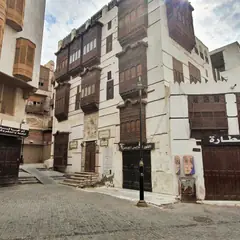
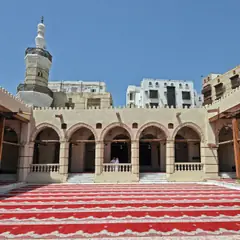
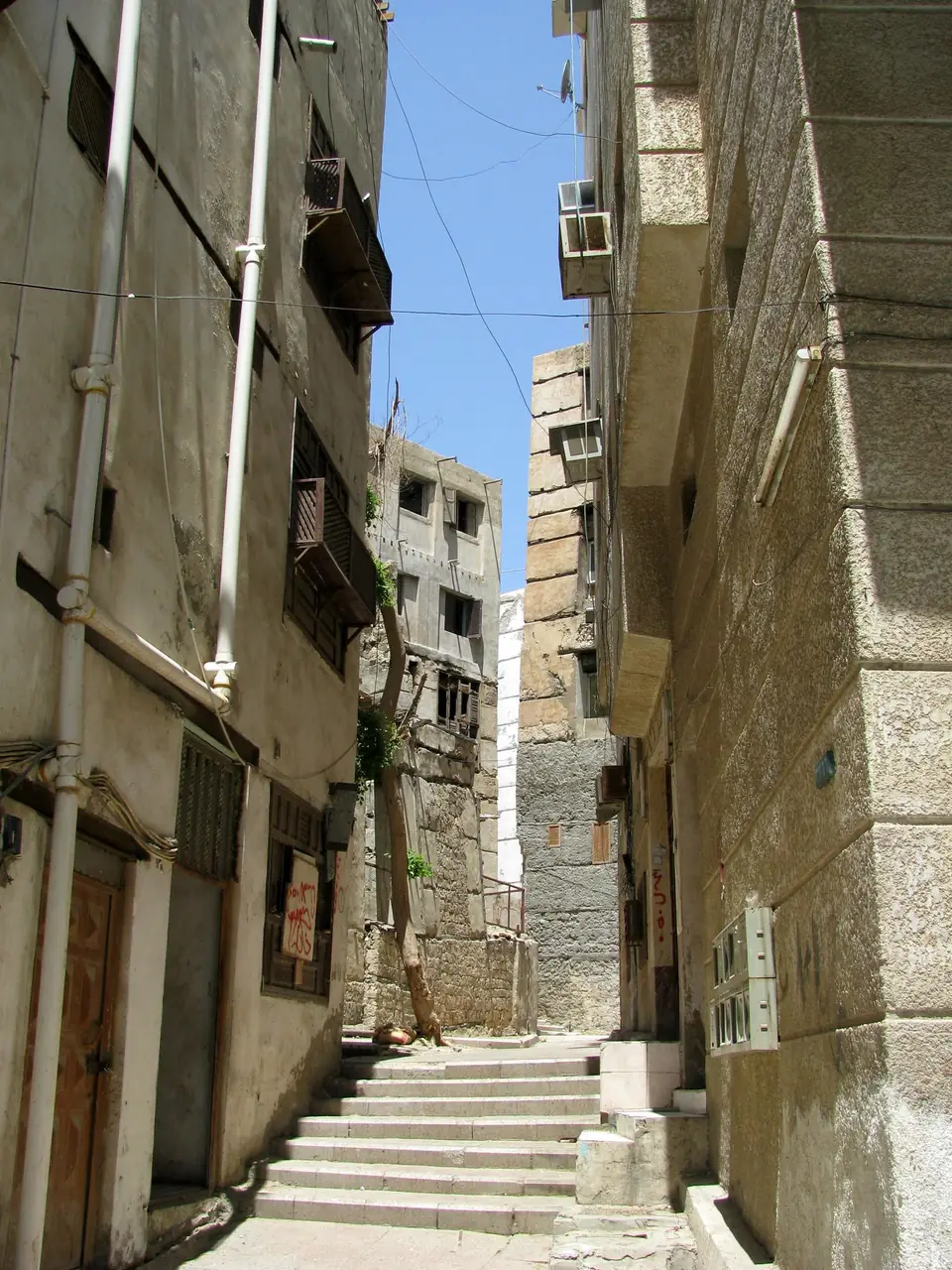
What to see at Souq Al-Alawi goes beyond the counters. At street level line up the shops of the attarin and of old merchant families who founded the trade in incense, perfumes, spices, dates and dried fruit here; above, coral tower houses such as Bayt Noorwali and Bayt Jokhdar; and on al-Alawi Street, at the entrance to the souq road, the Ottoman-era al-Mimar mosque keeps the mukabbariya, the wooden platform from which the muezzin repeated the imam’s words for worshippers at the back. Abandoned by worshippers before 2018, although pilgrims from Turkey still sought it out, it reopened on 15 May of that year with several historic wells that the works brought back into view. Guides and press repeat that the souq is the largest popular market in Saudi Arabia, with no measurement to back it; heritage sources limit themselves to saying that it covers half of historic Jeddah.
The audio guide walks the street in four stops, from Bayt Noorwali to the Mecca Gate, with documented narration checked against historical sources that follows the same direction of travel as the pilgrims.
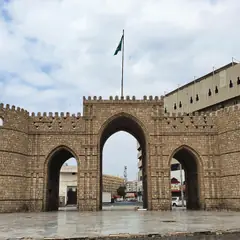
The Nasseef square, in front of Nasseef House, is the traditional entrance to the souq, and the street comes out in the east at the Bab Makkah, the Mecca Gate, where caravans set out for the holy city.
The green tower that watches the souq
Bayt Noorwali
Summary of this stop
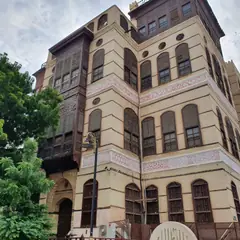
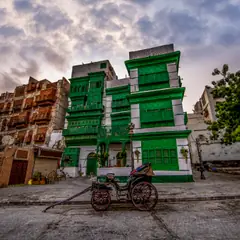
The tour starts beneath Bayt Noorwali, a five-floor tower house with green-painted rawashin, one of the tallest in historic Jeddah. It was built by Mahmood al-Sabban and in 1944 bought by Abdulqader Noor Wali, who left it his name.
From its foot you understand the geography of the souq. Al-Alawi Street forms the border between the districts of the walled enclosure: to the north lies Harat al-Mazloum, with the al-Shafi’i mosque, and to the south Harat al-Yaman, so called because it faces Yemen, where the Nasseef house stands. From west to east, the souq runs from Qabil Street to Souq al-Badu Street, toward Bab Makkah.
That narrow street is also the one that, according to tradition, the caliph Uthman ibn Affan walked on his way to the sea. Why a neighbourhood market carries such a solemn route is what the narration explains beneath the green tower.
The Nasseef square and the lost Nuriyya
Barhat Nasseef
Summary of this stop
The Barhat Nasseef, the square in front of the house of the effendi Muhammad Hussein Nasseef, serves as the entrance to the souq. Beside it stands Bayt Kadwan, and along the same axis rise Bayt Jokhdar, with the largest decorated wooden rawashin in the area, and Bayt al-Rais, all restored.
On the west, al-Dhahab Street separates the souq from Qabil Street, which the merchant Sulaiman Qabil, mayor of Jeddah between 1334 and 1343 AH, covered with zinc sheets and whose shops he electrified. The 1916 junction between the two streets set off the area’s commercial boom and made the Alawi the largest and most famous market of historic Jeddah, spread over half its old core.
At the western end of the souq stood the old Nuriyya, the market of butchers and greengrocers, open to Qabil Street. It was torn down around 1960, with the widening of the new street, and nothing of it remains in view. What that vanished market was like is part of what you hear in the square.
The Yemeni saint and the lost fountain
Attarin shops
Summary of this stop
By the Matbouli house the souq smells of incense and oud. It is the stretch of the attarin, where Jeddah’s best-known perfumers and herbalists are concentrated, and the one that best explains the street’s name: sayyid Abu Bakr al-Alawi, the Yemeni pilgrim who prayed every day in a mosque beside the market, is buried in the Al Alawi family cemetery, in one of the narrow passages leading off the souq toward the neighbourhoods.
Within the souq is also Ayn al-Qawsiyah, Jeddah’s best-preserved historic fountain, fed from Wadi Qaws, modernised in the 19th century and restored in the early 20th; its excavations have yielded Islamic coins, a pipe and Chinese porcelain.
The souq also keeps the story of a fountain with several lives. It was built between 1504 and 1509, in the time of the Mamluk sultan Qansuh al-Ghuri, and so was first called the Ghuriyya; in 1854, after a water crisis, the merchants gathered donations to repair it, the merchant Faraj Yusr paid for the work and the fountain came to bear his name. Around 1887 it dried up and vanished underground. How it was searched for over a century, and what it took to be sure it had been found, is the episode the narration reserves for this stretch.
Bab Makkah, the end of the pilgrims’ road
Souq axis toward Bab Makkah
Summary of this stop
At the end of the street, along Souq al-Badu, the Mecca Gate appears. Here ended the climb of pilgrims disembarked at the port, who went on toward the holy city, and through here they came back in to go down to the sea.
The souq changes rhythm with the calendar. On Ramadan nights it fills with people until the hour of suhur, the last meal before dawn, under festive lighting, and in the hajj season its atmosphere becomes especially cosmopolitan.
When Ramadan arrives and on the eve of Eid al-Fitr, the markets running from Bab Makkah to Souq al-Alawi and Qabil Street greet visitors with ahazij, traditional welcome songs, amid the cries of the vendors, and costumed performers dressed in old style appear in the streets, like the saqqa, the water carrier. How that welcome sounds is the scene with which the tour ends.