The Ebony Mosque
Uthman ibn Affan Mosque Audio Guide (Masjid Othman bin Affan)
A small coral-stone hall in an Al-Balad alley that looks almost new and hides thirteen centuries under a single floor. Behind its mihrab came two pillars of Ceylon ebony and, below, cisterns sealed for almost 800 years and Chinese porcelain: Indian Ocean trade excavated in a neighbourhood mosque.
- 20 min of audio
- Indian Ocean archaeology
The Uthman ibn Affan Mosque, in Harat al-Mazloum, bears the name of the caliph who made Jeddah the port of Mecca, and tradition places its foundation in the year 33 AH, 654. Medieval travellers knew it as Masjid al-Abanus, the Ebony Mosque, for two columns of that wood beside the mihrab. The Historic Jeddah archaeological project, launched in January 2020, has identified seven building phases in it, and the oldest excavated part dates from the 9th to the 11th centuries.
During the excavations, when the modern wooden panels of the mihrab were removed, two octagonal ebony pillars dated to the 7th-8th centuries came to light, the oldest objects found on the site. The German Archaeological Institute identified the wood as rare ebony from Ceylon, present-day Sri Lanka. Beneath the hall also emerged cisterns still sealed and full of clear water, and thousands of pottery fragments, among them blue-and-white Chinese porcelain and celadon.
Highlights
- Mihrab — where two Ceylon ebony pillars of the 7th-8th centuries appeared
- Sunken south entrance — steps descending through seven building phases
- Underground cisterns — some sealed and full of water after almost 800 years
- Chinese porcelain and celadon — finds that tell what world passed through the port
- Prayer hall — six pillars, a wooden roof and five windows with jali lattices
In the 12th century the traveller Ibn Jubayr saw in Jeddah a mosque with two ebony columns and noted that some attributed it to the caliph Umar ibn al-Khattab and others to Harun al-Rashid. Two centuries later Ibn Battuta spoke of a Jami’ al-Abanus famous for its blessing, where prayers were answered. Then the columns vanished from sight, and the mosque, rebuilt again and again, ended up looking like an almost new building. The history of the Uthman ibn Affan Mosque is that of how archaeology found them again.
The name it bears today is that of the caliph Uthman ibn Affan, who made Jeddah the port of Mecca, and tradition dates the foundation to the year 33 AH, 654. The chronology does not quite add up: the oldest excavated part is from the 9th to 11th centuries, other sources speak of a 15th-16th-century construction and only the ebony pillars come close to the traditional date, reused from an earlier phase. The historian Abd al-Quddus al-Ansari considers the attribution to Uthman the most reliable of those in circulation. It is also passed down, from the chronicler Ibn Faraj, that Abdullah ibn Abbas, cousin of the Prophet, made his Ramadan retreat here, a report held to be of little reliability and which in any case would refer to an earlier building on the same plot.
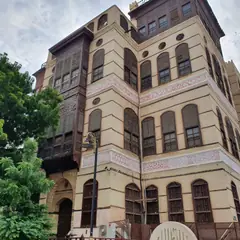
The architecture of the Uthman ibn Affan Mosque is simple: Red Sea coral-stone walls with buttresses, as in Jeddah’s other traditional mosques, a single-storey prayer hall and a modern minaret that replaces the enormous original minaret, long gone. Because of its size, some neighbours affectionately called it “the Zawiya of Uthman ibn Affan”, the little prayer nook, and some simply call it “the blessed mosque”.
The audio guide walks through the mosque in four stops, from the alley to the prayer hall, with documented narration checked against historical sources that goes down, layer by layer, beneath its floor.
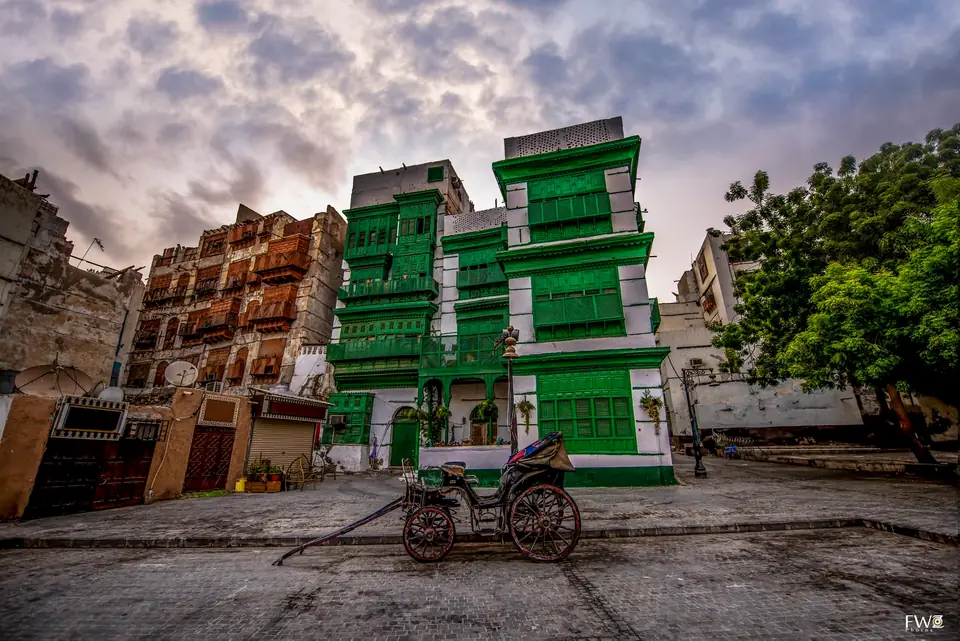
About 165 metres away, the Al-Shafi’i Mosque tells another story of sunken floors with the oldest minaret in the Hejaz, and about 150 metres away stands Nasseef House, the tower house where Abdulaziz ibn Saud settled in 1925. To the west, the Red Sea Museum occupies the old sea gate where pilgrims arrived.
A caliph and a hanged man in the alley
Uthman ibn Affan Mosque
Summary of this stop
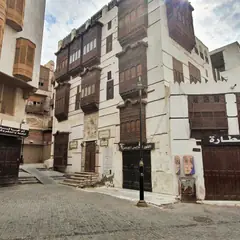
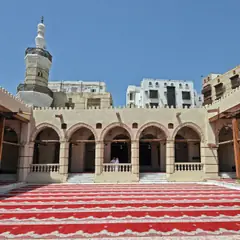
From the alley the mosque looks like a neighbourhood building. Its southwest corner minaret is modern, square and in two sections, rises some six metres above the roof and ends in a conical cap; it fills the role of an enormous minaret the mosque once had and which no longer exists.
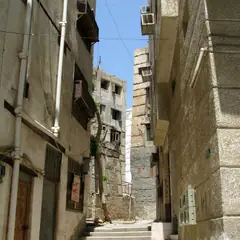
What is not modest at all is the name. Tradition attributes the foundation to the year 654, in the time of the caliph Uthman ibn Affan, who made Jeddah the pilgrims’ gateway to Mecca. The neighbours also say that the caliph walked down toward the sea along the road that is today Souq Al-Alawi and that, at the end of the route, he stopped to pray two rakaat.
The neighbourhood, Harat al-Mazloum, keeps its own legend. The most widespread version tells of a notable from Medina accused of provoking, around 1720, a revolt among the eunuch guardians of the Prophet’s mosque and the garrison; he fled to Jeddah, the governor had him hanged and his kin buried him in this quarter, which took his nickname, “the wronged”. Tradition adds that his blood wrote that word on the ground, something the historian Abd al-Rahman al-Arabi considers a legend born of popular compassion. Who that man was is what the narration tells in front of the minaret.
Steps that descend four centuries
Sunken south entrance
Summary of this stop
The south door makes you go down a few steps to the level of the hall, and that gesture sums up the building’s archaeology. The Historic Jeddah project, under way since January 2020, has identified seven building phases, and the oldest excavated part dates from the 9th to the 11th centuries.
From the end of the Mamluk period, in the 15th and 16th centuries, the builders raised the floor with each renovation and reused the same paving, which stayed in use for some 400 years, until the early 20th century. Beneath the feet lay the earlier phases, one on top of another, like the layers of a cake.
The most striking thing is what did not change. Right up to its modern form, from the late 20th century, every phase followed the regional scheme of an open courtyard before a covered prayer hall, and the size, orientation and niche of the mihrab stayed the same for over a thousand years. What that fidelity means in a city that remade everything is understood by listening to the narration on the steps.
The Ceylon ebony behind the mihrab
Mihrab of the prayer hall
Summary of this stop
The mihrab occupies the qibla wall in the same place and at the same size as for over a millennium. Here stood the columns that made the mosque famous: Ibn Jubayr saw two ebony columns in the 12th century, and because of them it was called Masjid al-Abanus, the Ebony Mosque. The chronicler Ibn Faraj recorded that in his day one was still standing and the other already lost.
During the excavations of the Jeddah Historic District Programme, when the modern wooden panels covering the mihrab were removed, two octagonal ebony pillars dated to the 1st-2nd centuries AH, 7th-8th of our era, appeared: the oldest objects found on the whole site.
The analyses of the German Archaeological Institute in Berlin identified the wood as a rare ebony from Ceylon, present-day Sri Lanka, across the Indian Ocean. How they could spend centuries hidden in plain sight is the central revelation of the tour.
Forty neighbours and a porcelain floor
Pillars and lattices of the hall
Summary of this stop
The prayer hall is an oblong nave of coral stone with a wooden roof supported by arches on six pillars, in three rows parallel to the qibla. It is lit by five large windows with wooden jali lattices: three on the north and two on the south.
Ibn Battuta left a scene from this mosque in the 14th century. Every Friday the muezzin counted the Jeddah residents living in the city: if they reached forty or more, the qadi, a Shafi’i jurist from Mecca named Abdallah, gave the sermon and led the Friday prayer; if not, the noon prayer was said. Outsiders did not count, however many there were.
Meanwhile, beneath the floor slept another archive. The excavations uncovered a system of underground cisterns, some still sealed and full of clear water after almost 800 years, and thousands of finds: blue-and-white Chinese porcelain of the 17th century, grey-green glazed Chinese celadon of the 11th-13th centuries and white, green and yellow glazed pottery of the 9th-10th centuries. What those fragments tell about the port that Jeddah was is the close of the narration.