Zen bamboo temple
Hokoku-ji Temple Audio Guide
Kamakura's bamboo temple: some two thousand mōsō stalks, a tea house serving matcha and, behind it, three tombs dug into the rock. It was raised in 1334 in memory of an Ashikaga who took his own life half a century earlier and whose grandson would become shogun.
- 40 min of audio
- Zen temple and bamboo forest
Hokoku-ji was founded in 1334, the first year of the Kenmu era, as a Rinzai Zen temple of the Kenchō-ji branch. It was erected by Uesugi Shigekane to honour Ashikaga Ietoki, who died in 1284, and its first abbot was Tengan Ekō. It was the family temple of the Uesugi and the Ashikaga, related by marriage, and it occupies the Takuma-gayatsu valley, which owes its name to the Takuma school of Buddhist painters. The Kantō earthquake of 1923 brought down almost all its buildings; only the bell tower of 1757 keeps the thatched roof that the whole precinct once had.
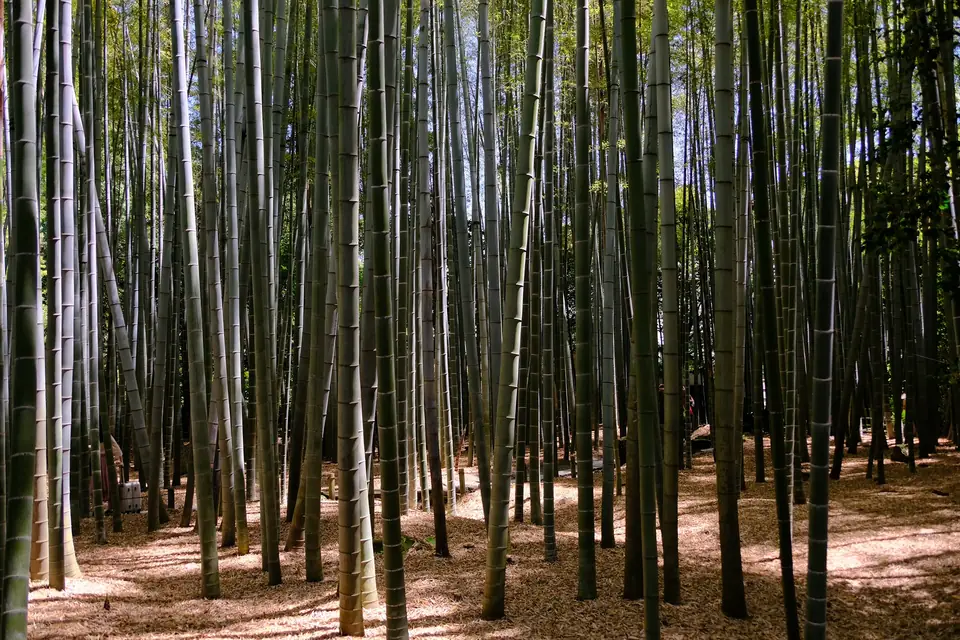
The forest that makes it famous today is not medieval: it was planted in the mid-Edo period on the site of the Kyūkōan, the hermitage where the first abbot spent his last months meditating and writing poetry. The tea house that serves matcha among the stalks bears that same name, and a few metres away, on the slope, open the burial caves held to be the tombs of Ietoki and of an Ashikaga boy who died in this temple during the Eikyō war.
Highlights
- The bamboo forest — some 2,000 mōsō bamboos planted in the Edo period over the founder's hermitage
- The Kyūkōan tea house — matcha with dry sweets in the middle of the bamboo
- The three yagura — arched burial caves dug into the rock, held to be tombs of the Ashikaga
- The bell tower of 1757 — the temple's oldest building and the only one with a thatched roof
- The Kashō-dō — a zazen hall with the wooden statue of the founder Tengan Ekō, carved in 1347
In a closed valley east of Kamakura, Hokoku-ji (報国寺) is known as the “bamboo temple”, and almost everyone who comes does so for the photos of its forest. But the history of Hokoku-ji begins with a tomb. In 1334, Uesugi Shigekane raised this small Rinzai Zen temple to honour the memory of Ashikaga Ietoki, who had taken his own life fifty years earlier, in 1284. Four years after the founding, in 1338, Ietoki’s grandson, Ashikaga Takauji, became shogun, and his line would govern Japan until 1573.
Between those two dates fits everything the precinct holds today: a moss path, a thatched bell tower that is the oldest thing left standing, a meditation hall where zazen is still practised every Sunday, the forest of some two thousand mōsō bamboos and, at the back, three burial caves hewn in the rock. The route with the audio guide, documented and checked against historical sources, links those pieces in four stops, from the murmur of the valley to the slope of the tombs.
The temple belongs to the branch of Kencho-ji Temple, the first temple in Japan to call itself a “Zen temple”, and shares the Rinzai school with Engaku-ji Temple, in Kita-Kamakura. To the west, a little over a kilometre away, Tsurugaoka Hachimangu Shrine marks the city’s axis.
A thatched bell tower that survived the earthquake
Hokokuji Temple
Summary of this stop
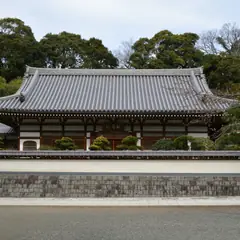
From the entrance gate, a gentle slope climbs between moss-covered stones and lanterns, dotted with small statues, to the bell tower that stands in front of the main hall. Built in 1757, it is the oldest building at Hokoku-ji and the only one that keeps the arched thatched roof that the hondō and the other buildings once had. The great Kantō earthquake of 1923 destroyed most of the precinct, and the main hall was rebuilt with a different roof.
Nor is the bell what it was. The original was requisitioned and melted down during the Second World War; the present one is post-war and, since the valley filled with housing, it rings only on special dates, such as the 108 strokes at midnight on 31 December, the Joya no kane.
Near the bell tower, small five-tier stone stelae, the gorintō, are grouped around a larger one. Legend has it that when the Hōjō regime fell in 1333 there was a fierce battle in Kamakura, that part of the remains of the fallen were brought here and that those little stones are their tombs. The narration on site explains why that belief fits so well with a temple that did not yet exist that day.
A temple raised for a man who took his own life
Hondō and Kashō-dō
Summary of this stop
The main hall, rebuilt after 1923 with a copper roof, keeps the temple’s main image: a Shaka Nyorai seated in meditation, about 50 centimetres tall, a cultural property of Kamakura city, attributed to the sculptor Takuma Hōgen, of the Nanboku-chō period. The valley’s name, Takuma-gayatsu, comes from the Takuma school of Buddhist painters that had its base here; much later the writers Kawabata Yasunari and Hayashi Fusao lived in it.
The temple’s origin lies with Ashikaga Ietoki, who died by suicide on the 25th of the sixth month of 1284, and whose posthumous Buddhist name, Hōkoku-ji-dono Ginin, became attached to the place. Uesugi Shigekane built it in 1334 and its first abbot was Tengan Ekō. There have been doubts over who figures as the lay founder: the temple resolves them by naming Ietoki as the one honoured and Shigekane as the one who raised it.
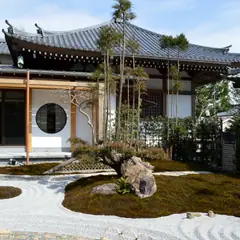
Beside the hondō stands the Kashō-dō, a zazen hall of 1978 that keeps the image of Kashō Sonja and a wooden statue of the founder carved in 1347. Every Sunday at 7:30 the temple closes the main gate for its weekly zazen, and on the ground-floor wall hang wooden tablets with the names of the regulars; according to documented tradition, some have been coming to meditate here for fifty years. The audio guide tells what Ietoki did that led to his name ending up naming a temple.
The forest that grows over the founder’s hermitage
Bamboo forest and Kyūkōan tea house
Summary of this stop
Behind the hondō begins the Take no niwa: some 2,000 bamboos, almost all mōsō, crossed by two paths that meet in front of the tea house, among stone lanterns and moss-covered statues. It is the most photographed corner of Hokoku-ji, that of striped green light and the creak of the stalks, and also the one that is most misleading about its age: the forest is not medieval, but from the mid-Edo period.
It was planted on the site of the Kyūkōan, the hermitage where Tengan Ekō spent his last years in zazen and writing poetry. A disciple of Mugaku Sogen at Kenchō-ji from the age of 13, he travelled in 1320 to Yuan China to study with Gulin Qingmao and Zhongfeng Mingben, returned in 1329 and died in 1335, barely a year after opening the temple.
The pavilion that today serves matcha with dry sweets facing the bamboo bears the same name as that hermitage, Kyūkōan. The narration, heard at the crossing of the paths, gives the forest back the monk who lived beneath it.
Three caves for a vow to Hachiman
The three yagura
Summary of this stop
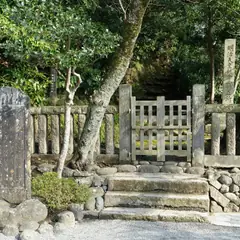
On the slope behind the Kashō-dō open three yagura, burial caves with arched mouths dug into the soft sandstone tuff of the Kamakura hills, with horizontal pits for the urns of ashes and stone monuments inside. They can be glimpsed from the back garden and are held to be the tombs of Ashikaga Ietoki and of Ashikaga Yoshihisa.
The chronicle Nantaiheiki, of 1402, tells that Ietoki, seventh descendant of Minamoto no Yoshiie, knew himself unable to take power, begged Hachiman that his descendants might achieve it within three generations, left the plea in writing and took his own life. The written vow existed, but present-day historiography views that three-generation version with caution and considers it probably part of the later Ashikaga propaganda. What is certain is that his grandson Takauji was shogun in 1338.
More than a century later, the temple was again the scene of a death. In the Eikyō war, Yoshihisa, eldest son of the Kamakura kubō Ashikaga Mochiuji, took his own life at Hokoku-ji after his father’s defeat by the shogun Ashikaga Yoshinori; the sources do not agree on the date or his age. According to documented tradition, the war began with a name: the one his father gave him without asking permission from Kyoto. How that story was woven between the Hachiman shrine and this slope is revealed before the rock.