Indigenous market
Castillo Tielemans Market Audio Guide (Mercado Municipal José Castillo Tielemans)
San Cristóbal's "old market" arrived at its site at the same time as the jail and has spent decades resisting anyone who wants to move it: every metre of pavement and aisle has been occupied, charged for, disputed and defended by the Tsotsil and Tseltal people who give it life today.
- 45 min of audio
- Tsotsil and Tseltal culture
As late as 1968 the San Cristóbal de las Casas market stood beside the former convent of La Merced, then the city jail. Governor José Castillo Tielemans, born here in 1911 and head of Chiapas from 1964 to 1970, relocated the market and the municipal jail at the same time, and the hall he built on Avenida General Utrilla at the corner of Nicaragua, in the Mexicanos quarter, bears his name. After the religious expulsions from San Juan Chamula in 1976, Indigenous migration overflowed the building and turned streets, courtyards and vacant lots into a labyrinth of stalls.
The hall has never had a comprehensive rehabilitation, and more than one government has tried to take the market away or knock it down: a new market in the north of the city around 2010, a budget of 350 million pesos in 2014, a demolition and reconstruction project in 2022. That year the stallholders responded with night watches street by street, with bread and atole handed out to those keeping guard and a tepache seller nicknamed "El Machetes" on patrol with his machete.
Highlights
- Avenida General Utrilla — the old street of warehouses and freight trucks, now taken over by stalls of clothes, fruit, popcorn and tepache
- Main hall — the building from Castillo Tielemans's years, with butchers, fish, breads, traditional sweets and food stalls
- Former west car park — the parking lot that at the end of the 1980s filled with stalls that are now permanent
- Mercadito 2 — the former "Parque Infantil", scene of the 2002 revolt against a raid on pirated CDs
- Medicinal herbs and flowers of the Highlands — sacks with labels for remedies and shopping done by shouting in Tsotsil, Tseltal and Spanish
The story of the José Castillo Tielemans Municipal Market begins in another neighbourhood and beside another building. In 1954 the San Cristóbal de las Casas market stood next to the former convent of La Merced, which served as the city jail, and in 1968 it was still there. Its move was the work of Governor José Castillo Tielemans, a native of San Cristóbal born in 1911 and head of Chiapas from 1 December 1964 to 30 November 1970, who moved the public market and the municipal jail at the same time and paved the main streets of the centre. No open source gives the exact date the hall opened: his term bounds the work, and guides limit themselves to speaking of “more than 50 years”.
What turned a municipal market into the commercial heart of the Highlands came later. The religious expulsions from San Juan Chamula in 1976 pushed a wave of migrants towards San Cristóbal who settled to work around the market and, since there was no room, occupied courtyards, streets and vacant lots. Around 2016 some 2,800 stallholders worked here, with a clear predominance of Tsotsil and Tseltal traders and producers, joined by Ch’ol, Tojolabal, Lacandon and Zoque people.
What to see at the Castillo Tielemans Market is not limited to one building: it is a route that goes up Avenida General Utrilla, stops before the old hall, looks into Mercadito 2 and ends inside, among butchers, chickens, herbs and flowers. The audio guide covers it in 45 minutes, documented and checked against historical sources, to read the market as what it has been: a territory occupied, charged for, disputed and defended.
The former convent of La Merced, beside which the market once stood, now houses the Amber Museum of Chiapas, and a few streets to the south Tsotsil and Tseltal weavers fill the atrium of the Santo Domingo Church every day.
A street of trucks taken over by stalls
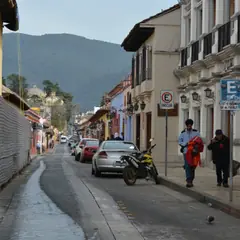
Street stalls on Avenida General Utrilla
Summary of this stop
Avenida General Utrilla reaches the market from Santo Domingo flanked by street and semi-fixed stalls of clothes, fruit, popcorn and tepache. It looks like disorder, but it has a precise chronology: the streets around the hall were at first wholesale warehouses where freight trucks passed; by the 1980s they had become narrow rows of stalls, and at the end of that decade the car park on the west side filled with stalls that are now permanent premises.
That ground was never free. Under the control of ALMETRACH, the association that ran the collection of floor fees, the street vendors here paid 700 pesos a month, while the fixed stallholders inside paid 750 pesos a year. Among the freight vans, often painted and chromed, in which producers from the communities bring fruit, vegetables and flowers, the pavement is also a map of who paid and how much.
The fall of that power is measured here with a small story, that of a popcorn seller on this very street and the sums she worked out after she stopped paying the fee. How it came to that, in an account that the sources themselves tell in conflicting versions, is revealed by listening to the narration on the avenue.
The market that moved with the jail
José Castillo Tielemans Municipal Market
Summary of this stop
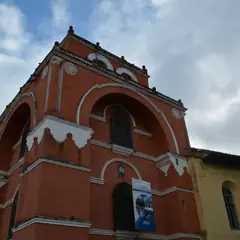
At the corner of Utrilla and Nicaragua rises the main hall, the great covered building from Castillo Tielemans’s years. The name it bears is not a generic tribute: it is that of the governor who took the market out of the La Merced quarter at the same time as the jail beside it, a double move that explains much of the architecture of the Castillo Tielemans Market and of its place in the city.
The wear is visible at a glance. The hall has never had a comprehensive rehabilitation, and failures in drainage, water and electricity have caused floods and fires; the worst, on 19 January 2010, affected 40 Indigenous stalls. That same year Mayor Mariano Díaz Ochoa and the state government built a new market in the north of the city to rehouse the Tielemans traders, who refused to leave the centre.
In December 2010 a rumour was also going round: that the land was to be sold to the Soriana chain or turned into a park. Why so many have wanted to take this market away from here, and why they have never managed it, is the thread the narration untangles in front of the façade.
From children’s park to burning patrol cars
Mercadito 2
Summary of this stop
Beside the Tielemans rises Mercadito 2, a block of food, clothing and service stalls of two and three floors. For a long time it was still called “Parque Infantil”, because that is what it had been: according to a documented tradition, a park with play equipment where the vendors’ children stopped on the way to their parents’ stall, and in the 1980s the occupation of the new market was celebrated with a big party with food and dancing.
The site also holds the market’s most violent episode. On the afternoon of 7 March 2002, according to the chronicles of the time, a prosecutor’s operation against a pirated-disc stall ended in revolt: patrol cars burned beside the market, nearby shops looted, tear gas and between 52 and 60 detained, with damage that Mayor Enoc Hernández put at more than 20 million pesos. Later human rights complaints described a transfer of detainees to the Cerro Hueco prison that still shakes people today.
The disputes over the ground did not end there. In March 2022 there were sticks, stones and gunshots between rival stallholders after the expulsion of the leader Narciso Ruiz, and the stallholders ended up banishing the ALMETRACH leaders. On the night of Holy Saturday 2023, 8 April, bursts of gunfire in the air over control of Mercadito 2 left worshippers sheltering inside the churches of the Mexicanos quarter. What exactly happened that afternoon in 2002 is told in front of Mercadito itself.
Aisles defended with shouts and by night
Butcher and poultry aisles
Summary of this stop
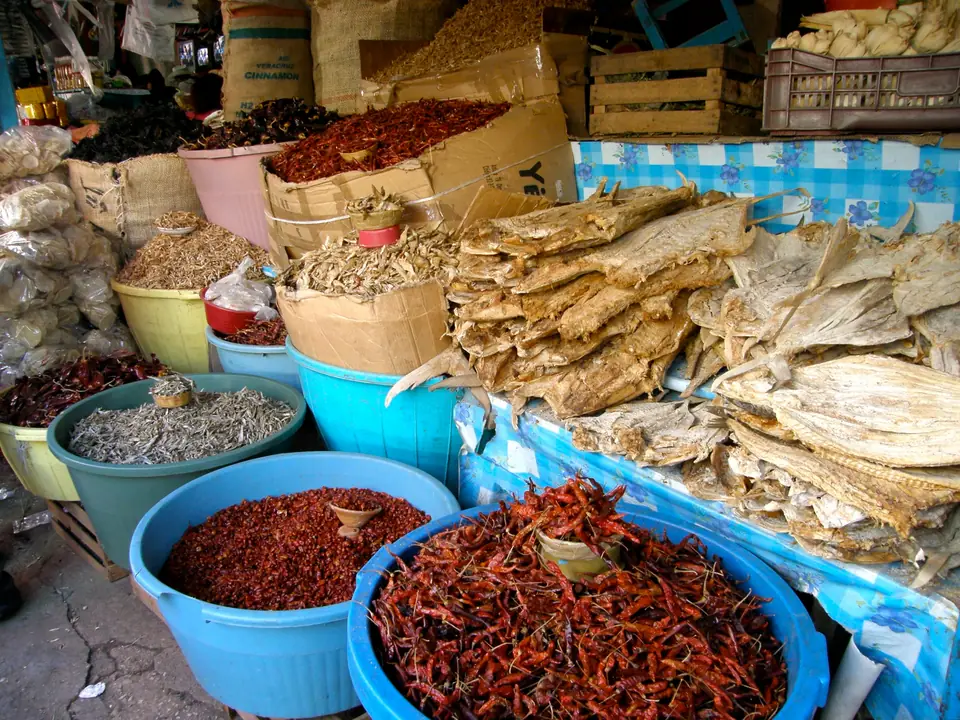
The interior of the hall holds mostly traditional butchers, as well as fish, breads, traditional sweets and a regional-cuisine food area, and is surrounded by stalls that invade the neighbouring streets. There are sacks of herbs with labels for remedies, flowers grown in the Highlands and, beside the exit to the bus terminal, live hens, ducks and turkeys.
These aisles came close to disappearing. In December 2014 a budget of 350 million pesos was authorised and the market’s demolition was proposed for 2015, and in 2022 the city council announced a SEDATU project of more than 150 million pesos to knock the building down and rebuild it. The response was night watches street by street. The defence was presented as a spontaneous, leaderless movement, although some spoke of internal figures driving it.
The proof that the market still stands is heard before it is seen. The Tielemans is called the “old market”, and here shopping is done by shouting, in Tsotsil, Tseltal and Spanish: children hawking tomatoes at the entrance, chicken sellers with a cry of their own for a word of just two syllables, an herbalist who prescribes by word of mouth. What that custom says about who won the battle for these aisles is discovered by listening to it right here.