Historic monument
Caves of Hercules Audio Guide (Grottes d'Hercule)
A limestone cave beside Cape Spartel that myth reserves for Hercules and that was in fact enlarged by generations of Berber quarrymen, until it opened onto the Atlantic a mouth shaped like Africa upside down.
- 40 min of audio
- Cave and legend
On the Achakar coast, on the outskirts of Tangier, the cave holds Neolithic remains, centuries of quarrying millstones for oil presses and a natural opening to the ocean that many call the Map of Africa. Opened to the public in 1920 and classified as a historic monument in 1950, it is today one of the city’s great tourist icons.
Few caves have had so many lives: quarrymen’s workshop, brothel in the first half of the 20th century, party venue for Tangier celebrities and, in October 1995, the stage of the first concert of Def Leppard’s Guinness record, three concerts on three continents in a single day.
Highlights
- Mouth of the Map of Africa — an inverted silhouette of the continent, with a hole that stands in for Madagascar
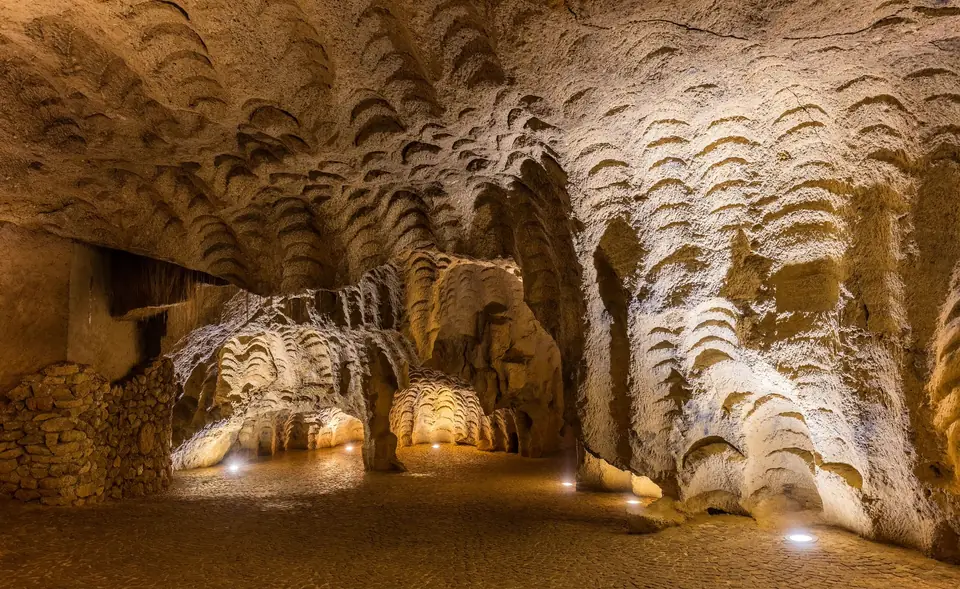
- Quarry walls — rows of semicircular hollows left by millstones for oil presses
- Legend of Hercules and Antaeus — the sword blow that, according to myth, opened the Strait and the cave
- Def Leppard, 1995 — the small-hours start of a Guinness record of three concerts on three continents
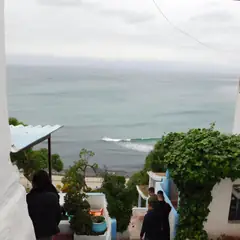
- Esplanade over the Atlantic — terraces facing Achakar beach and Cape Spartel
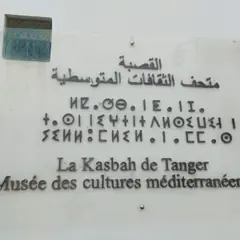
The history of the Caves of Hercules begins long before the Greek hero. Excavations brought out of its floor polished red pottery, polished stones, cut flint and terracotta figurines from the Neolithic, now displayed in the Kasbah Museum of Tangier; the exact date of that occupation varies by source, as does that of the supposed discovery of the cave. Then came the Berber quarrymen, who for generations cut millstones from the limestone and with their work opened a second entrance, the landward one. Officially opened to the public in 1920 and classified as a historic monument in 1950 (other sources give 1952), the cave is today walked along a path that passes the old quarry to the mouth over the Atlantic.
Between myth and trade, the cave has been a workshop, brothel, party venue, rock stage and Tangier postcard, always with the same sea breaking beside it. That mix of Greek legend, Berber labour and 20th-century episodes is what the audio guide unpacks stop by stop, in a narration documented and checked against historical sources.
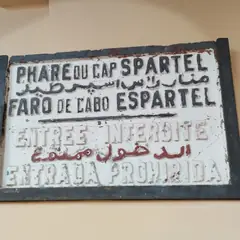
About 4 km away, on the same headland, the minaret-shaped lighthouse of Cape Spartel completes the excursion along the Atlantic coast; back in the city, the Café Hafa looks onto the Strait from its Marshan terraces.
The entrance the quarry opened
Grottes d'Hercule
Summary of this stop
The route starts before the entrance door, and there is the first surprise: of the cave’s two mouths, the landward one was made neither by nature nor by a hero, but by the extraction of millstones by Berber quarrymen. The other, the one facing the Atlantic, is indeed natural.
The present door has its own history too. The site’s first renovation followed the last visit of King Mohammed V, who recommended building it to ease an access that until then had been very difficult. And for decades the descent was made by gaslight: electric lighting did not arrive until 1982.
What that first image says about who really shaped the cave is better understood by listening to the narration right there, before the threshold.
Semicircles of stone that look like roof tiles
Millstone quarry walls
Summary of this stop
The walls of the old quarry are the most striking part of the visit: rows of semicircles that, at first glance, recall a roof. Each is the hollow left by a flat, round millstone, cut from the wall for oil presses. The repetition of the cut, over and over, covered the limestone with that pattern. When the quarrying began is a matter of debate: some date it to the 1920s and others describe it as a centuries-old trade of the area’s Berbers.
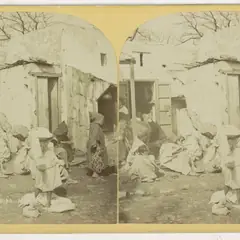
The trade passed from father to son among the residents of the douar Mediouna, who extracted millstones as their ancestors had. When in the 1970s and 80s the cave received between 500 and 600 tourists a day, those residents turned into guides and craft sellers. Beneath those same walls the Neolithic remains now kept in the Kasbah Museum appeared.
Against so much work by human hands, the mythological tradition tells another story: that Hercules stayed to sleep here before his eleventh labour, the theft of the golden apples from the garden of the Hesperides, which Greek tradition placed very close by, at Lixus, next to present-day Larache. Another version adds that he came to rest after splitting apart with blows the lands that joined Africa and Europe.
Africa upside down facing the ocean
Mouth of the Map of Africa
Summary of this stop
The mouth to the sea is the image that has made the cave famous. Seen from inside, its silhouette recalls the African continent inverted, with a hole in the rock standing in for Madagascar; the waves break into it and the entrance becomes impassable at high tide. Its origin is debated: a widely repeated version attributes it to the Phoenicians, another presents it as a fissure carved by the waves, and some consider it natural and judge the resemblance rather slight.
In the version of the myth told in Tangier, the giant Antaeus, son of Poseidon and Gaia, assaulted travellers and with their skulls raised a temple to his father; he gave his kingdom the name of his wife, Tinja. According to the legend, Hercules defeated him in a fierce fight, and one of his sword blows opened the Strait between Europe and Morocco and the caves that bear his name. He later married Antaeus’s widow, who bore him a son, Sufax, to whom tradition attributes the founding of Tingis.
This corner also holds a rock episode: on 23 October 1995, Def Leppard opened here, at 12:23 in the early morning and half an hour late because of a power cut, their Guinness record of three concerts on three continents in a day, which continued in London and ended in Vancouver at 23:33.
From brothel to terraces over Achakar
Café esplanade over the Atlantic
Summary of this stop
The exit leads to the esplanade of cafés, restaurants and shops that looks onto the ocean, Achakar beach and Cape Spartel. Before being that postcard, the cave served as a brothel in the first half of the 20th century, and afterwards Tangier’s celebrities held parties in it, until tourism established itself as the most profitable business. After Brion Gysin’s death in 1986, his friend Anne Cumming organised the funeral and the scattering of his ashes in the Caves of Hercules, although some doubt they were ever scattered here.
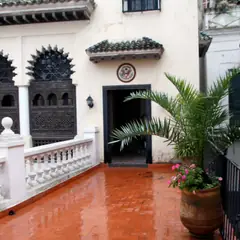
The current terraces were born of the 2014 renovation: 10 million dirhams and eight months of works that reinforced the walls, renewed the lighting and raised the cafés and shops outside. King Mohammed VI inaugurated the renovated site on 16 October 2015.
The close has something of a contemporary portrait: in 2019, photo sellers charging 5 dirhams for posing with monkeys and parrots were documented inside the cave, where signs on the place’s history were missing. How the demigod’s myth now coexists with that fairground scene at the foot of the rock is what the narration leaves for the end.