Ancient Egypt
Egyptian Museum Audio Guide (Museo Egizio)
Since 1824, a Baroque brick college in the centre of Turin has been guarding Egypt: a tomb found intact, a list of pharaohs shattered into pieces and a gallery of statues that has seen daylight again.
- 120 min of audio
- Egyptian archaeology
It is the oldest museum in the world devoted solely to ancient Egypt. It was born in 1824, when King Carlo Felice of Savoy bought for 400,000 lire the collection of the Piedmontese Bernardino Drovetti, French consul general in Egypt, which Paris had turned down in 1816. It was installed in the former Collegio dei Nobili, built from 1679 to a design attributed to Michelangelo Garove, opened to the public in 1832 and still shares the palace with the Academy of Sciences.
Jean-François Champollion came here in 1824, two years after deciphering the hieroglyphs, convinced that “the road to Memphis and Thebes passes through Turin”. He spent months among still-rolled papyri and, along the way, wrote a mocking petition to the king signed by a five-metre statue tired of waiting packed in straw.
Highlights
- Tomb of Kha and Merit — found intact in 1906, with more than 500 objects
- Turin Kings List papyrus — a list of pharaohs reassembled from about 300 fragments
- Galleria dei Re — statue gallery by OMA reopened to natural light in 2024
- Seated Ramesses II — the Apollo Belvedere of Egyptian art according to Champollion
- Temple of Ellesiya — chapel of Thutmose III rebuilt from 66 blocks
The story of the Egyptian Museum in Turin begins with a king’s purchase. In 1824 Carlo Felice of Savoy paid 400,000 lire for the collection that Bernardino Drovetti, French consul general in Egypt, had assembled and that France had turned down in 1816. With it he founded a museum that two centuries later holds some 40,000 pieces, of which about 3,300 are in the galleries, and that is still in the same palace at Via Accademia delle Scienze 6, reopened on 1 April 2015 after three and a half years of works. It is often called the second Egyptian museum in the world after Cairo; by number of pieces others surpass it, and its primacy holds up mainly among museums devoted solely to Egypt.
Its galleries bring together the consuls and sculptors who emptied temples, the Egyptologist who first read the hieroglyphs, the Italian excavations of the early 20th century and the 2024 redesign that gave the statues their light back. The audio guide route follows that thread in five stops, from the brick of the façade to the far end of the Galleria dei Re, with narration researched and checked against historical sources.
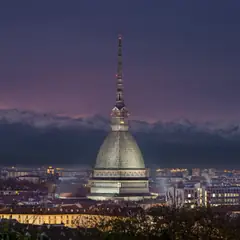
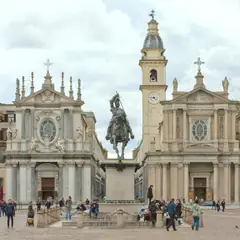
Less than 200 metres away lies Piazza San Carlo, the city’s Baroque drawing room, and Turin’s other great museum, the one on cinema, occupies the Mole Antonelliana.
A Baroque college that guards Egypt
Palazzo dell'Accademia delle Scienze
Summary of this stop
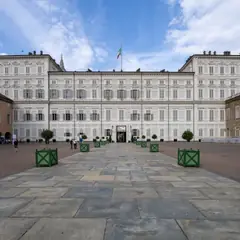
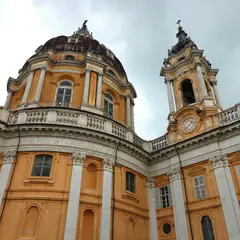
The visit starts in front of the exposed-brick façade of the former Collegio dei Nobili, a college for nobles built from 1679. The design is attributed to Michelangelo Garove, although some sources link it to Guarino Guarini. In 1824 Drovetti’s crates came in here and, from 1832, the public could see them.
What is unusual is that the building was never only the museum’s: two centuries later, the Egyptian Museum still shares the palace with the Turin Academy of Sciences. The story of how a consul’s spoils ended up in a Baroque college, and why France let them go, is the entrance to the route.
The tomb no one opened in 3,500 years
Tomb of Kha and Merit
Summary of this stop
On 15 February 1906 Ernesto Schiaparelli’s mission found intact at Deir el-Medina the tomb of Kha, chief of the workmen of the royal tombs, and his wife Merit. Inside were more than 500 objects: sarcophagi, furniture, folded clothing, chests, loaves of varied shapes, salted meat and wine labelled with year and origin. In front of the wooden door of the chamber, Schiaparelli asked his servant for the key, who did not know where it was; the crossbars were sawn through to keep the lock.
The mummies of Kha and Merit have never been unwrapped. They have been studied with X-rays in 1966 and 2014 and with tomography in 2002 and 2016. The grave goods are part of the roughly 30,000 pieces that the excavations of Schiaparelli and Giulio Farina brought to Turin between 1903 and 1937. And their journey did not end there: the narration tells what happened to this ensemble during the Second World War, far from the display cases.
Pharaohs written on tax paper
Turin Kings List
Summary of this stop
The Turin Kings List is a list of pharaohs in hieratic script written on the back of a tax register from the time of Ramesses II: reused paper. Drovetti bought it around 1820 and it arrived in pieces. In 1824 Champollion, who spent months in Turin studying mainly the papyri, identified 47 of some 300 fragments. Today it is displayed mounted on Japanese paper after the 2022 restoration.
A legend born in those months circulates around the papyrus: that it disappeared and reappeared missing some of its pieces. In 1950 a parapsychologist was even consulted, to no avail. The real lead came from a forgotten note, and about half of the papyrus is still lost; where the missing fragments finally turned up is kept for the stop.
The sphinxes that face each other again
Karnak sphinxes in the Galleria dei Re
Summary of this stop
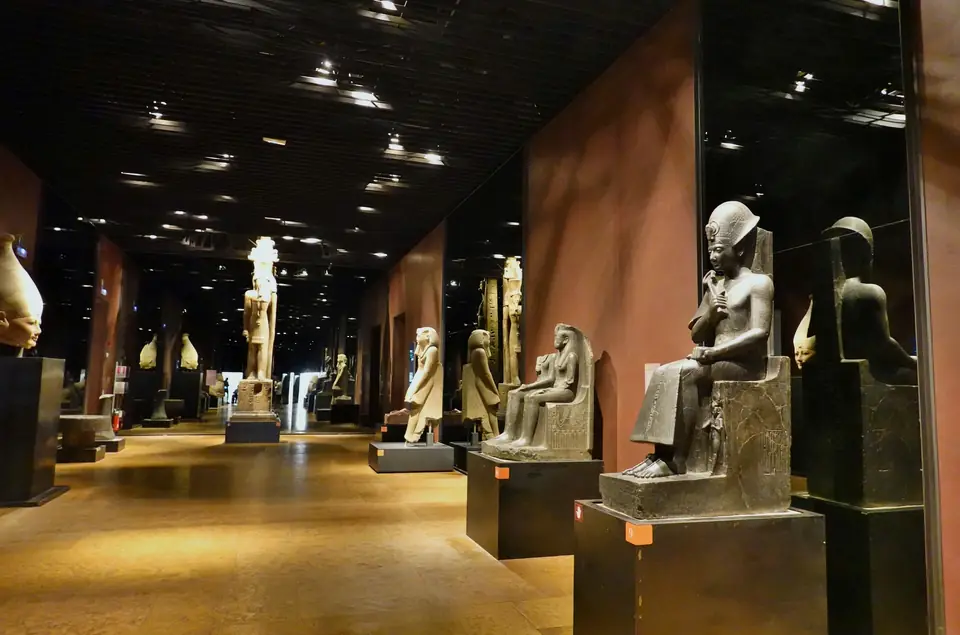
The Galleria dei Re, the museum’s statue gallery, spent almost 20 years with the dark installation that Dante Ferretti designed as a temporary one for the 2006 Winter Olympics. The new OMA gallery, inaugurated on 20 November 2024, reopened the large windows, lined the walls with matte aluminium and again placed face to face the two sandstone sphinxes from the temple of Amun at Karnak, beside a wall that traces the processional avenue.
On many sphinxes and statues of the Drovetti collection a modern name appears chiselled: that of Jean-Jacques Rifaud, sculptor and agent of the consul in Luxor. Nearby wait the granodiorite Sekhmets, the lioness-headed goddess, from the reign of Amenhotep III. According to the museum’s custodians, moving one of them for the 2006 installation had consequences; the story is heard right there.
Ozymandias complains and Ramesses charms
Colossus of Seti II and seated Ramesses II
Summary of this stop
At the far end of the first room stands the colossus of Seti II, about five metres tall and weighing about five tonnes. Before Christmas 1824, Champollion drafted in its name a mocking petition to the king: “Ozymandias” complained of having stood for months in the courtyard, packed in straw up to the neck. The target of the joke was the curator Giulio Cordero di San Quintino, with whom he clashed over access to the collection.
In the centre of the second room is the seated Ramesses II in granodiorite, in his pleated tunic, which already presided over the statue hall in 1832. Champollion called it the Apollo Belvedere of Egyptian art and declared himself in love with it. The close of the route shows a passionate, teasing decipherer, and explains why in Turin the study of Egypt has never stopped advancing.